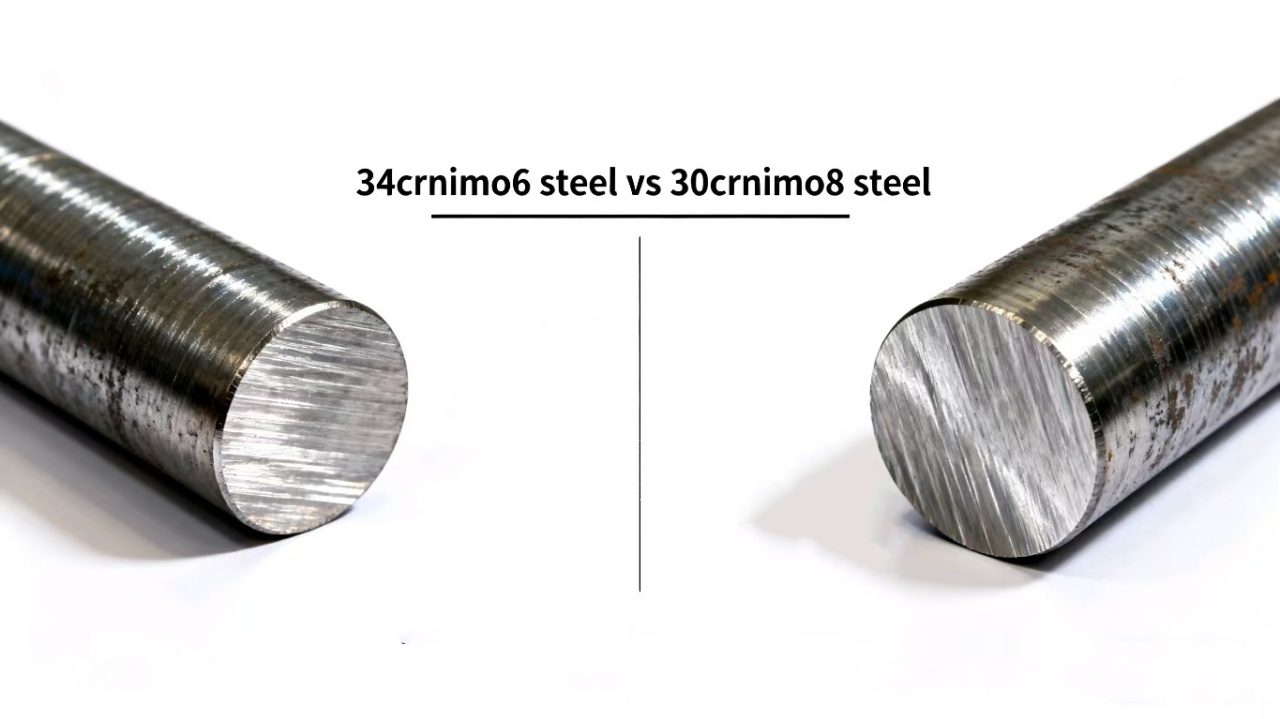
Both 34CrNiMo6 and 30CrNiMo8 are chromium-nickel-molybdenum alloy structural steels according to the European standard (EN 10083-3), widely used in critical components requiring extremely high strength, toughness, and fatigue life.
Due to its higher alloy content, 30CrNiMo8 has better overall performance than 34CrNiMo6, and can therefore be regarded as an “upgraded version” of the latter.
This article will begin with an analysis of the chemical composition, and then gradually explore the differences in the mechanical properties and applications of the two materials.
Chemical Composition:34CrNiMo6 Steel vs 30CrNiMo8 Steel
| Grade | C | Si | Mn | P | S | Cr | Ni | Mo |
| 34CrNiMo6/1.6582 | 0.30-0.38 | ≤ 0.4 | 0.50-0.80 | ≤ 0.025 | ≤ 0.035 | 1.3-1.7 | 1.3-1.7 | 0.15-0.30 |
| 30CrNiMo8/1.6580 | 0.26-0.34 | ≤ 0.4 | 0.50-0.80 | ≤ 0.025 | ≤ 0.035 | 1.8-2.2 | 1.8-2.2 | 0.3-0.5 |
First, we can see that 34CrNiMo6 has a higher carbon content range, which means that under the same heat treatment conditions, its theoretically achievable surface hardness and strength are slightly higher than 30CrNiMo8. However, the actual difference is very small.
Secondly, we see that the alloying elements chromium, nickel, and molybdenum in 30CrNiMo8 are significantly higher than those in 34CrNiMo6. This means that the hardenability of 30CrNiMo8 is superior to that of 34CrNiMo6.Furthermore, the synergistic effect of high alloys further enhances the strength and toughness of 30CrNiMo8.
Heat Treatment & Mechanical Property:34CrNiMo6 Steel vs 30CrNiMo8 Steel
Typical Heat Treatment Process:Quenching & Tempering
| 34CrNiMo6 steel | 30CrNiMo8 steel | ||
| Quenching | Tempering | Quenching | Tempering |
| 830-860°C/oil | 540-600°C/Air | 830-860°C/oil | 540-600°C/Air |
| Tensile Strength | 950-1100 MPa | Tensile Strength | 1000-1200 MPa |
| Yield Strength | 750-900 MPa | Yield Strength | 850-1050 MPa |
| Elongation | ≥12% | Elongation | ≥12% |
| Reduction of Area | ≥45% | Reduction of Area | ≥45% |
| Impact toughness | ≥50 J | Impact toughness | ≥60 J |
| Hardness | 280-320HBW | Hardness | 280-320HBW |
Both 30CrNiMo8 and 34CrNiMo6 achieve very similar strength levels after quenching and tempering (quenching + high-temperature tempering). However, due to the higher hardenability of 30CrNiMo8:
- For large parts: 30CrNiMo8 can be hardened to a larger critical diameter, with higher core strength and better toughness, while 34CrNiMo6 may experience a decrease in hardness and strength in the core of large parts.
- For small parts:both can be fully hardened,and the performance difference between the two is virtually the same.
How to Choose 34CrNiMo6 steel and 30CrNiMo8 steel?
- The workpiece cross-section is very large (e.g., diameter > 200mm).
- The design requires extremely high strength and toughness in the core of the part, with no performance degradation.
- The part operates in a low-temperature environment or has extremely stringent impact toughness requirements.
- The budget allows (30CrNiMo8 is generally more expensive due to its high Ni content).
Typical applications:
- Large gears and shafts for million-kilowatt generators
- Propeller shafts and gears for large ships
- Main shafts for heavy-duty presses
- Aircraft landing gear (requires extremely high strength and toughness)
- Large molds
- The workpiece cross-section is medium or large, but not extreme.
- The performance of 34CrNiMo6 fully meets the design specifications.
- Considering cost, 34CrNiMo6 is the more economical choice.
Typical applications:
- Heavy-duty vehicle transmission gears and shafts
- Engine crankshafts and connecting rods
- Turbine rotors
- High-strength bolts
Question: In applications, Can 34CrNiMo6 and 30CrNiMo8 be Substituted for each other?
In most non-extreme applications, these two materials can be substituted for each other.However, if a substitution is absolutely necessary, scientific process verification is essential.
Generally, 30CrNiMo8 can be considered a “high-performance upgrade” of 34CrNiMo6, specifically designed for larger components with higher safety requirements. Therefore, replacing 34CrNiMo6 with 30CrNiMo8 is a safer choice.
Related Products By FUHONG
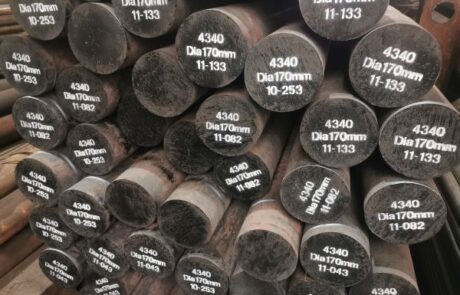
SAE 4340 Steel Bar | AISI 4340 Alloy Steel-ASTM A29


34CrNiMo6 Steel Round Bars With Full Size In Stock
1000+tons Full Size Stock For 4340 Steel Bright Bars

EN24+QT Steel | 817M40 | 34CrNiMo6 Round steel

30CrNiMo8 Alloy Steel | DIN 1.6580-EN10250

34CrNiMo6 Steel Bar | DIN 1.6582 Alloy Steel