AISI 4340 Steel Bar | ASTM 4340 Alloy Steel2026-01-30T10:02:02+08:00

AISI 4340 is defined as medium-carbon nickel-chromium-molybdenum alloy structural steel in the AISI/ASTM standard system.

AISI 4340 steel is renowned for its superior strength-toughness balance and high hardenability. Through quenching and tempering heat treatment, 4340 steel can achieve tensile strengths exceeding 1000 MPa while maintaining excellent impact toughness and fatigue resistance.

As a guarantee of high reliability,AISI 4340 steel can meet the most demanding application requirements in aerospace,automotive,and machinery industries.
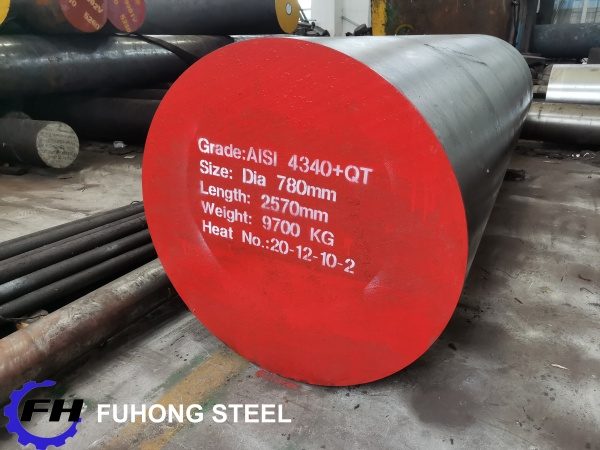
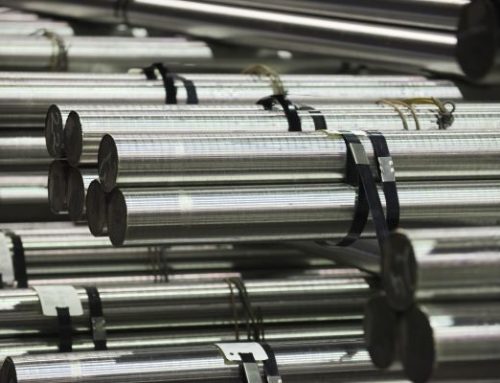
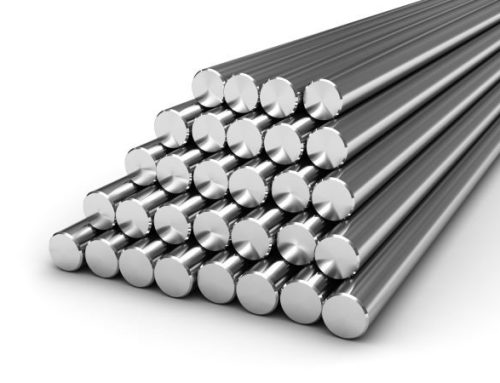
AISI 4340+QT Steel bar

AISI 4340 STEEL & EQUIVALENT GRADE CHEMICAL COMPOSITION

GradeCSiMnPSCrNiMo
43400.38-0.430.15-0.350.6-0.8≤0.035≤0.040.7-0.91.65-2.00.2-0.3
40CrNiMoA0.37-0.440.17-0.370.5-0.8≤0.025≤0.0250.6-0.91.25-1.650.15-0.25
36CrNiMo40.32-0.4≤0.40.5-0.8≤0.035≤0.0350.9-1.20.90-1.20.15-0.3
EN24/817M400.36-0.440.1-0.40.45-0.7≤0.035≤0.041.0-1.41.3-1.70.2-0.35
SNCM4390.36-0.430.15-0.350.6-0.9≤0.03≤0.030.6-1.01.6-2.00.15-0.3

AISI 4340 STEEL PHYSICAL PROPERTY

  • Density: 7.85 g/cm³
  • Melting point: approx. 1427°C
  • Elastic modulus: approx. 200-210GPa
  • Poisson’s ratio: 0.27-0.30
  • Thermal conductivity (20℃): 42 W/(m・K)
  • Specific heat capacity (20℃): 460 J/(kg・K)
  • Linear expansion coefficient (20~100℃): 11.3×10⁻⁶/℃

AISI 4340 STEEL FORGING

The core principles of forging AISI 4340 steel are: uniform heating, full deformation, slow cooling, and stress relief.

Due to the poor thermal conductivity of AISI 4340 steel, in order to avoid the risk of thermal stress cracking, stepped preheating (650~800℃) before forging can gradually and evenly increase the overall temperature.Initial forging temperature should be carried out between 1150℃-1200℃,and final forging temperature should be strictly controlled between 850-900°C.

During forging, multiple small deformations are performed to ensure that the core of the 4340 steel is fully deformed.To eliminate the original casting defects of 4340 steel, the forging ratio should be at least 4:1.

After forging, 4340 steel must be slowly cooled. For general forgings, direct furnace cooling is acceptable. However, for large or complex forgings, isothermal annealing is necessary to relieve internal stress.

For 4340 steel, forging is only the first step in obtaining its shape and preliminary microstructure. Subsequent heat treatment is what gives its superior properties.

AISI 4340 STEEL HEAT TREATMENT

Heat treatment is the “soul” of AISI 4340 steel’s performance. The core heat treatment process is quenching and tempering, supplemented by pre-treatment (annealing/normalizing) to eliminate defects from previous processes.

  • AISI 4340 Steel Preliminary Heat Treatment

The core of pre-heat treatment for 4340 steel is to eliminate residual stress from previous processes, refine grain size, and improve machinability, providing an ideal homogeneous microstructure for subsequent core quenching and tempering treatments. There are two main processes: Normalizing and Annealing.

The main purpose of normalizing 4340 steel is to refine the grains and optimize the microstructure. The normalizing temperature should be controlled at 880-900℃, and the steel should be held at that temperature for a sufficient time before air cooling.

Annealing 4340 steel focuses on softening the material and relieving internal stress. Annealing can be further divided into many processes, among which isothermal annealing achieves the best results.The annealing temperature is 830-860°C, held at that temperature, then rapidly cooled to 650-700°C, held at that temperature for a long time isothermally, and then cooled in the furnace to below 500°C before air cooling.

Both of the above processes can be considered as qualified and effective preparatory processes before the final heat treatment.

  • AISI 4340 Steel Final Heat Treatment:Quenching & Tempering

“Quenching + high-temperature tempering” is the core process that gives 4340 steel its superior properties. Through this process, 4340 steel can obtain a tempered sorbite structure with optimal comprehensive mechanical properties, achieving a perfect balance of high strength, high toughness, and good plasticity.

The quenching temperature of AISI 4340 steel is 840-870°C (full austenitization), and the preferred quenching medium is oil or polymer.After quenching, 4340 steel obtains a hard and brittle martensitic structure with a hardness of over 55 HRC and extremely high internal stress.

Principle: Tempering must be performed immediately after quenching!

Tempering temperature is the “master switch” for final performance. Practical experience shows that the optimal tempering temperature for AISI 4340 is 500~650℃, also known as high-temperature tempering. The tempering temperature can be adjusted as needed: lower temperatures result in higher hardness/strength, while higher temperatures provide better toughness.

AISI 4340+QT Steel Mechanical Property

Tensile Strength Yield StrengthElongationReduction of Area Impact Charpy-V Hardness
930-1100 Mpa≥740Mpa≥15%≥50%≥60J280-320HBW

AISI 4340 STEEL SUPPLY FORM & SIZE & TOLERANCE

Are you in need of high-quality 4340 steel for your projects? Look no further than FUHONG—we are committed to meeting and exceeding all your expectations. As one of China’s premier special steel suppliers, we focus on delivering reliable, industry-specific 4340 steel products tailored to diverse application needs. We guarantee uncompromising, consistent quality in our 4340 steel for every project you undertake.

Get in touch with us today to dive deeper into our product solutions and see how FUHONG can elevate your product quality and project success. For all your special steel project needs, trust FUHONG as your reliable partner.

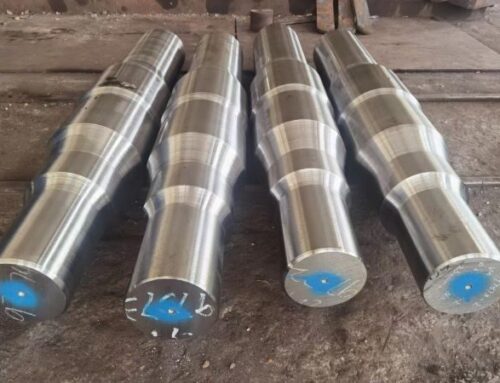
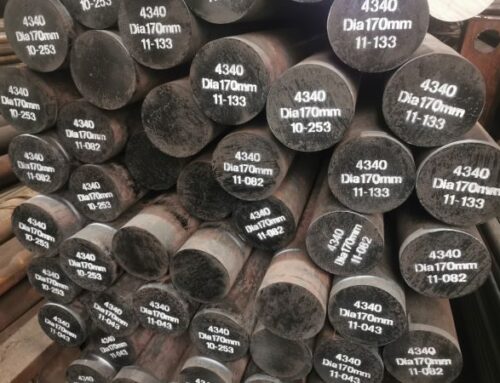
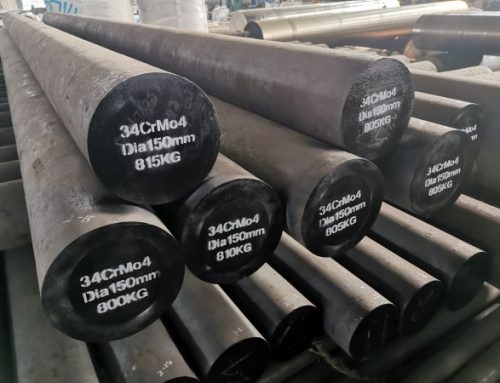
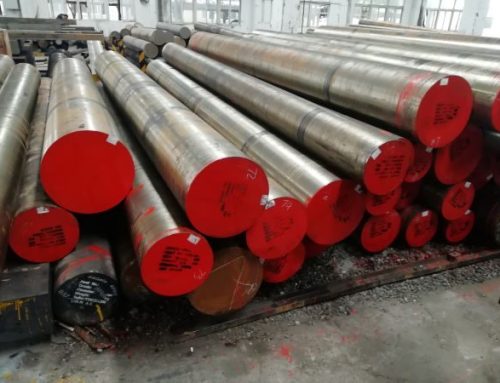
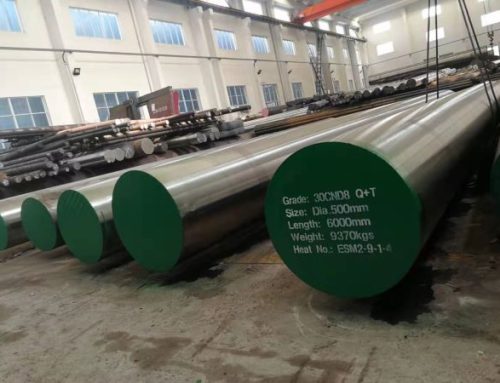
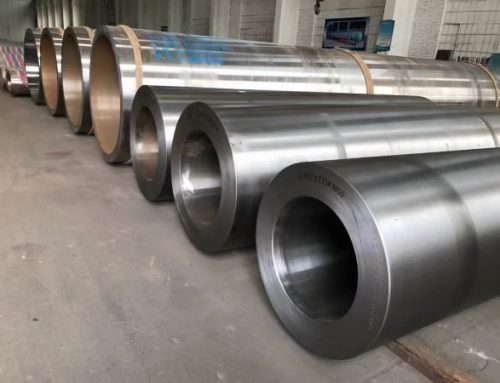
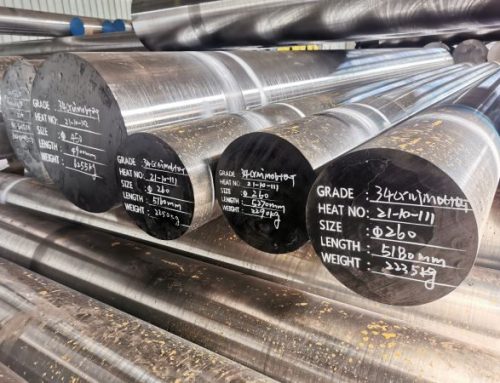
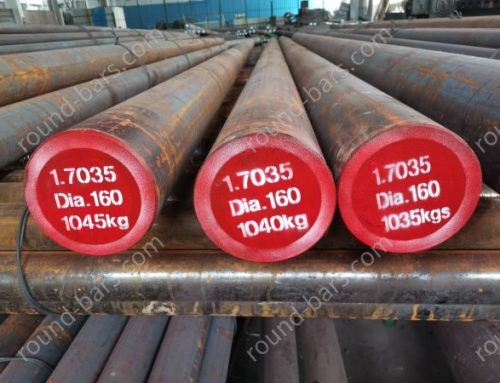
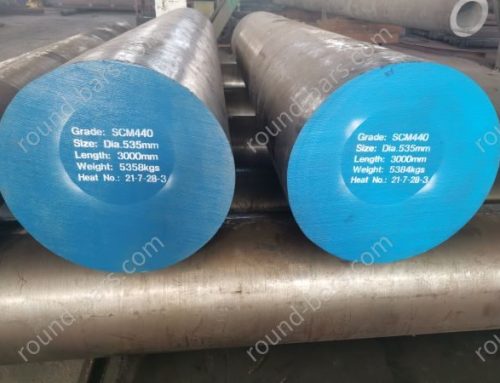
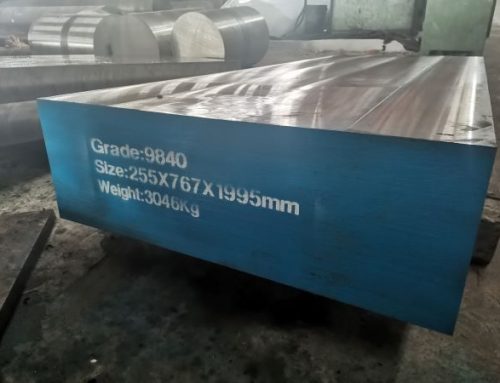
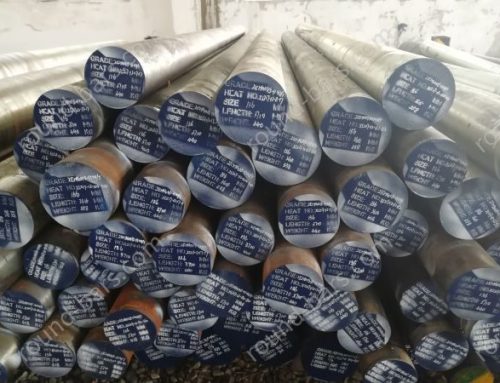
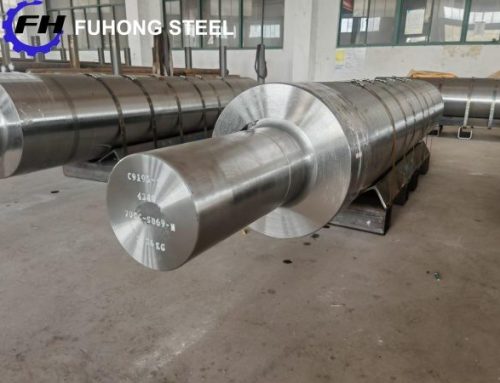
AISI 4340 steel Supplier,Stockist and Exporter,supplied with Round,Square,Flat,Block,and Shaft etc.

Hot Forged Round bar:Φ80-Φ1000mm

Hot Rolled  Round bar:Φ14-Φ280mm

Hot Forged Square bar: Max Thickness:500mm

Flat bar/Blcoks:Thickness :120-800mm ,Width:120-1500mm

Surface FinishBlack-Forged Black-Rolled Rough Turned   Cold DrawnPeeledPolishedGrinded
Tolerance0/+5mm0/+1mm0/+3mmBest H11Best H9Best H9Best h8

Heat treatment:Quenched and Tempered (+QT), Normalizing (+N), Annealing (+A)
Surface finish:Black / Rough turned / Peeled
FREQUENTLY ASKED QUESTIONS FOR AISI 4340 STEEL

What are the typical applications of 4340 steel?2026-07-27T13:52:48+08:00

AISI 4340 steel is widely used for highly stressed components operating under severe conditions. Typical applications include:

  • Aerospace: Landing gear components, structural fittings, engine crankshafts, and propeller shafts.
  • Automotive: Heavy-duty crankshafts, connecting rods, gear shafts, axle components, and high-strength fasteners.
  • Oil & Gas: Drill collars, downhole tools, wellhead components, and subsea equipment parts.
  • Heavy Machinery: Large gear shafts, spindles, couplings, forging dies, and power transmission components requiring high fatigue strength.
  • Defense & Energy: Pressure vessel components, turbine shafts, and structural parts subjected to impact and cyclic loading.
Is 4340 steel low alloy steel?2026-07-27T13:50:07+08:00

Relative to carbon steel, low alloy steel is based on carbon steel, and one or more alloying elements are intentionally added to improve properties such as strength, hardness, toughness, wear resistance, and hardenability. The total amount of alloying elements less than 5% is called low alloy steel.

It is no doubt that 4340 steel is a low-alloy steel that contains nickel, chromium, molybdenum, and manganese alloy elements. Due to its exceptional strength-to-toughness ratio, fatigue resistance, and deep hardening capability, it is widely used in aerospace, energy, heavy machinery, and defense industries.
Is 4340 steel easy to machine?2026-07-27T12:24:25+08:00

4340 steel is readily machinable especially in the annealed or normalized condition. Complex shapes will require annealing but simple shapes can be machined smoothly with a normalizing treatment.

For 4340 steel after quenching and tempering, the hardness increases to 28–36 HRC, increasing the difficulty of machining. However, carbide or coated tools can still be used to complete the machining effectively.
Is 4340 steel easy to weld?2026-07-27T12:12:56+08:00

4340 steel has poor-to-moderate weldability and is not classified as a free-welding steel.

4340 steel contains approximately 0.4% carbon along with nickel, chromium, and molybdenum, resulting in very strong hardenability. During the welding cooling process, the heat-affected zone is highly prone to forming a hard and brittle martensitic structure, which can easily lead to cold cracking.

Therefore, it is essential to reduce welding risks through preheating (250–350°C), using low-hydrogen welding electrodes, and performing immediate post-weld tempering. Welding in the fully hardened condition is generally not recommended.

What is the difference between 4340 and 4145 steel?2026-07-27T11:44:57+08:00
Both 4340 and 4145 belong to the alloy steel family, but 4340 contains a significant amount of nickel (1.65–2.00%) while 4145 contains none. This leads to several key differences:
  • Hardenability: 4340 has substantially better hardenability and can fully harden in much thicker sections via oil quenching.
  • Strength & Toughness: 4340 delivers higher tensile and yield strength while maintaining superior toughness, especially at low temperatures.
  • Applications: 4145 serves general-purpose high-strength industrial parts, whereas 4340 is specified for ultra-high-strength components under severe conditions such as aerospace landing gear, heavy-duty shafts, and oil & gas drill components.
  • Cost: Due to its nickel content, 4340 carries higher raw material and processing costs.
Which is harder, 4140 steel or 4340 steel?2026-01-19T18:47:45+08:00

Under the same quenching and tempering process, 4340 can achieve a higher ultimate hardness, meaning 4340 steel is harder than 4140 steel.

However, in practical applications, material selection is not simply a matter of “which is harder,” but rather should consider:

While meeting the necessary hardness/strength requirements, does the material also need higher toughness to withstand impacts? Does it need better fatigue performance to ensure lifespan? Furthermore, practical constraints such as cost, processing difficulty, and cross-sectional dimensions must also be considered.

What is the low-temperature toughness of 4340 steel?2026-01-19T12:56:44+08:00

4340 steel exhibits excellent low-temperature toughness.

4340 steel, through quenching and tempering, achieves an excellent balance of strength and toughness. Benefiting from its low low-temperature brittle transition temperature, it maintains good impact resistance even at -40°C, effectively preventing low-temperature brittle fracture. This is mainly due to the synergistic effect of the nickel-chromium-molybdenum alloy system, making its low-temperature toughness significantly superior to nickel-free medium-carbon alloy steels such as 4140 steel.

By further refining the grain size or optimizing the heat treatment process, 4340 steel can also withstand even lower service temperatures, meeting the stringent requirements of low-temperature, heavy-duty mechanical components.Learn More

Is 4340 steel suitable for making gears?2026-01-18T12:08:37+08:00

4340 steel is suitable for making gears, especially heavy-duty gears that require high strength and toughness.

After quenching and tempering, 4340 steel exhibits uniform overall properties and excellent core strength and toughness, enabling it to withstand high loads, impact loads, and fatigue stresses, perfectly matching the core performance requirements of gears.

Furthermore, surface hardening processes can be combined to address the insufficient surface wear resistance of 4340 steel, fully meeting the requirements for gear applications.

4340 steel is highly suitable for core gears in heavy machinery, wind power, and aerospace transmission systems, maintaining stable performance even at low temperatures.

What is 4340M steel?2026-01-17T15:39:17+08:00

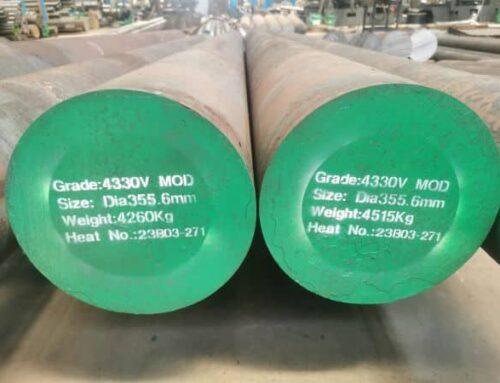
4340M steel which is modified from AISI 4340 Steel,also known as 300M.

GradeCSiMnCrNiMoV
43400.38-0.430.15-0.35 0.6-0.90.7-0.91.65-2.00.2-0.3
/
4340M0.38-0.431.45-1.800.6-0.90.7-0.91.65-2.00.3-0.5
0.05-0.1

As a low-alloy ultra-high-strength steel, 4340M steel, after quenching and tempering, can achieve a tensile strength exceeding 1860 MPa.

Mechanical Performance Characteristics

  • High Strength
  • High Lateral Plasticity
  • High Fracture Toughness
  • Excellent Fatigue Performance
  • Good Corrosion Resistance

These properties are extremely beneficial for the long-term use of aircraft landing gear and other aircraft components, which is the main reason for the widespread application of 4340M steel in the aircraft industry.

Go to Top