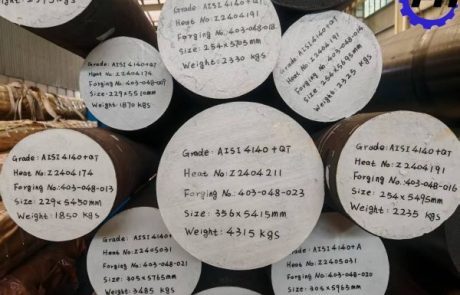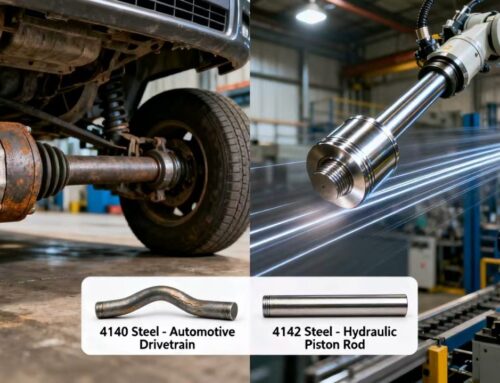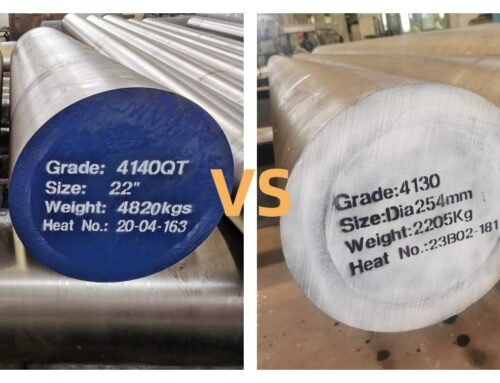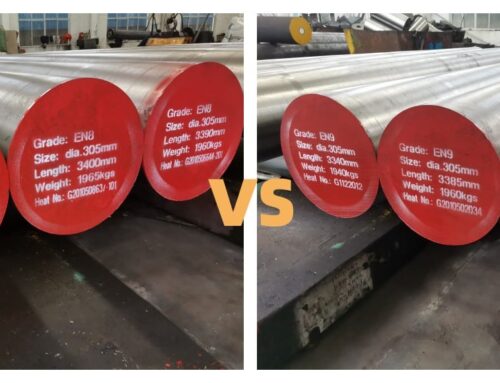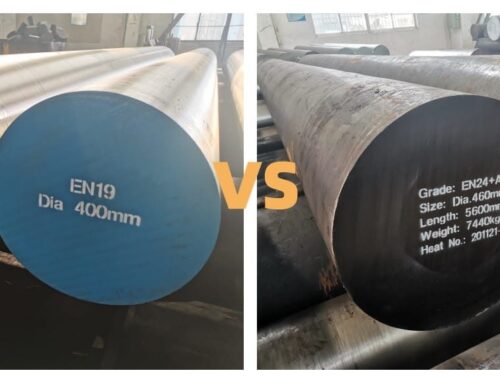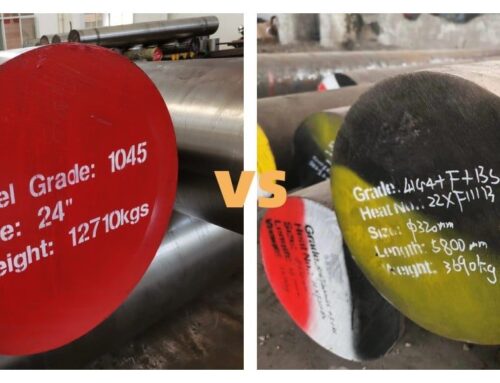
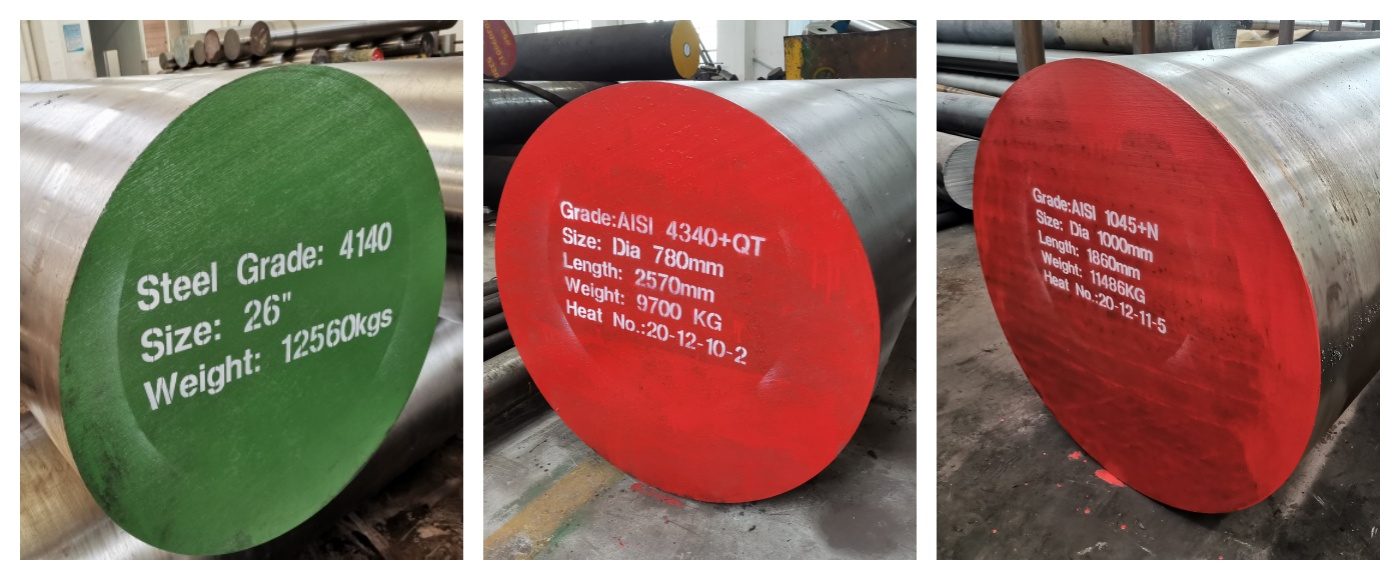
Most people are familiar with 1045, 4140, and 4340 steel, as they are widely used in various industries. However, choosing the right one can sometimes be confusing. This article aims to help clarify the issue, allowing you to select the right steel without confusion.
Basic Information Introduction
1045 steel:Average carbon content 0.45%, basic carbon steel
4140 steel:Average carbon content 0.40%, Chromium-molybdenum alloy steel
4340 steel:Average carbon content 0.40%, Chromium-nickel-molybdenum alloy steel
Differences in Chemical Composition in ASTM A29
| Grade | C | Si | Mn | Cr | Mo | Ni |
| 1045 | 0.43-0.50 | 0.15-0.35 | 0.6-0.9 | - | - | - |
| 4140 | 0.38-0.43 | 0.15-0.35 | 0.75-1.0 | 0.8-1.1 | 0.15-0.25 | - |
| 4340 | 0.38-0.43 | 0.15-0.35 | 0.6-0.8 | 0.7-0.9 | 0.2-0.3 | 1.65-2.0 |
As we can see from the table above, alloying elements are the main difference between the three. 4140 steel is made by adding chromium and molybdenum alloys to 1045 steel, while nickel is the key element that distinguishes 4340 steel from 4140 steel.
Which one is More Expensive?
In addition, the different alloying elements will further affect the price of raw materials. We can naturally know from this that the lowest price is 1045 steel and the highest is 4340 steel.This might not be very intuitive, so we can roughly represent it using relative price relationships.
| Grade | 1045 steel | 4140 steel | 4340 steel |
| Relative price | x 1.0 | x 1.2-1.4 | x 1.8-2.0 |
If subsequent processing and heat treatment factors are taken into account, the price difference will be even greater.
You Get What You Pay For: Performance
Having covered the basic information, let’s now talk about the most important issue: performance.
Mechanical Property Comparison
| Property | 1045 steel | 4140 steel | 4340 steel |
| Tensile strength,MPa | 700-850 | 850-1000 | 930-1080 |
| Yield strength,MPa | 450-600 | 650-800 | 750-900 |
| Elongation,% | 15-17 | 17-20 | 19-22 |
| Area reduction,% | 40-50 | 45-55 | 55-65 |
| Hardness,HBW | 200-300 | 280-320 | 280-320 |
| Room temperature toughness | 1045<4140<4340 | ||
| Low temperature toughness | 1045<4140<4340 | ||
The data in the table above shows that the strength and toughness ranking is 4340 > 4140 > 1045. The excellent performance of 4340 makes us realize that although it’s expensive, it’s truly worth it.
Process Performance Comparison
Machining Difficulty: In the annealed state, none of the three grades have high hardness, making them relatively easy to machine. In the quenched and tempered state, alloying elements increase work hardening tendency and tool wear, making 4340 the most difficult to machine, followed by 4140, with 1045 being the easiest.
Welding Difficulty: 1045, 4140, and 4340 are all difficult to weld. If a comparison must be made, under strict control of the welding process, 1045 is relatively easy to weld, followed by 4140, with 4340 being the most difficult.
Hardenability: 1045 steel has the worst hardenability and can hardly be effectively hardened in large sections. 4140 steel is next, and can harden medium to large sections. 4340 steel is the best, and can harden extremely large sections, which is crucial for large forgings and parts. For more information on hardenability, please click [here].
Heat Treatability:All three grades of 1045, 4140, and 4340 are heat-treatable. The superior performance of 4140 and 4340 depends entirely on the correct heat treatment process. While 1045 can also be heat-treated, the performance improvement is limited.
How to Choose the Right One?
FUHONG’s Suggestions For Choose 1045,4140 and 4340 steel
The choice of steel ultimately depends on the specific application requirements, cost budget, and processing capabilities.4140 is the mainstream alloy steel. 4340 is the “high-end” choice, offering excellent performance but with high cost/processing requirements. 1045 is the economical, foundational choice.
- 1045 steel: Cost-sensitive, general-purpose structural parts with low performance requirements.
- 4140 steel: The most widely used chromium-molybdenum steel, offering a balance of strength, toughness, cost, and processability.
- 4340 steel: High-end or critical applications requiring extremely high strength, excellent toughness (especially at low temperatures and impact), and high hardenability.
CHOOSE FUHONG STEEL FOR YOUR STEEL NEEDS
3000+ tons Inventory For 4140 Hot Rolled Round Steel Bar
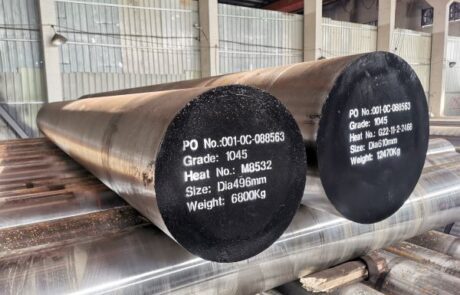
SAE 1045 Steel Bar | AISI 1045 Carbon Steel-ASTM A29
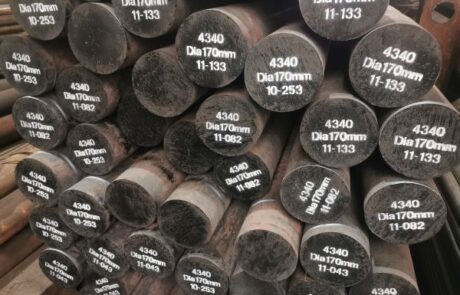
SAE 4340 Steel Bar | AISI 4340 Alloy Steel-ASTM A29
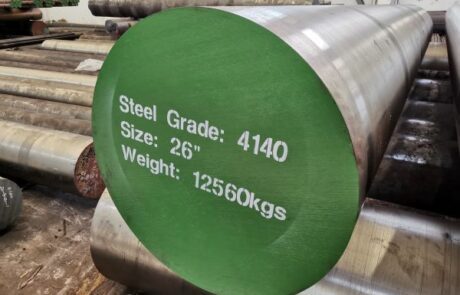
SAE 4140 Steel Bar | AISI 4140 Alloy Steel-ASTM A29
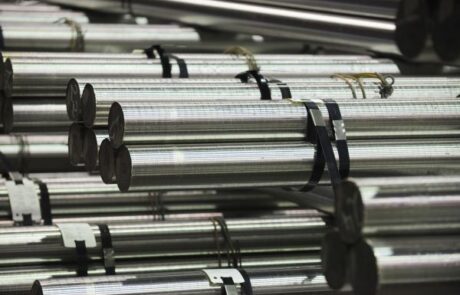
1000+tons Full Size Stock For 4340 Steel Bright Bars
One-Stop Solution For 4140 Steel Bright Bar
AISI 1045 Steel Bar | ASTM 1045 Carbon Steel

AISI 4340 Steel Bar | ASTM 4340 Alloy Steel