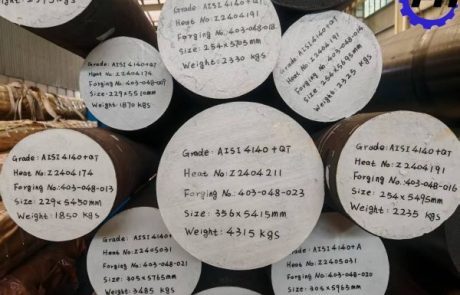

Drill pipe joints bear the brunt of the most severe wear on the drill string. Torque, fatigue cycles, and abrasive wear all act on the joints, making the steel used for them just as crucial as the drill pipe itself.
For most rotary drill strings, this steel is AISI 4145H: a medium-carbon chromium-molybdenum alloy steel with high hardenability. Due to its excellent strength, wear resistance, and fatigue resistance, it is widely used in drill pipes for oil and gas drilling equipment.
This article covers what 4145H is, its composition and mechanical properties, the heat treatment that turns it into drill-stem material,and where it used.
What is 4145H Steel?
AISI 4145H is a chromium-molybdenum alloy steel with a carbon content of 0.42% to 0.49%, higher than 4140 steel. The higher carbon content means greater strength under the same quenching and tempering conditions.
| Grade | C | Si | Mn | P | S | Cr | Mo |
| 4145H | 0.42-0.49 | 0.15-0.35 | 0.65-1.1 | ≤0.035 | ≤0.04 | 0.75-1.2 | 0.15-0.25 |
The suffix “H” is often overlooked,but it is the part that makes 4145H work in drill pipe. H stands for hardenability.The steel is produced to hardenability bands under ASTM A304, so each heat is required to respond to heat treatment within a defined range, verified by Jominy end-quench testing. For a drill collar with a 5- or 6-inch wall,this consistency determines whether the parts can be hardened uniformly.
In oilfields, 4145H steel is typically ordered as “4145H Mod.” “Modified” means the steel mill has stricter controls on sulfur, phosphorus, and residues than with standard AISI steel.Most tool joints, drill collars, and heavyweight drill pipe components are made from this material in the quenched and tempered condition,conforming to API Spec 7-1 standards.
Heat Treatment: What Makes 4145H Work
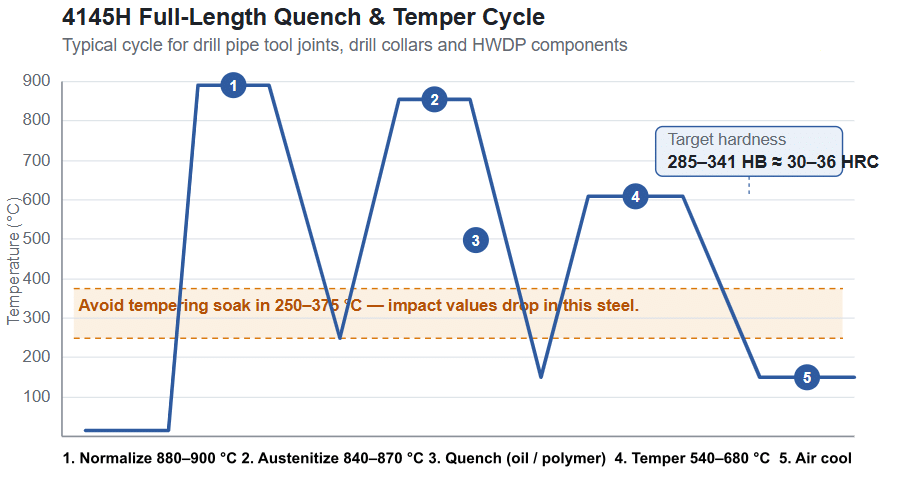
4145H is not a material used directly after hot forming. Its properties stem from a controlled quenching and tempering process:
1. Normalize at 880–900 °C to refine the grain after forging and prepare the structure for hardening.
2. Austenitize at 840–870 °C and hold long enough to soak the full section.
3.Quench in oil or polymer to form martensite.Polymers are commonly used in long bars where distortion control matters.
4. Temper at 540–680 °C, holding for approximately 2 hours per 25 mm section, then air cool. The tempering temperature is set to achieve a hardness in the range of 285–341 HB.
5. Tool joints and collars are often double-tempered. Avoid tempering in the 250–375 °C range: in this steel it can pull impact values down.
Because hardenability is guaranteed, 4145H steel from the same batch can undergo the same cyclic heating and obtain the same hardness test results. If Jominy data cannot be provided, the material should be considered 4145 steel without the H-band,which is not the same product.
Mechanical Properties:
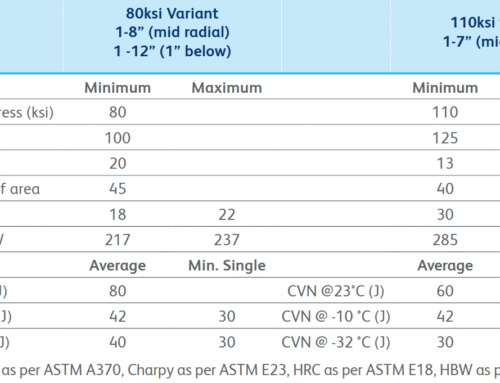
The table below lists the values usually specified for 4145H drill-stem components after full-length quench and tempering.It is important to note that API Spec 7-1 specifies a minimum value that decreases as the outer diameter increases: the yield strength requirements for 4-inch drill pipes and 11-inch drill pipes cannot be the same, because the overall hardness of the quenched material will be higher at larger cross-sections.
| Property | Typical Q&T value |
| Hardness | 285–341 HB (about 30–36 HRC) |
| Yield strength (0.2% offset) | 758–827 MPa (110–120 ksi) |
| Tensile strength | 827–965 MPa (120–140 ksi) |
| Elongation (2 in / 50 mm) | 13–18% minimum |
| Charpy V-notch impact | 54 J (40 ft·lb) minimum, commonly specified |
Where is 4145H Used in Drill String?
4145H is used in drill string components that require high load bearing, such as joints or thick-walled sections:
Drill pipe joints (Tool Joints):The threaded connections friction-welded to both ends of the pipe body (API 5DP E75–S135 pipe).They withstand make-up torque, resist fatigue, and take hardbanding wear. 4145H Mod. in the 285–341 HB condition is the standard choice.
Drill collars:Thick-walled tubing used to apply pressure to drill bits. Full-length quenched and tempered to 285–341 HB, conforming to API Spec 7-1.
Heavyweight drill pipe (HWDP):Joints and center sections are manufactured to API Spec 7-1.
Kelly bars (square or hexagonal), drill-stem subs, crossovers, and stabilizer bodies.
4145H vs. 4140, 4340, and 4130
If you are sourcing steel for drill pipe components, these four steels cover most of the discussion.
| 4145H | 4140 | 4340 | 4130 | |
| Carbon range | 0.42–0.49% | 0.38–0.43% | 0.38–0.43% | 0.28–0.33% |
| Alloy base | Cr–Mo with H-band | Cr–Mo | Ni–Cr–Mo | Cr–Mo |
| Strength after Q&T | High (110–120 ksi yield class) | Medium | High, with better toughness | Low–medium |
| Toughness | Good | Good | Best | Good |
| Weldability | Fair; PWHT required | Fair | Fair; preheat and PWHT | Best |
| Typical drill-string use | Tool joints, drill collars, HWDP, kelly | Subs, pup joints, lower-strength connections | Premium drill collars, stabilizers, critical subs | Hollow bar and light components; applications favoring welding |
| Relative cost | Medium | Low–medium | High | Low–medium |
4145H is the workhorse for high-strength drill-stem parts, 4340 is the upgrade when toughness at high strength is the priority, 4140 handles lower-strength connections and subs, and 4130 is the choice when weldability or formability matters more than peak strength.
These are typical comparisons, not guarantees. The right grade for your part depends on outside diameter, strength class, and service environment.
Need 4145H steel for your Drill String?
√ ISO 9001 Certified √ MTR Included √ Global Shipping √ Custom Cutting √ Technical Support
Related 41XX Series Products By Fuhong Steel
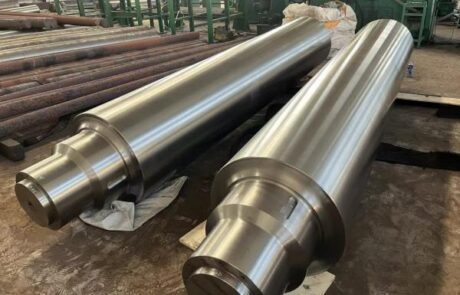
AISI 4130+QT 75K For Wellhead Device & Christmas Tree Equipment
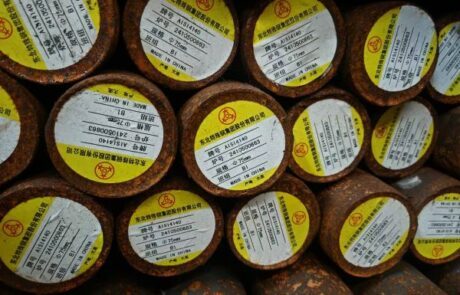
3000+ tons Inventory For 4140 Hot Rolled Round Steel Bar
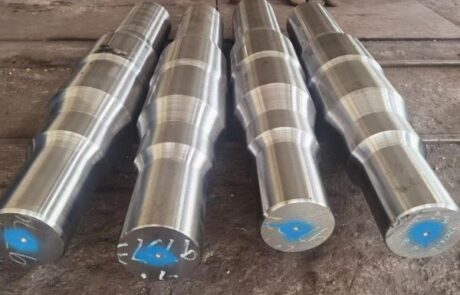
SAE 4130 Steel Bar | AISI 4130 Alloy Steel-ASTM A29
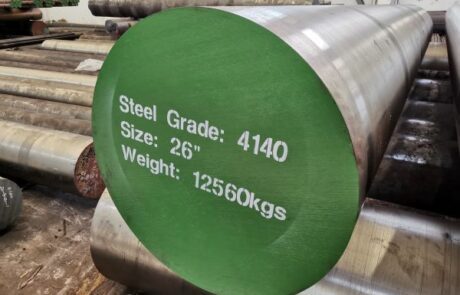
SAE 4140 Steel Bar | AISI 4140 Alloy Steel-ASTM A29

One-Stop Solution For 4140 Steel Bright Bar
SCM440 | SCM430 Alloy Steel-JIS G4105

AISI 4150 Steel | 50CrMo4 | DIN 1.7228 Alloy Steel


EN 42CrMo4 Steel |42CrMoS4| DIN1.7225

AISI 4130 Steel Bar | ASTM 4130 Alloy Steel