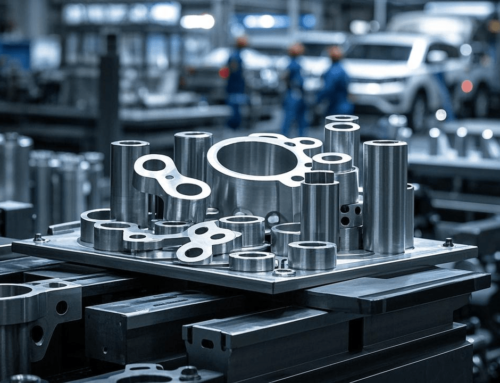

30CrNiMo8 (material number 1.6580) is a medium-carbon chromium-nickel-molybdenum alloy steel under the European standard system. As a classic quenched and tempered steel, 30CrNiMo8 is widely used in key components under high load and high impact in industry due to its excellent strength, toughness, and hardenability.
What are the performance of 30CrNiMo8 steel? What are its specific applications? Let’s find out.
30CrNiMo8 Steel:Core Performance
When discussing the application of 30CrNiMo steel, we must first understand its core performance advantages, as this is the foundation for its application.
What are the Mechanical Properties of 30CrNiMo8 Steel?
There is no doubt that quenching and tempering brings out the maximum potential of 30CrNiMo8 steel. The mechanical properties here refer to its properties in the quenched and tempered state.
| Tensile Strength | Yield Strength | Elongation | Reduction of Area | Impact Charpy-V |
| 1100–1300 MPa | ≥900Mpa | ≥10% | ≥45% | ≥35 J |
After quenching and tempering, 30CrNiMo8 steel exhibits excellent strength properties. For large cross-sections exceeding 100 mm, the core still maintains a high strength of 900–1100 MPa, a level difficult to achieve with ordinary alloy steels.
30CrNiMo8 also demonstrates excellent plasticity and toughness, maintaining good impact toughness, especially at low temperatures.
Furthermore, despite this high strength, 30CrNiMo8 retains excellent plasticity and toughness, especially maintaining good impact toughness at low temperatures.
30CrNiMo8 Steel Heat treatment Characteristics
30CrNiMo8 is a typical quenched and tempered steel, and its properties are highly dependent on heat treatment. So what are its heat treatment characteristics?
Excellent hardenability is the core heat treatment characteristic of 30CrNiMo8. It directly determines that the difference in hardness and strength between the core and surface of 30CrNiMo8 steel in large cross-section workpieces is much smaller than that of ordinary alloy steel, ensuring the uniformity and stability of the overall load-bearing capacity.
Furthermore, due to the synergistic effect of molybdenum and chromium, the tempering softening resistance of 30CrNiMo8 steel is significantly improved. At the same tempering temperature, the hardness and strength of 30CrNiMo8 are 10%~15% higher than those of 4140. Therefore, to achieve the same strength level, a higher tempering temperature can be used to obtain better toughness and fatigue resistance.
30CrNiMo8 Steel: Two Core Applications In Industry
Why do these industry applications use 30CrNiMo8 steel? To understand this, we must first understand its performance characteristics, which is what we emphasized above.
The main applications of 30CrNiMo8 can be more concisely summarized as: core components requiring ultra-large cross-sections and bearing complex dynamic loads.
Core Application One:Wind Power
This is currently the largest and most representative field for the use of 30CrNiMo8, perfectly meeting the core requirements of wind power equipment: “large size, long life, alternating load, and low temperature operation”.
Core applications: Wind turbine main shafts, core components of wind turbine gearboxes.
Core Application Two:Heavy Machinery
This is the most widespread core application of this steel grade. 30CrNiMo8 steel is mainly used for core transmission and load-bearing components in various heavy industrial equipment that withstand heavy loads, strong impacts, and continuous operation.
Core applications:Heavy-duty gears, Transmission shafts, crankshafts, and connecting rods.
In addition to the two core applications mentioned above, it is also widely used in critical components in specialized fields with extremely high reliability requirements:
- Energy Equipment: High-voltage fasteners for nuclear power plants, generator rotor components;
- Petrochemical Industry: Key load-bearing components for high-pressure vessels, core parts for oil drilling and production equipment, capable of withstanding high pressure and fluctuating loads;
- High-end Fasteners and Molds: Heavy-duty high-strength bolts/studs, large plastic mold frames;
- Aerospace and Military Industry: Key components with high specific strength requirements, such as aircraft landing gear structural components.
30CrNiMo8 Steel vs Alternative Materials
- 34CrNiMo6: Higher strength, but slightly lower toughness,suitable for high-strength parts with slightly smaller cross-sections
- 42CrMo4: Lower cost, but weaker low-temperature toughness and hardenability,suitable for parts with medium cross-sections.
- AISI 4340: Similar composition, but better high-temperature resistance, suitable for aerospace.
30CrNiMo8 steel has become an ideal choice for heavy-duty, high-reliability components due to its high strength, good toughness and process adaptability, especially for scenarios that require fatigue resistance, wear resistance and certain corrosion resistance. When designing, it is necessary to optimize the heat treatment and surface treatment processes according to the specific working conditions to give full play to its performance potential.
Related 30CrNiMo8 Steel Products By FUHONG
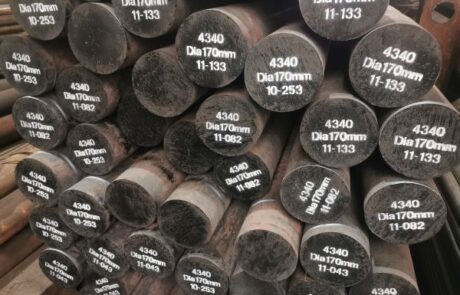
SAE 4340 Steel Bar | AISI 4340 Alloy Steel-ASTM A29


34CrNiMo6 Steel Round Bars With Full Size In Stock
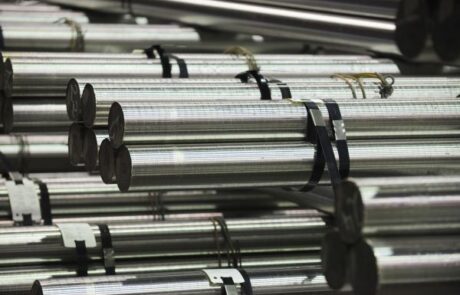
1000+tons Full Size Stock For 4340 Steel Bright Bars

EN24+QT Steel | 817M40 | 34CrNiMo6 Round steel

30CrNiMo8 Alloy Steel | DIN 1.6580-EN10250

34CrNiMo6 Steel Bar | DIN 1.6582 Alloy Steel