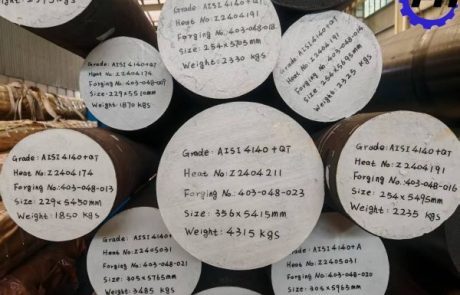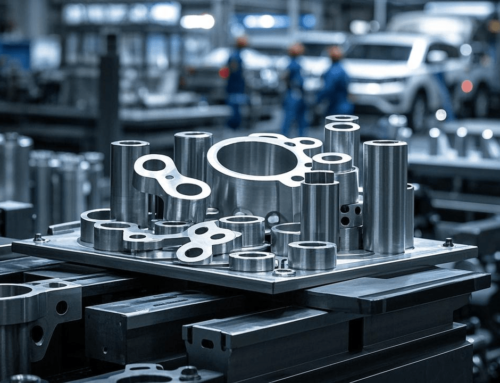

4145 steel, a medium-carbon chromium-molybdenum alloy steel, is widely used in key areas such as oil drill collars and heavy-duty shaft parts due to its excellent strength, wear resistance, and fatigue resistance.
However, balancing strength and toughness is a major challenge for 4145 steel. Next, we will discuss how to optimize and improve the performance of 4145 steel through precise heat treatment processes.
4145 Steel:Raw Material Composition and Metallurgy
Impurities, inclusions, gases, and compositional segregation directly disrupt the integrity of the 4145 steel matrix. If these factors are not well controlled, even the best heat treatment cannot improve its performance.
| Grade | C | Si | Mn | P | S | Cr | Mo |
| 4145 | 0.43-0.48 | 0.15-0.35 | 0.75-1.0 | ≤0.035 | ≤0.04 | 0.8-1.1 | 0.15-0.25 |
For general applications, the harmful element phosphorus content in 4145 steel should be less than 0.020%, and sulfur less than 0.015%. For applications under particularly extreme conditions, phosphorus should be less than 0.015%, and sulfur less than 0.010%.
The hydrogen content of 4145 steel should be strictly controlled below 2 ppm. Simultaneously, the purity of the steel should be maximized to reduce large-sized non-metallic inclusions such as oxides and sulfides.
Furthermore, the original banded structure and carbide segregation can also cause uneven performance in 4145 steel, which can be improved through high-temperature diffusion annealing.
4145 Steel:Heat Treatment Process
4145 Steel Preparatory Heat Treatment
Hot-worked 4145 steel exhibits uneven grain structure, banded structure, and residual stress. Therefore, proper pre-heat treatment is essential; otherwise, the performance of the 4145 steel cannot be improved after subsequent quenching and tempering.
| PROCESS | TEMPERATURE RANGE | TIME AT TEMPERATURE | COOLING |
| Normalizing | 860-890℃ | 0.5hr/inch of metal thickness | Air cool to room temperature |
After normalizing, the grain size of 4145 steel is refined, and banded and network carbide structures are eliminated.
4145 steel Quenching & Tempering Process
Quenching followed by tempering is the most reliable way to obtain comprehensive mechanical properties for 4145 steel, and it is especially suitable for applications that require a balance between strength and toughness.
- Quenching temperature: 850-870℃ is recommended. Too high temperature will lead to grain coarsening, while too low temperature will lead to incomplete austenitization.
- Holding time: calculated according to thickness (1.5-2 minutes/mm) to ensure uniform composition.
- Cooling medium:Oil is for suitable for small and medium-sized parts, with moderate cooling rate to reduce the risk of deformation and cracking.Water-based polymer is used for large drill collars (diameter > 200mm) to improve cooling uniformity.
- Tempering temperature: 550~650℃.To achieve a more stable structure, double tempering is strongly recommended.
After quenching and tempering, 4145 steel ultimately obtains a tempered sorbitic microstructure. This microstructure consists of fine-grained carbides dispersed in a ferrite matrix, which effectively hinders dislocation movement and ensures strength. At the same time, the matrix has good plasticity and high resistance to crack propagation. Therefore, the strength and toughness can achieve an optimal balance.
Related 4145 Steel Product By FUHONG
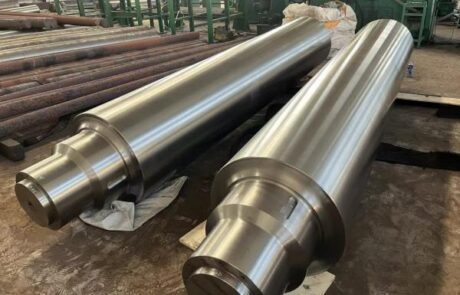
AISI 4130+QT 75K For Wellhead Device & Christmas Tree Equipment
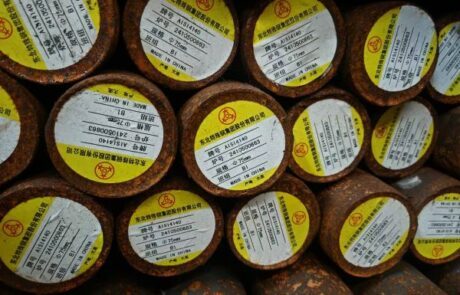
3000+ tons Inventory For 4140 Hot Rolled Round Steel Bar
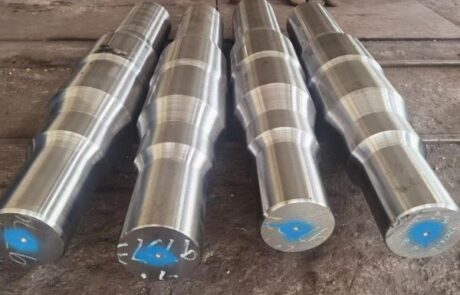
SAE 4130 Steel Bar | AISI 4130 Alloy Steel-ASTM A29
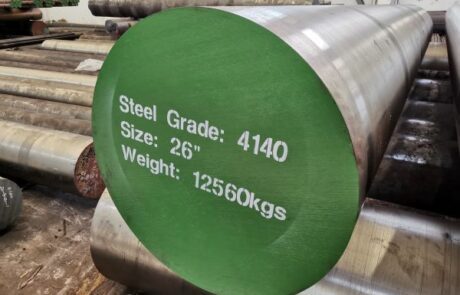
SAE 4140 Steel Bar | AISI 4140 Alloy Steel-ASTM A29

One-Stop Solution For 4140 Steel Bright Bar
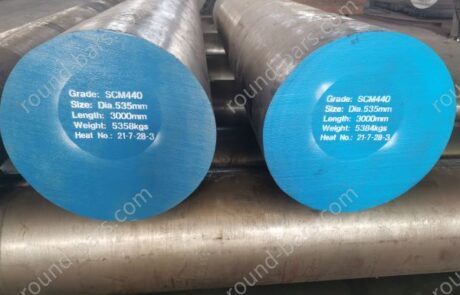
SCM440 | SCM430 Alloy Steel-JIS G4105

AISI 4150 Steel | 50CrMo4 | DIN 1.7228 Alloy Steel


EN 42CrMo4 Steel |42CrMoS4| DIN1.7225

AISI 4130 Steel Bar | ASTM 4130 Alloy Steel