Ask any design engineer where 8620 steel is used, and they’ll answer without hesitation: it’s used in almost half the factories—gearboxes, axles, camshafts, pins, bearings, and so on. This steel doesn’t seem particularly unusual. It’s a low-carbon nickel-chromium-molybdenum steel that undergoes carburizing to make its surface hard and wear-resistant, while its interior is tough and impact-resistant.
These two properties determine its wide range of applications. Regardless of the industry, all applications ultimately come back to the same question: does the part need to be both wear-resistant and able to withstand internal impacts?
This is where 8620 steel truly shines.
8620 Steel Properties Overview
8620 steel (SAE/AISI 8620) is a nickel-chromium-molybdenum alloy carburizing steel known for its excellent surface hardening ability and core toughness. Its characteristics make it widely used in components that need to withstand both surface wear and internal impact loads.
Chemical composition:
- Carbon (C): 0.18-0.23% -Low carbon core ensures toughness
- Nickel (Ni): 0.40-0.70% -Improves toughness and hardenability
- Chromium (Cr): 0.40-0.60% -Enhances surface hardening ability
- Molybdenum (Mo): 0.15-0.25% -Refines grains and improves high temperature performance
- Manganese (Mn): 0.70-0.90% -Deoxidation and solid solution strengthening
Mechanical property:
- Surface hardness: HRC 58-62
- Core hardness: HRC 28-35
- Tensile strength: 850-1000 MPa
- Yield strength: 650-800 MPa
- Impact energy (-20℃): ≥40 J
8620 Steel: Five Core Applications
1.Automotive and on-road powertrain
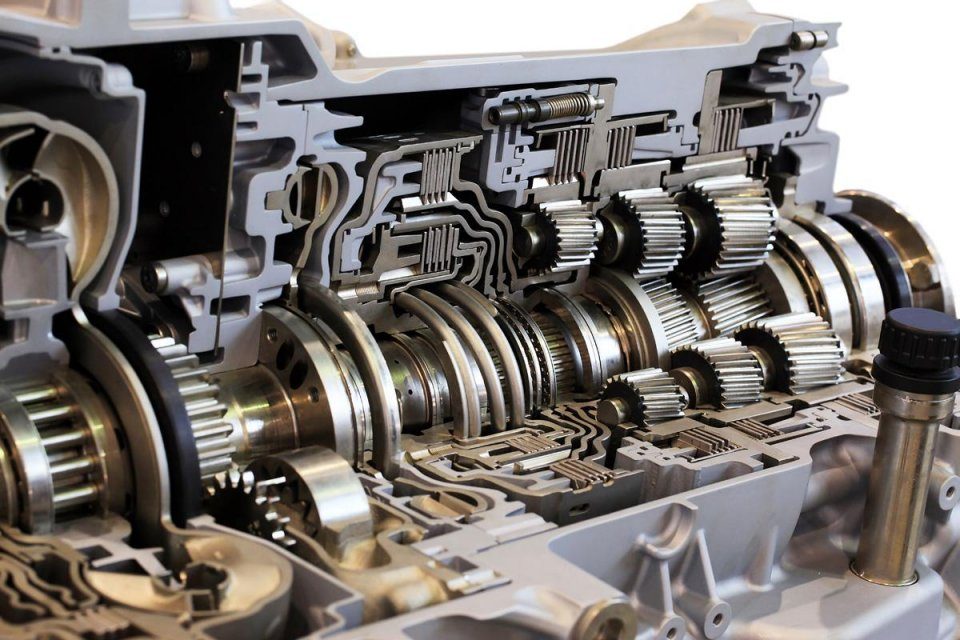
The largest single market for 8620 is vehicle powertrain systems.Gearbox gears, differential gears, and pinions, as well as the gear shafts that carry them, are typical carburized parts: the tooth surfaces wear against each other under rolling and sliding contact, while the root of each tooth withstands bending and torque peaks.
Applications extend far beyond this. Camshafts and drive shafts, steering components, clutch hubs, and universal joint cross shafts all appear in the 8620 specification.They all share the characteristics of sliding or rolling contact and impact, which is precisely what a robust shell encasing a tough core can withstand.
2.Off-Highway, Mining, and Construction
Construction and mining equipment uses the same type of gear, but on a larger scale and under harsher conditions.Final-drive pinions, spiral bevel gear sets, and heavy-duty gearboxes in excavators and haul trucks are typically made of 8620 steel.Large carburized bearings in these machines also rely on this steel, as the impact loads on bearing rings in mining applications are sufficient to crack fully hardened parts.
Kingpins and heavy bushings in these machines round out the picture: concentrated loads, dirt, poor lubrication, and a hard surface that has to keep sliding.
3.Agricultural machinery
Tractors and implements share the same genetic makeup as automobiles in their drivetrains, but they also face the challenges of dust, mud, and prolonged cycles of idling to full load. 8620 steel is commonly used for gearbox gears, power take-off (PTO) components, and pins and bushings in connecting rods and hook hardware.
In this environment, wear resistance determines the machine’s uptime, while core toughness ensures the implement survives high-speed impacts with rocks or tree stumps.
4.Oil & Gas and Energy
Downhole tools and drilling equipment come into contact with hard particles, high contact pressures, and poorly lubricated environments, making carburized surfaces particularly important. 8620 steel is commonly used for these components, and higher alloy grades are used for high-load conditions.
In the energy sector, wind turbine gearboxes and large carburized bearings utilize steel grades such as 8620 and 4320 in various markets.For bearing rings that must withstand multi-year variations and impact loads, the hard-case/tough-core balance is the same logic as in the automotive industry, only on a larger scale.
5.Industrial Machinery and Material Handling
Besides vehicles, this steel grade is widely used in general machinery: reducers, sprockets, splined shafts, clutch components, bushings, and gauges. These components withstand repeated sliding contact and occasional overloads,and they get machined first, hardened last, which controls production costs.
Fasteners and high-strength bolting with a hardened case also belong to this category.
Comparison:8620 vs Other Carburizing Steels
| Materials | Carburized layer hardness (HRC) | Core toughness (impact energy) | Cost (relative to 8620) | Typical application scenarios |
| 8620 | 58-62 | ≥40 J (-20℃) | 1.0x | Automobile gears, heavy-duty transmission parts |
| 20MnCr5 | 58-60 | ≥35 J (-20℃) | 0.7x | Economical gearbox gears |
| 9310 | 60-63 | ≥30 J (-20℃) | 2.5x | Aircraft engine gears |
| 16MnCr5 | 56-58 | ≥45 J (-20℃) | 0.8x | Agricultural machinery gears, general parts |
Where 8620 Steel Doesn’t Fit
It’s necessary to point out the limitations of 8620, as they do exist.
8620 has virtually no corrosion resistance. If parts are exposed to the outdoors or in contact with water for extended periods, electroplating or using other steel grades is necessary. At high temperatures, the surface hardness of 8620 decreases, making it unsuitable for high-temperature applications.
Furthermore, 8620 cannot be integrally hardened like 4140 or 4340 to achieve the same core strength.For large shafts subjected to significant bending loads, 4140 and 4340 are better choices.
There are also high-alloy carburizing steel grades, such as 4320 and 9310, which can further improve surface toughness to meet the stringent requirements of the aerospace industry.
8620 is a mid-range option, not a top-tier choice.In none of those places is it the toughest steel on the drawing. What it offers is a balance both need, at a cost and a consistency that are hard to beat.
Related Carburizing Steel Product By FUHONG


18CrNiMo7-6 | DIN 1.6587 Case Hardening Steel-EN10084

16MnCr5 Steel | DIN 1.7131 Case Hardening Steel


EN36 Case Hardening Steel | AISI 3310 | 15NiCr13


DIN 15CrNi6 | 1.5919 Case Hardening Steel-DIN 17210