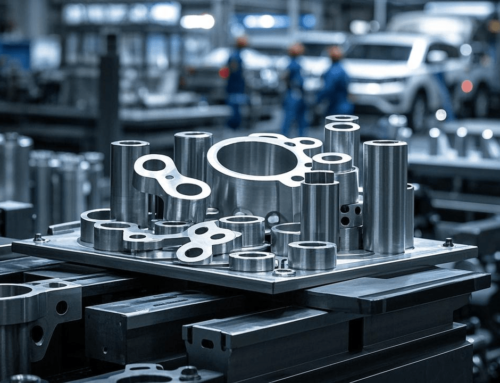

The mechanical properties of chromium-molybdenum steels (4130 and 4140) are highly dependent on the heat treatment process. By controlling the heating, cooling and tempering processes, engineers can achieve a precise balance between hardness and toughness. This article will reveal the influence of heat treatment on the properties of these two steels through experimental data, metallographic analysis and engineering cases.
4130 & 4140 Steel Heat Treatment Process Basis
| Process | Core Function | 4130 Steel | 4140 Steel | |
| Preliminary heat treatment | Annealing | Eliminate processing stress | 830-850°C | 800-850°C |
| Reduce hardness | ||||
| Normalizing | Uniform structure | 870-900°C | 870-900°C | |
| Fine grains | ||||
| Core heat treatment | Quenching | Rapid cooling to form martensite | 860-880°C | 840-880°C |
| Maximize hardness | ||||
| Tempering | Eliminate quenching stress | 650-680°C | 550-650°C | |
| Restore toughness |
4130 & 4140 Steel Quenching Secrets
4130 & 4140 Steel Hardenability Comparison
| Steel type | Ideal quenching medium | Critical diameter (50% martensite) | Maximum hardness (HRC) |
| 4130 | Oil | 25 mm | 52 |
| 4140 | Water or fast oil | 75 mm | 58 |
4130 & 4140 Steel Microstructure in Quenching
- 4130 steel:
After quenching, it is mainly composed of lath martensite, and the content of retained austenite is about 5-8%. - 4140 steel:
High carbon leads to an increase in the proportion of twin martensite, and the retained austenite is less than 3%, with higher hardness but increased risk of brittleness.
The difference in carbon content between 4130 and 4140 steel amplifies the quenching effect.The higher carbon content (0.38-0.43%) of 4140 significantly improves hardenability, forms more lath martensite with a higher hardness peak,but at the same time, it also loses some toughness.
4130 & 4140 Steel Tempering Control: The Game Between Hardness and Toughness
Tempering is a key step that determines the final performance; the higher the temperature, the better the toughness and the lower the hardness.
4130 & 4140 Steel:The influence of tempering temperature on performance
| Steel grade | Tempering temperature | Hardness,HRC | Performance characteristics |
| 4130 | Low temperature (200-300°C) | 40-45 | High hardness, low toughness, used for wear-resistant parts. |
| Medium temperature (400-550°C) | 30-35 | The most commonly used range for balancing strength and toughness. | |
| High temperature (550-650°C) | 25-30 | Optimal toughness, good weldability, suitable for structural components | |
| 4140 | Low temperature (200-300°C) | 45-50 | Extremely high hardness, wear-resistant, low toughness |
| Medium temperature (400-550°C) | 35-40 | High strength and good toughness, used for shafts and gears. | |
| High temperature (550-650°C) | 28-32 | Excellent toughness and high fatigue strength, suitable for heavy-duty components. |
4130 & 4140 Steel:How to Balance Hardness and Toughness?
- Hardness Comparison:4140 steel has a higher upper limit of hardness: Thanks to its higher carbon content, 4140 can achieve higher surface and core hardness than 4130. The hardness of both steels decreases with increasing tempering temperature, but the trends are slightly different.
- Toughness Comparison:4130 steel has better toughness: At similar strength levels, 4130 generally has better impact toughness than 4140. This is because the martensitic structure with lower carbon content inherently possesses better plasticity and toughness. However, the toughness of 4140 can be significantly improved through more refined heat treatment.
Application Cases: Selection of Different Heat Treatment Routes
4130 Steel
- High toughness + moderate strength => quenching + high-temperature tempering => aerospace structural components, high-pressure vessels
- Post-welding use => Welding + stress relief + quenching + tempering => Welded structural components, pressure vessels, and piping systems
4140 steel
- High strength + good toughness => quenching + medium-temperature tempering => drive shafts, gears
- High hardness + wear resistance => quenching + low temperature tempering => bearings, cams, wear-resistant bushings
- Large cross-section components => Quenching + Medium-high temperature tempering => Heavy-duty mechanical shafts, large gears
Heat treatment is the key to unlocking the performance potential of 4130 and 4140 steels,and the core of heat treatment for both lies in balancing hardness and toughness.
- 4130 steel,with its lower carbon content, offers superior toughness and weldability while maintaining good strength;
- 4140 steel,with its higher carbon content and hardenability, achieves higher hardness and strength, making it suitable for heavy-duty and wear-resistant applications.
RELATED PRODUCTS BY FUHONG STEEL
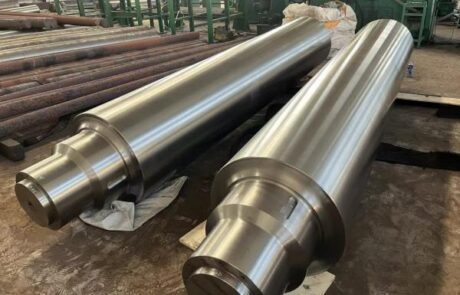
AISI 4130+QT 75K For Wellhead Device & Christmas Tree Equipment
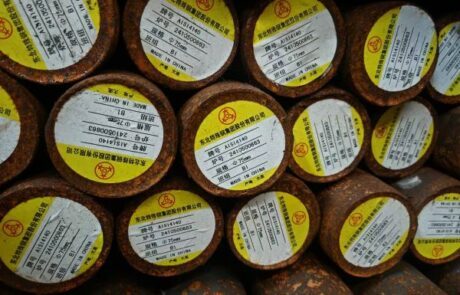
3000+ tons Inventory For 4140 Hot Rolled Round Steel Bar
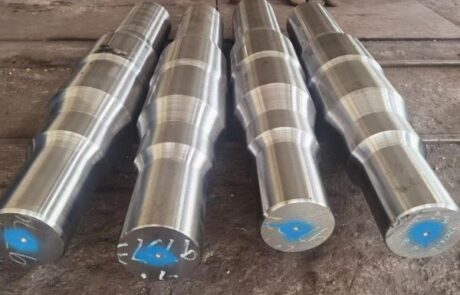
SAE 4130 Steel Bar | AISI 4130 Alloy Steel-ASTM A29
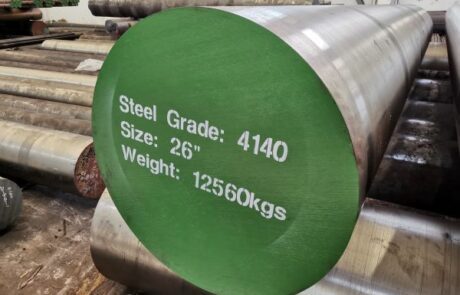
SAE 4140 Steel Bar | AISI 4140 Alloy Steel-ASTM A29
One-Stop Solution For 4140 Steel Bright Bar

AISI 4130 Steel Bar | ASTM 4130 Alloy Steel