When you hold delicate metal parts in your hands or marvel at the precision structure of a car engine, have you ever wondered how these products are transformed from hot liquid metal into durable parts? Behind this, hot work tool steel plays a crucial role.
As the “unsung heroes” shaping the high-temperature world, hot work tool steel is not defined by being the “hardest” or “most expensive,” but rather by its ability to maintain a balance of performance under high temperatures, high pressures, and repeated rapid heating and cooling cycles.
This article will provide a comprehensive overview of hot work tool steel, from its fundamental principles to its applications. After reading this article, you should be able to determine which type of steel is needed for your molds and where to begin troubleshooting when problems arise.
What Exactly is Hot Work Tool Steel?
Hot work tool steel is a type of tool steel specifically designed to withstand high temperatures, high pressures, impacts, and repeated thermal cycling. Its working environments involve contact with incandescent metals, such as molten aluminum at temperatures reaching 600°C or higher in die casting, steel billets exceeding 1000°C in forging, and continuous working temperatures of 400–800°C during extrusion.
It is neither ordinary structural steel nor cold work tool steel. Cold work tool steel prioritizes high hardness and wear resistance at room temperature. Once cold work steel is placed in a high-temperature environment, its hardness drops rapidly, causing the die to deform or even break.Hot work tool steel, on the other hand, prioritizes red hardness, maintaining sufficient hardness even at high temperatures, while also possessing enough toughness to absorb impact and sufficient resistance to thermal fatigue to withstand repeated heating and cooling cycles.
These three properties are interdependent. Higher hardness usually means lower toughness. And higher toughness often comes at the cost of wear resistance. The entire discipline of hot work tool steel is about finding the right balance under specific working conditions.
Hot Work Tool Steel Classification System:Three Major Families
The most widely used classification internationally is the AISI (American Iron and Steel Institute) H series. H stands for hot-work, and the numbers roughly group the alloy systems:
H10–H19: Chromium series (Cr-Mo-V system)
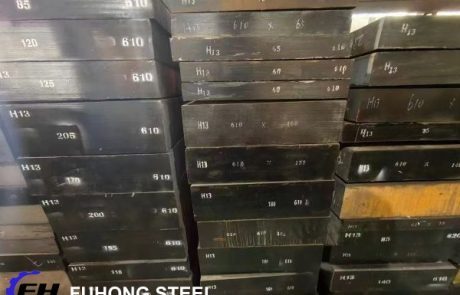
This is currently the most widely used steel series. Chromium is the main alloying element (approximately 5%), combined with molybdenum and vanadium. Representative grades include H11, H12, and H13.They offer good hardenability, high toughness, and strong thermal fatigue resistance, suited to medium-to-high temperature (400–600°C) die casting, forging, and extrusion. Among these, H13, as the most widely used hot work tool steel globally, is undoubtedly the mainstay of this series.
H20–H39: Tungsten series (W-Cr system)
Tungsten is the main alloying element (approximately 9–18%), coexisting with chromium and small amounts of vanadium. A representative grade is H21.Tungsten series steels exhibit better red hardness and can maintain their hardness at higher temperatures (600–750°C), but their toughness and resistance to thermal fatigue are weaker than chromium series steels, and their thermal conductivity is also poorer. They still have a place in high-temperature forging and copper alloy die casting, but their overall application is declining.
H40–H59: Molybdenum series (Mo-W system)
Molybdenum is the main element, and some grades contain tungsten. Representative grades include H41, H42, and H43.The molybdenum series is chemically close to high-speed steel (M-series), with extremely high red hardness but low toughness. They’re mainly used for special high-temperature cutting and hot working tools, and rarely appear in die applications.
In actual production, over 90% of hot work dies use H13 and H11 from the chromium series.The following discussion will primarily focus on these two grades,with H21 as a supplement for high-temperature applications.
What Actually is the Role of Alloying Elements in Hot Work Tool Steel?
The properties of hot work tool steels do not come from nothing, but are constructed one by one from various alloy elements. Once the role of each element is understood, the difference between H13 and H11 becomes clear.
Chromium (Cr): The foundation of hardenability and oxidation resistance
Chromium is the most abundant alloying element in hot work tool steel, around 5% in H13. Its primary role is to improve hardenability, ensuring that large dies are fully hardened from surface to core, rather than simply forming a hard surface shell. Secondly, it forms a dense oxide film, slowing down oxidation and corrosion at high temperatures.
Die-casting molds come into contact with molten metal in each cycle, and without the protection of chromium, the surface would be rapidly eroded.
Molybdenum (Mo): The core of tempering resistance
Molybdenum (Mo) content in H13 is approximately 1.5%. Its key role is to suppress temper brittleness while precipitating fine molybdenum carbides during tempering, producing a “secondary hardening” effect.
Ordinary carbon steel begins to soften at tempering temperatures above 500°C, while molybdenum-containing steel actually increases in hardness when tempered at 500–600°C.This is the fundamental reason hot work tool steel can maintain hardness at elevated temperatures.
Vanadium (V): A Key Factor in Wear Resistance and Grain Refinement
Vanadium is the most important difference between H13 and H11 steels. H13 contains approximately 1.0% vanadium, while H11 contains only about 0.3%.
Vanadium forms extremely hard VC carbides, significantly improving wear resistance and hot wear resistance. Simultaneously, vanadium carbides are stable at high temperatures, pinning grain boundaries and preventing grain growth, maintaining the fine-grained state of the steel even after prolonged high-temperature service.
However,more vanadium means more total carbides, which reduces toughness somewhat. That’s why H13 is more wear-resistant than H11, but H11 is tougher than H13.
Tungsten (W): Another Way to Improve High-Temperature Hardness
Tungsten-series steels (like H21) use tungsten to replace part of the molybdenum. Tungsten has a larger atomic weight and forms more stable carbides, giving better red hardness.
However, compared to chromium-molybdenum-vanadium steel, tungsten-series steels have poorer toughness and resistance to thermal fatigue. Therefore, chromium-series steels have pushed tungsten steels out of most medium- and low-temperature applications.
Heat Treatment: The Key to Steel Performance
The same batch of hot-work tool steel, heat-treated by different processing plants, can result in molds with vastly different lifespans.Heat treatment is not merely a formality,it determines the steel’s final microstructure and properties.
Taking H13 steel as an example, let’s illustrate its processing steps and details.
Step 1: Preheating
Large molds cannot be directly placed in a high-temperature furnace. The temperature difference between the surface and the core will generate thermal stress, leading to cracking.
The standard practice is staged preheating: first, hold at 600–650°C, then raise the temperature to 850–900°C and hold, allowing the temperature inside and outside the mold to reach equilibrium. The larger the mold, the more preheating stages are required.This step cannot be skipped.
Step 2: Austenitizing
The austenitizing temperature of H13 steel is typically 1010–1030°C. At this temperature, carbon and alloying elements completely dissolve in the austenite, preparing the steel for subsequent quenching.
If the temperature is too low, the alloying elements cannot completely dissolve, and the steel cannot be properly hardened. If the temperature is too high, the grains coarsen, and the toughness decreases. The holding time is calculated based on the effective thickness of the mold, typically approximately 30 minutes for every 25 mm of thickness.
Step 3: Quenching & Cooling
Rapid cooling from the austenitizing temperature transforms austenite into martensite. H13 can be quenched using oil, gas, or vacuum high-pressure gas quenching.
Vacuum gas quenching offers advantages such as uniform cooling, minimal deformation, and no surface oxidation, making it the mainstream method.However, gas quenching cools more slowly than oil quenching, and for large molds, complete hardening may not be possible. Therefore, high-pressure gas quenching is required to ensure adequate cooling capacity.
After quenching, H13 reaches about 52–56 HRC, but the microstructure contains enormous internal stress and very low toughness.Tempering must begin immediately.
Step 4: Tempering
Tempering involves heating the quenched martensite to a specific temperature, allowing it to decompose into tempered martensite while precipitating alloy carbides and relieving internal stress. H13’s tempering temperature is typically 540–650°C, requiring at least two tempers, each held for 2 hours or more.
The tempering temperature directly determines the final hardness:
- 540°C tempering → Approximately 52 HRC (High hardness state, suitable for high wear resistance requirements)
- 595°C tempering → Approximately 46–48 HRC (General die-casting state, balanced toughness and hardness)
- 650°C tempering → Approximately 40 HRC (High toughness state, suitable for forging dies subjected to heavy impact loads)
There’s a critical detail here: H13 has a temper brittleness tendency in the 400–550°C range. If the die cools slowly through this range after tempering, toughness drops. That’s why tempered dies should be cooled rapidly to bypass the brittle range. Many dies that “have the right hardness but crack easily” have this exact problem — the tempering cooling was too slow.
Also, after the first temper, the die must be fully cooled to room temperature before the second temper begins. If the second temper starts while the die is still warm, the first microstructure transformation isn’t complete, and the effect is compromised.
Three Mainstream Hot Work Tool Steel Comparison: H11 vs H13 vs H21
H13-1.2344 / SKD61 / 4Cr5MoSiV1
H13, a representative of chromium-molybdenum-vanadium steels, is also the most widely used hot work tool steel globally.
With a vanadium content of approximately 1.0%, H13 achieves an optimal balance between toughness, red hardness, resistance to thermal fatigue, and wear resistance. As a truly “general-purpose” steel, H13 is suitable for die casting dies, hot forging dies, extrusion dies, and hot stamping dies.
Typical hardness: 46–52 HRC. Red hardness maintained up to approximately 600–700°C. Impact toughness (V-notch): approximately 60–80 J.
H11 -1.2343 / 4Cr5MoSiV
H11 has almost the same composition as H13, the only difference being that the vanadium content is reduced to about 0.3%. The lower vanadium content means less hard carbides, which reduces wear resistance but significantly improves toughness. H11’s impact toughness can exceed 100J, significantly higher than H13.
What are the suitable applications for H11 steel? Large-section forging dies, hammer forging dies, and dies subjected to severe mechanical impact. In these cases, the primary failure mode is not wear, but cracking and chipping. H11’s high toughness is more valuable than H13’s high wear resistance.
However, H11 has slightly lower red hardness and thermal fatigue resistance than H13, resulting in a shorter service life in high-temperature cycling applications such as die casting.
H21 -1.2581 / 3Cr2W8V
H21 is a representative of the tungsten-chromium alloy system, containing about 9% tungsten. It has the best red hardness of the three grades, maintaining hardness at 700–750°C. But it has the worst toughness, the poorest thermal conductivity, and the weakest thermal fatigue resistance.
H21 is most commonly used in high-temperature forging and copper alloy die casting, operating at temperatures above 650°C. At this temperature, H13 begins to soften significantly, while H21 retains its hardness.
In the more common aluminum die casting (operating temperatures 400–550°C), the advantages of H21 cannot be realized, while its disadvantages (poor toughness, susceptibility to hot cracking) become apparent. This is why it has been widely replaced by H13.
| Property | H13 | H11 | H21 |
| Alloy system | Cr-Mo-V | Cr-Mo-V (low V) | W-Cr |
| Vanadium content | ~1.0% | ~0.3% | ~0.4% |
| Tungsten content | — | — | ~9% |
| Typical hardness (HRC) | 46–52 | 45–50 | 44–50 |
| Red hardness up to | 600–700°C | 550–650°C | 700–750°C |
| Toughness | High | Very high | Moderate |
| Thermal fatigue resistance | Excellent | Very good | Good |
| Wear resistance | Very good | Good | Moderate |
| Thermal conductivity | 28–30 W/m·K | 25–28 W/m·K | Lower |
| Best for | Die casting, forging, extrusion, hot stamping | Large-section forging, hammer forging, high-impact dies | Very high temperature forging, copper alloy die casting |
Which Steel is Suitable for Which Application?
Aluminum / Zinc / Magnesium Die Casting
Die-casting molds operate under harsh conditions: the cavity surface is repeatedly exposed to molten metal at temperatures as high as 600–700°C, and then rapidly cooled to approximately 200°C through water-cooling channels, with the entire cycle lasting from several seconds to tens of seconds. The mold must simultaneously withstand thermal shock, thermal fatigue, corrosion, and the erosion caused by molten metal.
This is H13’s largest application area, where its resistance to thermal fatigue is key.Thermal fatigue cracking is the most common failure mode of die-casting molds, and the chromium-molybdenum-vanadium combination in H13 can effectively delay the initiation and propagation of hot cracks.
For high-volume, long-life die-casting molds, it is recommended to use H13 produced by electroslag remelting (ESR). H13ESR steel is purer, has fewer inclusions, and can increase mold life by 20% or more.
Hot Forging -Die Forging / Hammer Forging / Precision Forging
Forging dies withstand immense pressure and impact loads at temperatures exceeding 1000°C, coming into contact with hot steel billets. Unlike die casting, the primary failure modes of forging dies are cracking, spalling, and plastic deformation caused by mechanical loads.
The choice of die material depends on the forging method. For mechanical press or hydraulic press forging, H13 is perfectly adequate due to the relatively stable load. However, for hammer forging, where the die is subjected to a huge mechanical impact instantaneously, the more resilient H11 is more suitable.
For high-temperature alloy forging (working temperature exceeding 1100℃), H13 and H11 may not be suitable, and H21 or more advanced nickel-based alloy mold materials should be considered.
Hot Extrusion
Extrusion dies operate under continuous temperatures of 400–800°C, subjected to immense extrusion pressure and frictional wear. Therefore, die failure is primarily caused by wear and deformation.
For aluminum profile extrusion dies, H13 is typically used. For high-temperature copper and copper alloy extrusion dies, where red hardness is more critical, H21 or other high-temperature alloys are preferred.
Hot Stamping
Boron steel is heated to over 900°C and simultaneously stamped and quenched in a die. The die surface comes into contact with the 900°C steel sheet, while the internal cooling channels rapidly cool the steel sheet, resulting in extremely intense thermal shock. Common failure modes for hot stamping dies are hot cracking and cooling channel corrosion.
This is a rapidly developing application in the automotive industry, and H13 is a mainstream material for hot stamping dies, effectively ensuring their performance.
How Actually Do Dies Fail?
Knowing how dies fail tells you what steel to choose and how to heat treat it. There are four primary failure modes for hot work dies, and in practice two or more often occur simultaneously.
Thermal Fatigue Cracking
This is the most common failure mode for die-casting and hot stamping dies. The die surface is repeatedly heated by high-temperature metal and then cooled by a cooling system, resulting in cyclic stress in the surface layer. When the stress exceeds the material’s fatigue limit, surface cracks appear.
The key factors in thermal fatigue resistance are:
- High thermal conductivity :Allowing heat to dissipate quickly and reducing temperature differences.
- High high-temperature strength:Resisting plastic deformation under thermal stress
- Good toughness:Stopping crack propagation
H13 is reasonably balanced on all three, which is why its thermal fatigue resistance is good. Although H21 has high hardness, its poor thermal conductivity means its resistance to thermal fatigue is actually inferior to H13.、
Hot Wear
The mold surface rubs against the workpiece metal at high temperatures, causing gradual wear. Thermal wear of die-casting molds differs from room temperature wear: at high temperatures, the material softens, hardness decreases, and the wear rate increases sharply.
Hot wear resistance depends on high-temperature hardness and hard carbides.At high temperature,H13’s vanadium carbides (VC) are stable and hard, effectively resisting hot wear. H11 has less vanadium, so its hot wear resistance is inferior to H13.
Surface nitriding treatment can form a high-hardness compound layer on the surface, which is an effective measure to resist high-temperature wear.
Plastic Deformation
The die undergoes irreversible shape change under high temperature and high pressure.This is essentially the die’s high-temperature strength being insufficient.
Plastic deformation typically occurs in two situations:
1.The mold operating temperature exceeds the red hardness range of the steel. For example, using H13 steel for copper alloy die casting above 700℃.
2.The tempering hardness is selected too low.For example, tempering H13 steel to below 40 HRC to improve toughness causes the mold to deform under pressure.
When selecting steel grades, the maximum operating temperature of the mold should be confirmed, and it should be ensured that the steel still has sufficient hardness and strength at that temperature.
Mechanical Cracking
Unlike the fine, network-like cracks caused by thermal fatigue, mechanical cracks are large, penetrating cracks, typically caused by impact loads or stress concentration. Chipping of forging dies and overall cracking of large-section dies both fall into this category.
The solution to mechanical cracking is to improve toughness. H11 steel is tougher than H13 steel and is less prone to cracking under high impact conditions.
Furthermore, rounded transitions in mold design, avoiding sharp corners and abrupt cross-sections, are crucial for reducing stress concentration and preventing mechanical cracking. Typically, mold cracking is not a problem with the steel itself, but rather caused by stress concentration points in the design.
How to Select Hot Work Tool Steel?
Selecting hot work tool steel doesn’t require memorizing dozens of grades. Walk through these four questions and you’ll generally get it right.
Step 1: Confirm the maximum working temperature
What is the maximum temperature the die surface actually contacts? This will determine the red hardness baseline.
- Below 500°C: Both H11 and H13 are suitable. Even some advanced plastic mold steels can withstand this.
- 500–650°C: The optimal operating temperature range for H13—die casting, hot forging, and hot stamping all fall within this range.
- 650–750°C:H13 starts to struggle.Consider H21 or higher grades.
- Above 750°C: Conventional hot work tool steels are generally insufficient.Nickel-based superalloys or ceramic materials need to be considered.
Step 2: Determine the primary loading type
Is the die subjected primarily to thermal cycling or mechanical impact?
- Thermal cycling dominant (die casting, hot stamping, extrusion): Prioritize thermal fatigue resistance — choose H13.
- Mechanical impact dominant (hammer forging, large-section forging): Prioritize toughness — choose H11.
- Both present (mechanical press die forging): H13 is usually sufficient.Consider H11 for large sections or high impact.
Step 3: Assess wear severity
Does the die have areas of high-speed friction, scouring, or galling? Sprue bushings, distributor cones, and extrusion bearing lands wear quickly and require higher wear resistance.
- Severe Wear: Choose H13 with surface nitriding or PVD coating.
- Minor Wear: H11 is also suitable, offering better toughness.
Step 4: Consider die size and manufacturing process
Large-section dies (thickness exceeding 150 mm) require high hardenability. Both H13 and H11 have good hardenability, but large dies require sufficient cooling capacity during vacuum gas quenching; otherwise, the core will not harden.
For dies with particularly high lifespan requirements, electroslag remelting (ESR) steel should be selected. ESR steel has fewer inclusions, a more uniform microstructure, and better isotropy. Under high stress and high thermal cycling conditions, its lifespan is significantly better than that of ordinary electric arc furnace steel.
Hot work tool steel isn’t a field you master by memorizing grade designations.The core logic is actually quite simple: what temperature does the die operate at, what loads does it bear, and what are its failure modes,and then select the appropriate steel and heat treatment process accordingly.
Ultimately, the lifespan of a die is often not determined by the choice of steel grade, but rather by the appropriateness of the heat treatment, the rationality of the die design, and whether operation and maintenance follow best practices. Steel is important, but it is not everything.
Related Hot Work Tool Steel Products By Fuhong Steel
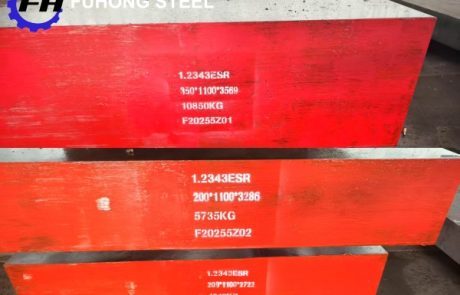
DIN 1.2343 Steel | H11 Hot Work Tool Steel

DIN1.2355 | S7 Shock-Resisting Tool Steel

DIN 1.2367 Tool Steel | X38CrMoV5-3

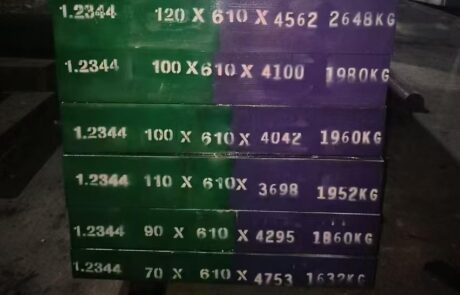
1.2344 Tool Steel | X40CrMoV5-1-DIN 17350
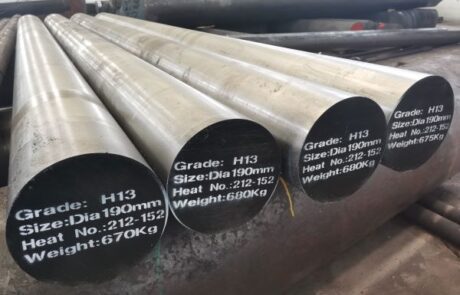
H13 Hot Work Steel | H13 ESR Quality Assurance

DIN 1.2329 Hot Work Tool Steel | 46CrSiMoV7

1.2714 Tool Steel | 56NiCrMoV7-DIN 17350
AISI H11 Tool Steel | DIN1.2343 | SKD6