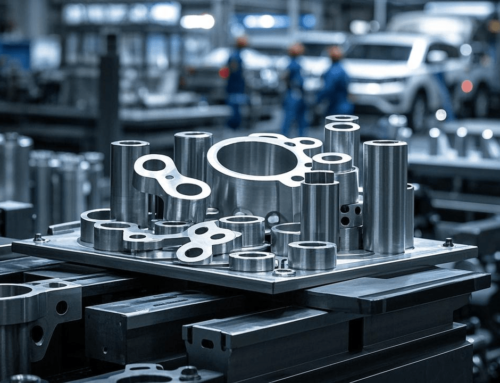
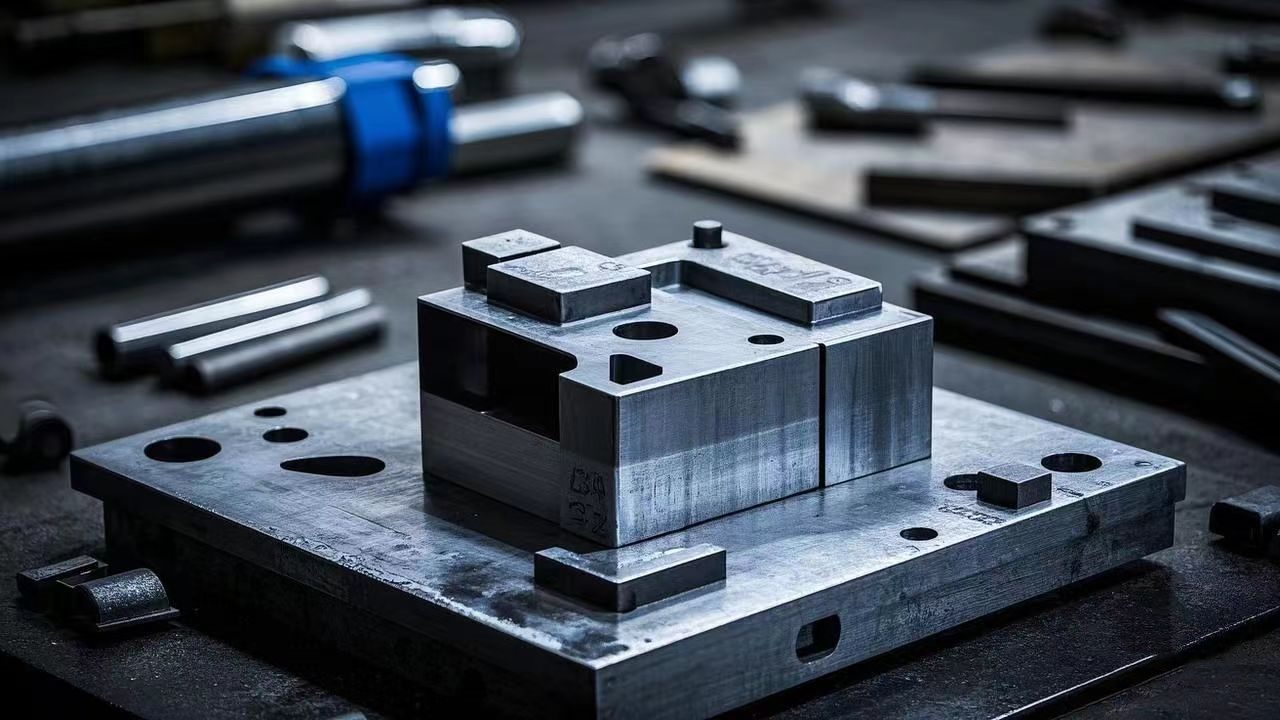
Walking into a sheet metal stamping factory, you might be surprised to find that a stamping die can run for half a million cycles before needing to be re-sharpened. This is not a magical phenomenon, as it is made of D2 steel.
D2 steel is little known outside of mold workshops, but once you start paying attention to it, you’ll find that the really interesting question isn’t what D2 is, but why this steel can be found everywhere in industry.
What is D2 Steel?
D2 is a high-carbon, high-chromium cold work tool steel. Its key characteristic lies in its composition: approximately 1.5% carbon and 12% chromium, with small amounts of molybdenum and vanadium. After quenching and tempering, its hardness is approximately 58 to 62 HRC.
What the chromium actually does is form chromium-rich carbides,hard wear-resistant particles dispersed through the steel. The high carbon gives the matrix its hardness. Molybdenum and vanadium refine the grain and deepen hardenability.
Another unique feature of D2 steel is its ability to harden in air, which means less thermal shock and less deformation. This is a crucial detail for mold makers, as it determines whether the hardened mold will maintain its tolerances or be deformed when removed from the furnace.
D2 Steel’s Diverse Industrial Applications
1. Mold Manufacturing
- Cold working molds: D2 steel is widely used to make stamping dies, cold heading dies, drawing dies and shear blades. Its high wear resistance can withstand high pressure impact and repeated friction of metal sheets, extending the life of the mold.
- Precision molds: High hardness (HRC 60-62 after heat treatment) and dimensional stability are suitable for precision molding, such as electronic connector dies or automotive parts molding dies.
2. Cutting tools and knives
- Industrial knives: Used to make tools for cutting high-hardness materials, such as milling cutters, drill bits and saw blades, but it should be noted that its red hardness (ability to maintain hardness at high temperatures) is not as good as high-speed steel, suitable for medium and low speed cutting.
- Wear-resistant blades: Such as paper/plastic slitting knives, woodworking knives, their wear resistance reduces the need for frequent replacement.
3. Automobile and mechanical parts
- Wear-resistant parts: Used to make bearings, guide rails, gears and other parts that are subject to high wear, such as engine valve guides or transmission parts.
- Gauges and fixtures: High hardness and stability are suitable for precision measuring tools (such as plug gauges) or fixture positioning blocks.
4. Plastic molding molds
- High-finish molds: D2 steel has a low surface roughness after polishing, which is suitable for injection molds of transparent plastic parts (such as optical lenses and cosmetic packaging) to reduce product surface defects.
- Glass fiber reinforced plastic molds: Wear resistance can resist the wear of glass fiber and extend the life of the mold.
5. Wear-resistant parts and tools
- Punches and dies: Excellent performance in metal punching and blanking processes, especially when processing stainless steel or high-strength alloys.
- Industrial rollers: Used for cold-rolled thin plates or strips, and the surface hardening improves wear resistance.
6. Special application scenarios
- Corrosion protection demand scenarios: Compared with ordinary tool steels (such as T10), D2 steel has a certain corrosion resistance due to its 12% chromium content and can be used in humid environments (regular maintenance or coating treatment is required).
- High-precision parts: such as watch parts or precision instrument parts, deformation is controlled by heat treatment to ensure dimensional accuracy.
When to Choose D2 Steel?
If you are choosing a material, the question is not whether D2 is good. It is whether its properties match the failure mode.
D2 should be chosen in the following situations:
1. Wear is the primary mode of component failure.
2. Smaller cross-sectional dimensions, where air hardening is more advantageous, resulting in less deformation and a lower risk of cracking.
3. Strict dimensional stability is required after heat treatment.
4. Parts are machined in the annealed state and then hardened to their final dimensions.
5. Target working hardness is approximately 58 to 62 HRC.
Frequently Asked Questions
D2 steel has existed in its current form for a long time. It doesn’t win by being the hardest, most durable, or cheapest, but by its predictability. Factories know how to machine D2 steel, how to heat treat it, and how it performs in service. It is this reliability that allows it to be used across various industries.
The best tool steels rarely rank highly in datasheets. They win because engineers trust their performance after the first 10,000 cycles.
Related Cold Work Tool Steel Products By Fuhong
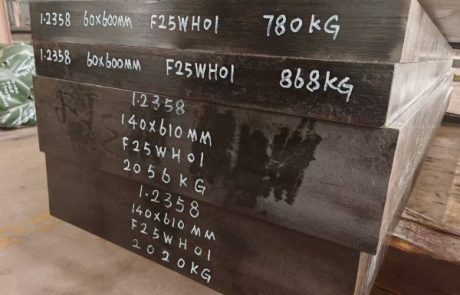
DIN 1.2358 Tool Steel | 60CrMoV18-5
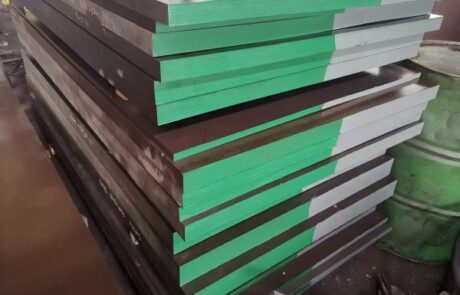
A2 Air Hardening Tool Steel | DIN 1.2363
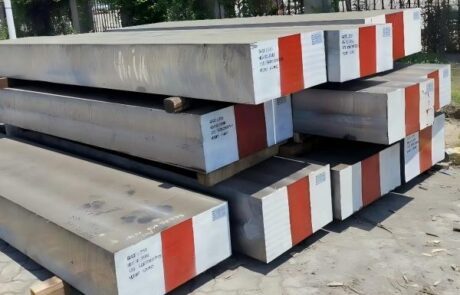
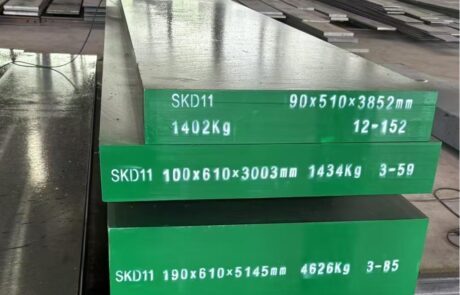
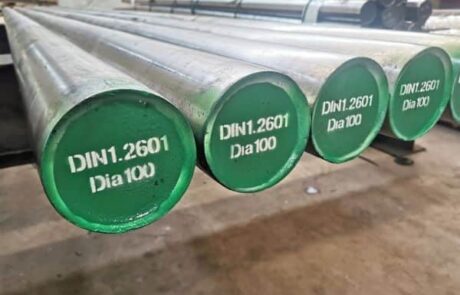
DIN 1.2601 | X165CrMoV12-DIN 17350 Standard

DIN 1.2510 Tool Steel | 100MnCrW4 | AISI O1 | SKS3

DIN 1.2080 Tool Steel | X210Cr12 | AISI D3 | SKD1

DIN 1.2767 Tool Steel | X45NiCrMo4-DIN 17350

DIN 1.2842 Tool Steel | 90MnCrV8 | AISI O2