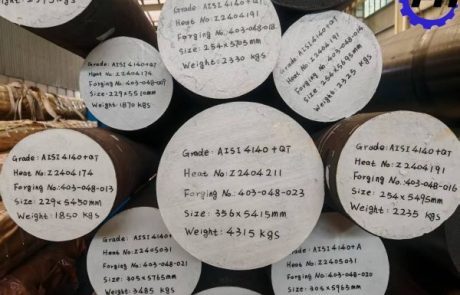

42CrMo4 steel (corresponding to the numerical grade 1.7225) is a medium-carbon chromium-molybdenum alloy steel under the European standard system. As a classic quenched and tempered steel, 42CrMo4 is widely used in heavy-duty gear applications due to its high strength and toughness, good hardenability, and fatigue resistance.
Why is 42CrMo4 Steel Suitable for Heavy-duty Gears?
Heavy-duty gears need to withstand continuous alternating heavy loads and impact loads, therefore the material must be wear-resistant on the tooth surface while maintaining toughness in the core.
42CrMo4, after quenching and tempering followed by surface hardening, balances strength, toughness, wear resistance, and fatigue life, making it suitable for their operational requirements.
- Balanced strength and toughness: After quenching and tempering, 42CrMo4 can obtain good mechanical properties to withstand heavy impact.
- High wear resistance: After quenching and tempering, induction hardening gives the tooth surface high hardness and high wear resistance, while the core retains its toughness.
- Excellent hardenability:Chromium and molybdenum elements jointly enhance hardenability, resulting in uniform hardness distribution across the cross-section of 42CrMo4 gears, preventing bending fracture due to insufficient core strength.
- Excellent fatigue resistance:The fatigue limit of 42CrMo4 is approximately 50% higher than that of ordinary low-alloy steel, meeting the requirements of heavy gears to withstand long-term alternating loads.
42CrMo4 Steel Heat Treatment for Heavy-duty Gears
For heavy-duty gears made of 42CrMo4 steel, the core objective of heat treatment is to achieve high strength and toughness in the core and high hardness and wear resistance on the tooth surface.
- 42CrMo4 steel pretreatment: Normalizing at 850–880℃ to refine grains and homogenize the microstructure.
- 42CrMo4 steel quenching and tempering: Oil quenching at 840–870℃ + high-temperature tempering at 550–650℃ to obtain a tempered sorbite matrix, which is the fundamental performance guarantee for heavy-duty gears.
- 42CrMo4 steel Induction hardening:This is the most commonly used tooth surface strengthening process. The tooth surface hardness can be increased to HRC55–62 while maintaining the core toughness, and the heat treatment deformation is controllable.
- 42CrMo4 steel Tempering:Low-temperature tempering at 150-200℃ eliminates quenching stress and stabilizes dimensions.
42CrMo4 Steel: Typical Applications in Heavy-duty Gears
42CrMo4 steel is mainly used in medium-speed gears that transmit high torque and withstand impact.
- Wind Power: Yaw/pitch reducer gears
- Mining Machinery: Main drive gears for ball mills and crushers
- Heavy Engineering Machinery:Loader and bulldozer drive gears, reducer gears
- Marine Machinery:Propeller reduction gears,anchor winch and cable winch gears
- Metallurgical Machinery: rolling mill gear housings, crane travel gears
Heavy-duty Gears:42CrMo4 Steel vs Other Grades
- 42CrMo4 vs 18CrNiMo7-6:As a low-carbon carburizing steel, 18CrNiMo7-6 has a surface hardening layer with superior hardness and depth compared to 42CrMo4, while maintaining excellent core toughness.However, its manufacturing cost is higher than that of 42CrMo4. 18CrNiMo7-6 is suitable for high-end hardened gears requiring extremely high contact stress and deep hardening across the entire tooth surface.
- 42CrMo4 vs 5140:42CrMo4 is superior to 5140 in all aspects, with its advantages being particularly significant for large cross-sections.5140 is more suitable for gears with medium loads and small to medium cross sections.
- 42CrMo4 vs 34CrNiMo6:42CrMo4 has weaker hardenability and lower low-temperature toughness than 34CrNiMo6, but it has a significant cost advantage, making it the first choice for medium and heavy-duty gears in terms of cost performance.
Related 42CrMo4 Steel By FUHONG
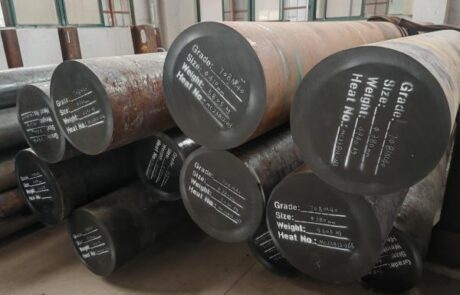
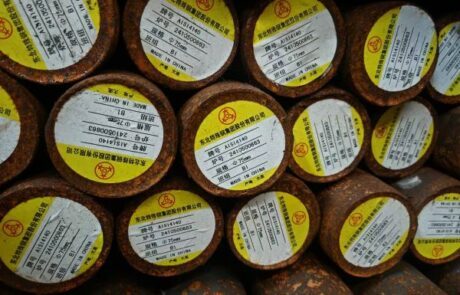
3000+ tons Inventory For 4140 Hot Rolled Round Steel Bar
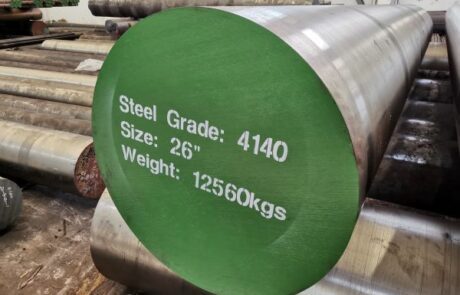
SAE 4140 Steel Bar | AISI 4140 Alloy Steel-ASTM A29
One-Stop Solution For 4140 Steel Bright Bar
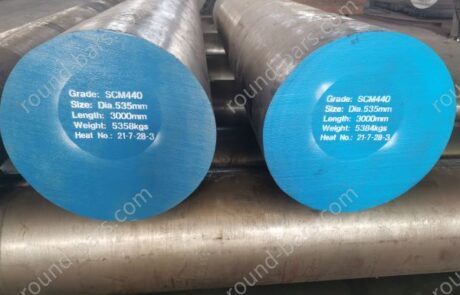
SCM440 | SCM430 Alloy Steel-JIS G4105

EN19+QT Steel | 709M40 round steel-BS970 Standard

EN 42CrMo4 Steel |42CrMoS4| DIN1.7225