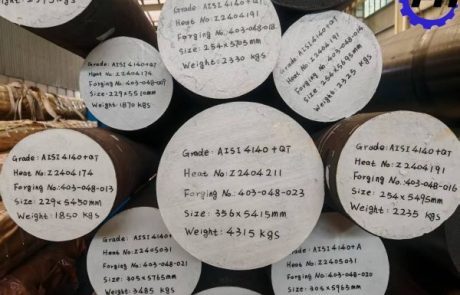

In industrial manufacturing, 4140 steel is widely used due to its excellent overall properties. In the market, the most common processes for producing 4140 steel are rolling and forging, each with its own advantages in different applications.
We know that the choice of different processes often directly affects product quality and production efficiency. So what are the differences between them? Let’s find out.
4140 Rolled Steel & 4140 Forged Steel:How are They Manufactured?
4140 Rolled Steel-Hot Rolling Process
Metal billets are compressed by passing them through a pair of rotating rolls, reducing their cross-section and increasing their length. This is a continuous, efficient process suitable for mass production.
| Rolling temperature | Deformation | Rolling ratio |
| 900-1200°C | Unidirectional continuous roll extrusion | ≥9:1 |
Microstructure: The internal grains of 4140 steel are elongated along the rolling direction, forming a fibrous structure. Defects such as central porosity and micro-shrinkage cavities are prone to remain in the core.
Surface & Dimensions:4140 rolled steel has a uniform surface and small dimensional tolerances, making it easy to control.
4140 Forged Steel-Hot Forging Process
Heated metal billets are repeatedly hammered or pressed using a forging hammer or press, causing plastic deformation. This is an intermittent, time-consuming process, with each product processed individually.
| Forging temperature | Deformation | Forging ratio | |
| Initial | Final | ||
| 1100-1200°C | ≥850°C | Multi-directional progressive deformation | ≥4:1 |
Microstructure: Through forging, coarse as-cast grains are broken down, forming a finer, more uniform recrystallized structure. Internal porosity and looseness are compacted, resulting in a denser microstructure.
Surface & Dimensions:4140 forged steel has a relatively rough surface and large dimensional tolerances, making it difficult to control.
Mechanical Property:4140 Rolled Steel vs 4140 Forged Steel
| Performance | 4140 Rolled steel | 4140 Forged steel |
| Tensile strength (MPa) | 850-950 | 900-1000 |
| Yield strength (MPa) | 650-800 | 750-900 |
| Elongation (%) | 12-18 | 15-22 |
| Impact toughness | Low with anisotropy | High with isotropic |
| Fatigue life | Average | Significantly longer |
Four Principles For Choosing Between 4140 Rolled Steel and 4140 Forged Steel
Principle One:Dimensions
For dimensions under 200mm, 4140 rolled steel is the preferred choice. Below this size, the rolling ratio is sufficiently large, the internal compaction is close to that of forging, and the surface dimensions are precise, offering excellent cost-effectiveness.
For dimensions 200mm and above, 4140 forged steel is the preferred choice. Large-sized rolled steel is prone to central porosity or segregation, while forging can completely break down the cast structure, compact the core, and ensure better subsequent performance.
Principle Two:Shape
If the part has a simple shape (round, square): 4140 rolled steel is the best choice due to its high cost-effectiveness.
If the part has a complex shape: 4140 forged steel is more suitable.
Principle Three:Stress Conditions
If the stress is multi-directional, involving heavy loads, impact loads, and high-frequency alternating fatigue loads, choose 4140 forged steel. 4140 forged steel has good isotropy, with uniform strength in all directions.
If the stress is uniaxial and the load is stable, choose 4140 rolled steel. The rolling streamline direction is exactly the same as the stress direction.in this case, the axial performance of 4140 rolled steel is even comparable to that of forged steel.
Principle Four:Product Scale
For mass production of standardized parts (such as fasteners, general shafts, and universal gear blanks): 4140 rolled steel offers significantly better cost-effectiveness.
For small-batch, customized single-piece/small-batch heavy-duty parts: 4140 forged steel offers better overall cost and avoids excessive waste from large-size rolled materials.
How to choose? It’s a comprehensive consideration of performance and cost.
For critical components where reliability is paramount, 4140 forged steel is the preferred choice. For most conventional industrial applications, 4140 rolled steel offers excellent cost-effectiveness.
Interactive topic: In your industry, what is the priority? 4140 rolled steel or 4140 forged steel?Welcome to discuss with us!
MORE ABOUT 4140 STEEL PRODUCT
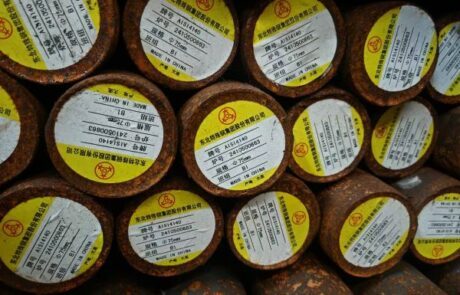
3000+ tons Inventory For 4140 Hot Rolled Round Steel Bar
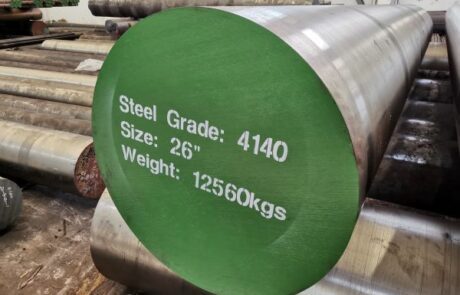
SAE 4140 Steel Bar | AISI 4140 Alloy Steel-ASTM A29
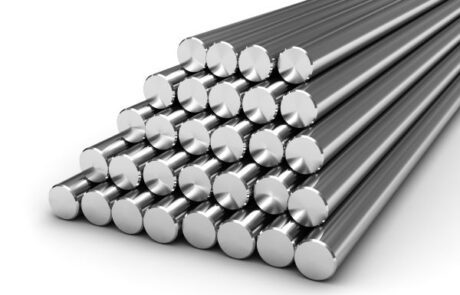
One-Stop Solution For 4140 Steel Bright Bar
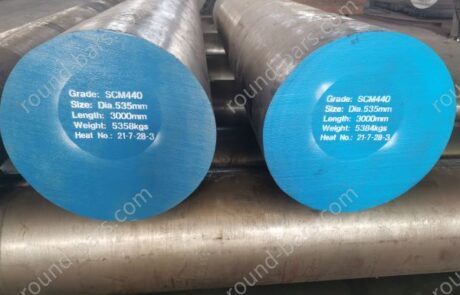
SCM440 | SCM430 Alloy Steel-JIS G4105

EN 42CrMo4 Steel |42CrMoS4| DIN1.7225