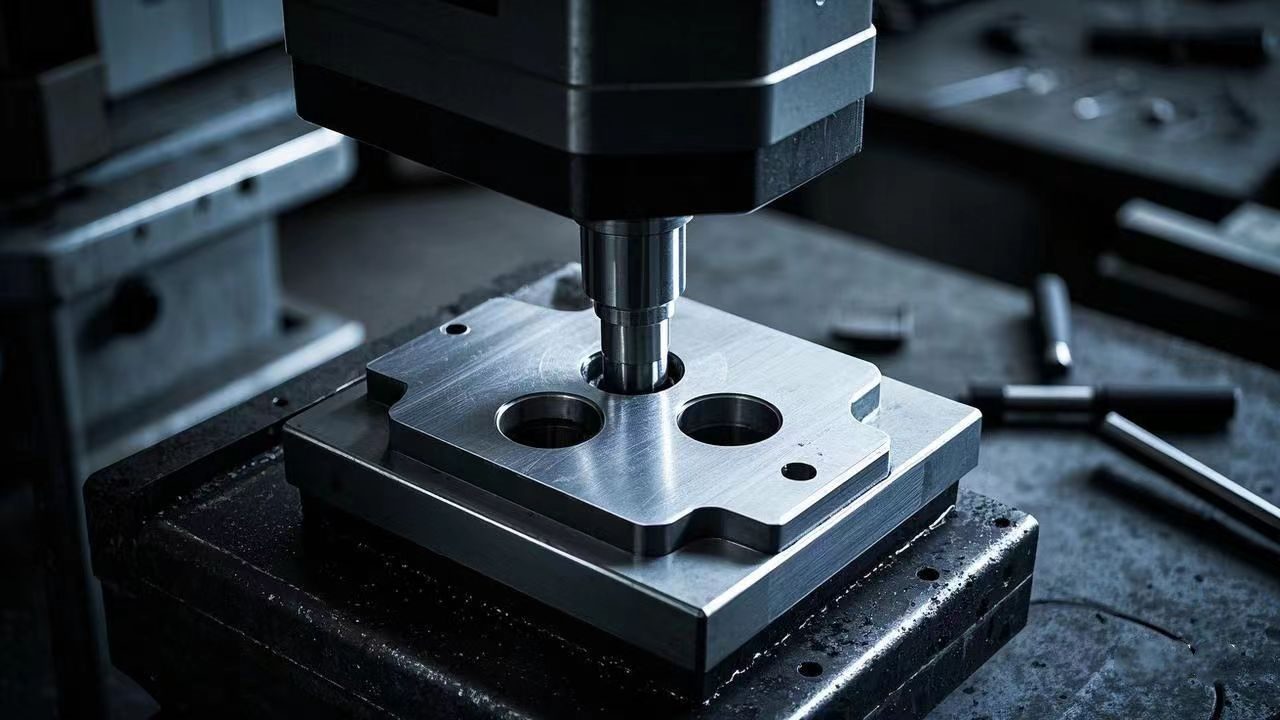
In the vast field of industrial manufacturing, molds are the key “behind-the-scenes heroes” that shape various products. Cold-working tool steel, as an important member of mold materials, plays an irreplaceable role in metal forming processing.
Cold work tool steels are not a single material, but a series of alloys designed for a single purpose—cutting, shearing, blanking, and forming at room temperature. Within this series, each grade balances wear resistance and toughness, machinability and cost, deformability, and hardness.This article will detail the meaning of the grades, the differences between commonly used grades, and their applications.
What Does “Cold Work” Actually Mean?
“Cold” refers to the workpiece, not the tool.Cold work tool steels are designed for tools that work material at or near ambient temperature: blanking, stamping, cold forming, cold heading, shearing.The cutting edge of the tool can still maintain a high temperature, but its design is based on strength, wear resistance, and toughness at room temperature.
This distinction is crucial because it’s key to classifying tool steel series. The standard specification for alloy tool steels, ASTM A681, classifies them according to their intended use:
- Cold Work (A, D, O series): Good wear resistance and toughness at room temperature.
- Hot Work (H series): Must maintain strength and resist thermal fatigue at temperatures above 500–600 °C.
- High Speed (M, T series): Maintains cutting edge hardness at high temperatures.
- Shock Resistant (S series): Able to withstand repeated impacts without cracking.
- Water-hardening (W), Plastic mold (P), and Special-purpose (L, F) steels.
S7 is frequently mentioned when discussing cold working, even though the ASTM standard classifies it as an shock-resistant material.That is the standard’s naming, not the application’s.If a tool fails due to impact, then S7 should be mentioned.
Reading Cold Work Tool Steel Designations
The AISI/SAE designation system, codified in ASTM A681, gives each series a letter and each member a number: O1, A2, D2, S7.The letter represents the quenching process, and the number represents the series member.
- O — Oil-quenched (O1, O2). Low-alloy steel, processed using oil quenching. Cheap and easy to machine, but with shallow hardening depth: internal hardness tends to decrease when the cross-sectional size exceeds approximately 50 mm (2 inches).
- A — Air-hardened (A2, A6). Medium alloy steel, processed by air or gas quenching. Less deformation than oil-hardened steel, achieving a good balance between wear resistance and toughness.
- D — High-carbon, high-chromium steel (D2, D3). Designed for maximum carbide content and wear resistance. High compressive strength, difficult to machine and grind, and relatively low toughness.Molybdenum-containing grades such as D2 can be air-hardened.D3, with no molybdenum,oil-quenched.
- S — shock resisting (S7).Low-carbon steel with excellent toughness, air-hardened. Designed for moderate hardness.
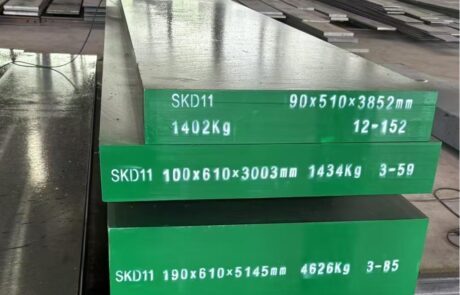
You will also meet the same steels under other naming systems.For example, D2 in DIN EN ISO 4957 is 1.2379 / X153CrMo12, and SKD11 in JIS G4404,A2 is 1.2363,O1 is 1.2510.If you don’t recognize the number in the data sheet you receive, first determine which naming system it belongs to, and then determine whether it is another material according to the rules.
Four Typical Grades For Cold Work Tool Steel
Four grades cover most cold-work applications:O1, A2, D2, and S7.The table below lists performance data for these four steel grades, along with a comprehensive comparison.
| Grade | Composition Basics | Wear resistance | Toughness | Dimensional stability | Machinability | Relative cost |
| O1 | ~0.9 C, ~1.0 Mn, ~0.5 Cr, ~0.5 W | Good | Good | Moderate–good | Best | Lowest |
| A2 | ~1.0 C, 5 Cr, ~1.0 Mo | Good | Good | Very good | Good | Moderate |
| D2 | ~1.5 C, ~12 Cr, ~0.8 Mo, ~0.8 V | Best | Lower | Good | Fair–poor | Higher |
| S7 | ~0.5 C, ~3.25 Cr, ~1.4 Mo | Moderate | Excellent | Good | Moderate | Moderate |
Heat Treatment Basics
| Grade | Quenching temperature | Quenching medium | Tempering temperature | Tempering cycles | Working hardness |
| O1 | 790–815 °C | Oil | 150–320 °C | ≥ 2 | 57–62 HRC |
| A2 | 940–980 °C | Air/Vacuum | 180–230 °C | ≥ 2 | 56–62 HRC |
| D2 | 980–1030 °C | Air/Vacuum | 200–220 °C | ≥ 2 | 58–62 HRC |
| S7 | 920–960 °C | Air | 200–430℃ | ≥ 2 | 54–58 HRC |
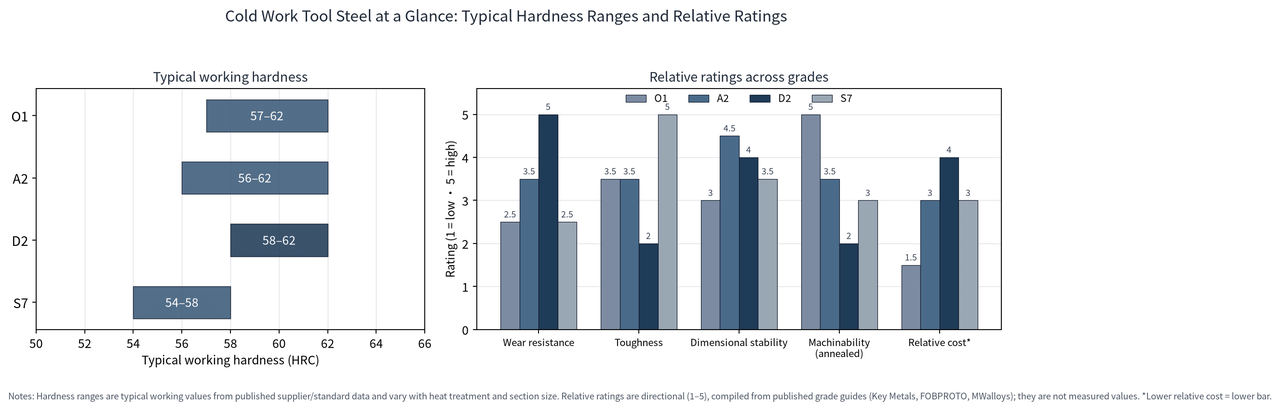
Hardness is often the most important data, but it’s not everything.Both D2 and O1 have hardness close to 60 HRC, but their wear characteristics are quite different. In sliding wear tests, the carbide content of D2 makes its wear life about two to three times that of O1 or A2. This is the real advantage of D2, not the hardness itself.
Typical Applications
| Grade | Typical applications |
| O1 | Short-run blanking and forming dies, trim dies, gauges, punches, bushings, arbors, woodworking tools, knife blades. |
| A2 | Punches, trim dies, forming tools, thread-rolling dies, gauges, stamping dies with moderate impact, plastic mold inserts. |
| D2 | Long-run blanking and punching dies, shear blades, slitter knives, cold-forming rolls, lamination dies, wear parts, cold extrusion punches where impact is controlled. |
| S7 | Impact-loaded punches and dies, chisels, shear blades under shock, swaging dies, tooling for thick or hard stock. |
Five Key Factors for Choosing Cold Work Tool Steel
When selecting cold work tool steel, the choice should be based on failure modes that you cannot afford,not by the datasheet you like best.The following five factors are more important than nominal hardness:
1. Wear mode
Abrasive sliding — long runs, thin abrasive stock — rewards carbide volume, so D2. Impact and edge chipping punish carbide volume, so A2 or S7. Galling and pickup respond more to hardness, lubrication, and surface finish than to grade alone.
2. Cross-sectional dimensions and hardenability
O1 steel has poor hardenability.Its internal hardness decreases after the cross-sectional size exceeds approximately 50 mm. Air-hardened A2 and D2 steels can be hardened through to larger cross-sections.
3. Deformation control
Oil quenching causes deformation, while air or vacuum quenching results in less deformation. For complex geometries and tight tolerances, A2 or vacuum-quenched D2 steel is superior to O1 steel, while oil-quenched D3 steel suffers the most deformation.
4. Machinability and grindability
The same carbides that give D2 wear resistance make it slow to machine and hard to grind.O1 steel has good machinability.If the tool needs to machine deep cavities or fine detail, machining cost can outweigh the steel price difference.
5. Cost per part, not cost per kilo
O1 steel is the cheapest raw material. However, if it needs to be reground or replaced during production, the cost of the steel only accounts for a small portion of the total cost. Labor, machining, heat treatment, and downtime are the main components of the tooling cost.A grade that doubles tool life can cut cost per part even at a higher price per kilo.
How to Choose Cold Work Tool Steel?
When selecting cold work tool steel, first clarify the following questions:
1. What failure mode are you designing against: abrasive wear, impact, edge collapse, galling, or distortion?
2.What are the operating conditions:thickness and hardness, impact level, lubrication, tool-face temperature?
3.What are the cross-sectional dimensions? Can the geometry withstand the quenching medium?
4.What tolerance does the tool hold, and can your heat treater verify it?
5. What is the machined geometry worth? Complex detail points toward O1 or A2; simple wear surfaces can absorb D2’s grinding cost.
When you clearly understand the above issues, you will stick to your choice, and get right grade.
Related Cold Work Tool Steel Product By Fuhong Steel
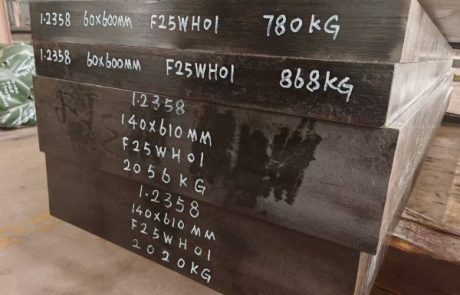
DIN 1.2358 Tool Steel | 60CrMoV18-5
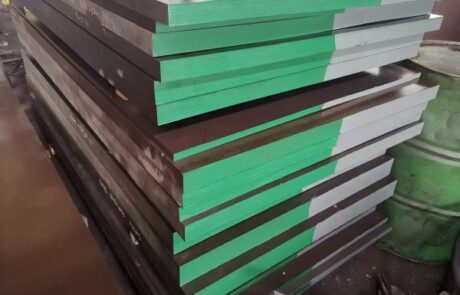
A2 Air Hardening Tool Steel | DIN 1.2363
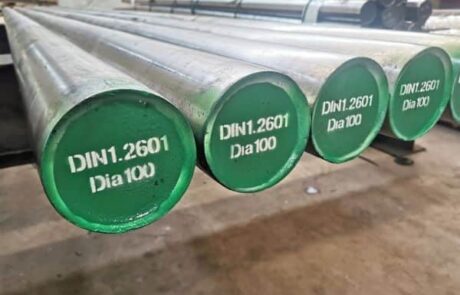
DIN 1.2601 | X165CrMoV12-DIN 17350 Standard

DIN 1.2510 Tool Steel | 100MnCrW4 | AISI O1 | SKS3

DIN 1.2080 Tool Steel | X210Cr12 | AISI D3 | SKD1

DIN 1.2767 Tool Steel | X45NiCrMo4-DIN 17350

DIN 1.2842 Tool Steel | 90MnCrV8 | AISI O2

DIN 1.2379 Tool Steel | X155CrVMo12-1-DIN 17350