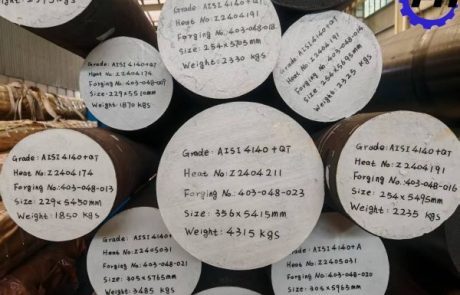

The Christmas tree equipment is the core control device of the oil and gas wellhead, which is subjected to high pressure , corrosive media and alternating loads for a long time.Almost all pressure components on the Christmas tree are forged from low-alloy steel. In fact, almost all of these components are 4140.
AISI 4140 (UNS G41400) is a chromium-molybdenum steel with a carbon content of 0.38% to 0.43%. It is not the strongest low-alloy steel grade, nor is it the most corrosion-resistant. However, its perfect properties perfectly match the actual needs of the Christmas tree.
This guide covers the property data, the heat treatment route, where 4140 is used component by component, and how it compares with 4130 and stainless alternatives.
What are Christmas Tree Equipment?
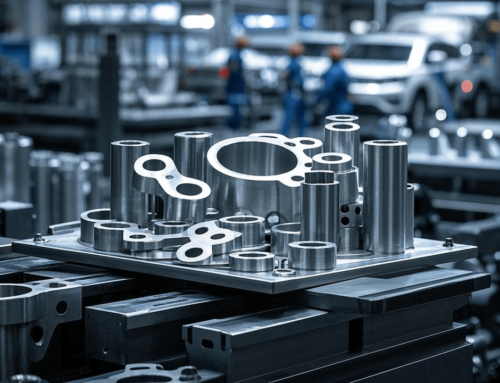
The Christmas tree is the assembly of valves, spools and fittings installed above the wellhead to control production. API 6A, Specification for Wellhead and Christmas Tree Equipment,considers the following components as pressure-bearing parts:bodies, bonnets, end and outlet connectors, clamp hub end connectors, hangers, and other pressure boundary penetrations.In a typical Christmas tree, this means:
- Gate valves (slab or expanding type), where the body and bonnet carry full well pressure
- Choke bodies, which regulate flow and absorb the pressure drop
- Flanges and clamp hubs, which make the bolted connections between components
- Tubing hangers, which suspend the production string
- Tees, crosses, crossovers and adapters, which route flow between bores and sizes
- Adapter flanges and bottom-hole test adapters for intervention work
These parts are mostly made of 4130 or 4140 steel, formed by closed or open die forging, and then subjected to heat treatment, machining, and pressure testing. 4140 steel is typically used for high-pressure, high-load parts, while 4130 steel is often used in designs that require extensive welding.
Why 4140 steel For Christmas Tree Pressure Parts?
While 4140 isn’t the absolute best steel, it’s suitable for and meets the practical needs of wellhead engineering: good hardenability, predictable quenching and tempering response, and a hardness range consistently below the NACE MR0175 standard 22 HRC upper limit in sulfur-containing oil wells.
Heat treatment:Obtain qualified parts for Christmas tree
4140 is not hard to heat treat correctly, but the sequence matters, and for sour service the tempering step decides whether the part passes.
1. Normalize after forging. Heat to 870–900 °C,hold for section size, cool in still air. This refines the as-forged grain and evens out the structure before hardening.
2. Austenitize and quench. Heat to 845–870 °C ,soak, then quench in agitated oil. Oil, not water: 4140 is deep-hardening enough to reach full hardness in oil, and water risks quench cracking in thick valve sections.
3. Temper for the target. Tempering temperature sets the final hardness-strength balance.
| Tempering temperature | Resulting hardness | Typical use |
| 205 °C | 52–54 HRC | Tooling; no tree service |
| 315 °C | 48–51 HRC | Wear parts; no tree service |
| 425 °C | 43–46 HRC | — |
| 480 °C | 38–42 HRC | — |
| 540–580 °C | 28-32 HRC | High-strength non-sour parts |
| ≈650 °C and above | 18–22 HRC | API 6A / NACE pressure parts |
Mechanical properties at three conditions
What 4140 delivers depends on the heat treatment, not on the grade name. Three conditions cover what matters in tree work: annealed (machining), normalized (an intermediate step), and quenched and tempered (API 6A 75K).
| Condition | Tensile | Yield | Elongation | Hardness | Use in Christmas tree equipment |
| Annealed 815 °C | 655 Mpa | 414 Mpa | 25.7% | ≈197 HB | Machining,not a service condition |
| Normalized 870 °C | 1020 Mpa | 655 Mpa | 17.7% | ≈302 HB | Intermediate after forging |
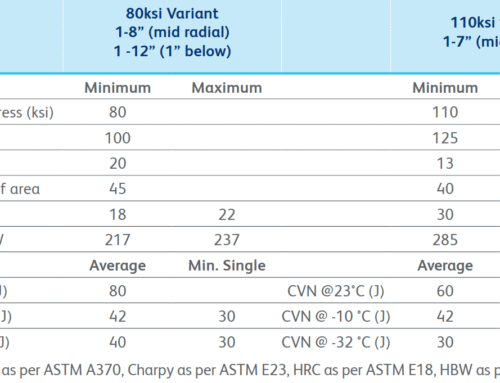
| Q&T to NACE | ≥690 Mpa | 551–665 Mpa | ≥20% | 18–22 HRC (217–235 HB) | API 6A 75K bodies, bonnets, flanges, hangers |
Quenching and tempering (Q&T) is key. Typically, 4140 is quenched and tempered to below 22 HRC, maintaining a yield strength higher than the minimum requirement of API 6A 75K (75 ksi = 517 MPa), and achieving a Charpy V-notch impact value of 27 J or lower at -46 °C. This combination of strength, low-temperature toughness, and NACE-approved hardness is exactly what the Christmas tree requires.
Where 4140 is Used in Christmas Tree
Here is where 4140 steel actually shows up in a tree, and why each part uses it.
| Component | Why 4140 | Notes |
| Gate valve bodies | Hold full working pressure; need deep, uniform hardenability in thick walls | Forged, Q&T to 75K / 22 HRC for sour service |
| Bonnets | Same pressure boundary as the body | Usually 4140 with L7 bolting |
| Clamp hubs and clamps | High bolt-load connections; load shoulders see wear | 4140 clamps with A320 L7 studs are standard practice |
| Flanges (end and outlet connectors) | Pressure boundary at the pipe-to-tree interface | 4130 also common where welding follows |
| Choke bodies | Flow control under high pressure drop; needs strength plus erosion resistance | 4140 body with carbide or CRA trim |
| Tubing hangers | Suspend the string; combined load and sealing duty | Q&T, hard-faced seal areas |
| Crossovers, adapters, tees | Connect different bore sizes and ratings; carry the same pressure class | 4140 typical; 4130 where field welding is planned |
4140 vs 4130 vs Stainless: How to choose?
This is not a contest for the “best” grade. It is a matter of matching the grade to the fabrication route and the service.
| AISI 4130 | AISI 4140 | 410 / 17-4PH | |
| Carbon | 0.28–0.33% | 0.38–0.43% | — |
| Weldability | Best of the low-alloy group; lower HAZ hardness | Requires controlled preheat, PWHT and a qualified WPS | 410 needs PWHT; 17-4PH used in hardened condition |
| Strength and hardenability | Moderate | Higher; deeper hardening in heavy sections | High in PH condition |
| Sour service (NACE) | ≤22 HRC | ≤22 HRC | 410≤22 HRC; 17-4PH H1150 ≤33 HRC |
| Corrosion resistance | Low | Low | High |
| Typical tree parts | Spools, welded assemblies, crossover subs | Bodies, bonnets, clamps, flanges, hangers, chokes | Trim, seats, stems; severe-service bodies |
| Relative cost | Lower | Moderate | Higher |
Choose 4130 when the part will be welded in fabrication and the strength demand is moderate. Choose 4140 for pressure-containing bodies and heavily loaded connections. Move to 17-4PH or 410 when the service is corrosive enough.
Need 4140 for a tree body, bonnet, clamp or hanger?
√ ISO 9001 Certified √ MTR Included √ Global Shipping √ Custom Cutting √ Technical Support
Related 4140 Steel Products By Fuhong
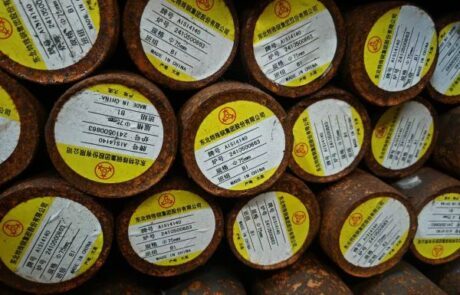
3000+ tons Inventory For 4140 Hot Rolled Round Steel Bar
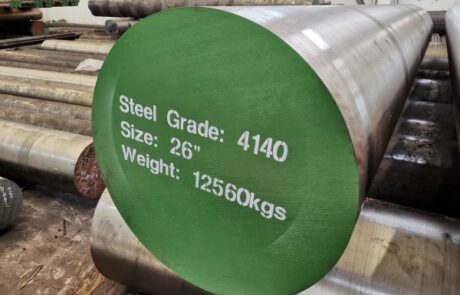
SAE 4140 Steel Bar | AISI 4140 Alloy Steel-ASTM A29
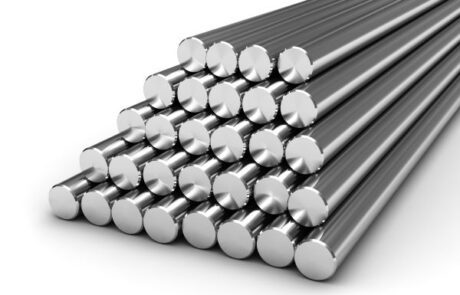
One-Stop Solution For 4140 Steel Bright Bar
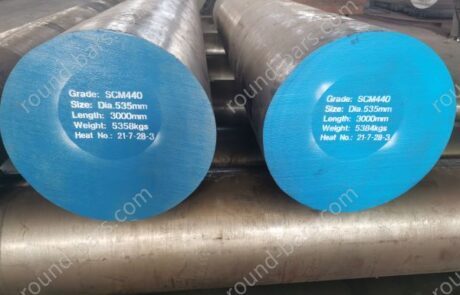
SCM440 | SCM430 Alloy Steel-JIS G4105

EN 42CrMo4 Steel |42CrMoS4| DIN1.7225