Why Does 4140 Steel Always Appear on Every Drawing?
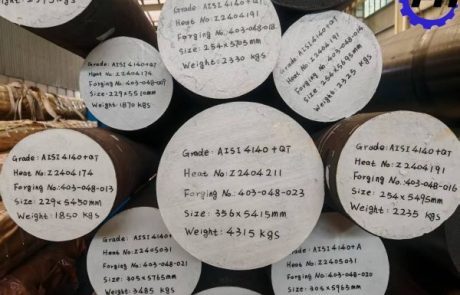
If you’ve ever worked in a machining workshop, on an oil drilling platform, or on a car assembly line, you’ve undoubtedly seen 4140 steel.Stacks of round steel bars against the wall, thick steel plates awaiting flame cutting, gear blanks being machined on CNC lathes—all these are 4140 steels. It’s one of the materials engineers instinctively choose, and for good reason.
This subconscious choice is worth understanding. 4140 steel is not the strongest, nor is it the hardest, cheapest, or most corrosion-resistant steel. Its advantage lies in its balanced performance: sufficient strength for high-stress shafts, toughness sufficient to withstand impacts, and hardness sufficient for wear-resistant surfaces, all at a relatively low processing cost.
This article walks through what 4140 actually is, why its chemistry behaves the way it does, how heat treatment changes it, where it shows up in industry, and when you should pick something else instead.
What is Actually 4140 Steel?
AISI 4140 (UNS G41400) is a medium-carbon chromium-molybdenum alloy steel. The “41” in the ASTM designation tells you it belongs to the Cr-Mo family,the “40” tells you the nominal carbon content is roughly 0.40%.
It is neither stainless steel nor tool steel. 4140 is a low-alloy structural steel, typically sold in normalized, annealed, pre-hardened, or quenched and tempered conditions, and then machine or form it into parts.
The reason it appears everywhere is that it responds well to heat treatment. Plain carbon steels like 1045 get hard on the surface but stay soft in the core once the section gets thick. 4140, because of chromium and molybdenum, hardens more uniformly through the cross-section. That is the single property that makes it useful for shafts, gears, and heavy loaded components.
Global Equivalent Grades
4140 steel is widely available on the international market, and there are many equivalent grades with roughly the same composition and properties.
| USA (AISI / SAE / ASTM) | Germany (DIN / EN) | Japan (JIS) | China (GB) | UK (BS) |
| 4140 | 42CrMo4 /1.7225 | SCM440 | 42CrMo | 708M40 |
4140 Basic Chemical Elements & Functions
| Grade | C | Si | Mn | P | S | Cr | Mo |
| 4140 | 0.38-0.43 | 0.15-0.35 | 0.75-1.00 | ≤0.035 | ≤0.04 | 0.8-1.1 | 0.15-0.25 |
From the composition table above, we can analyze that:
1.Carbon content in 4140 steel ranges from 0.38% to 0.43%, which is the baseline for strength.
2.Chromium content ranges from 0.80% to 1.10%, serving two purposes: firstly, it improves the hardenability of the steel, enabling overall hardening in thicker sections; secondly, it enhances wear resistance.
3.Molybdenum content ranges from 0.15% to 0.25%, improving the microstructure, preventing temper brittleness, and helping 4140 maintain its strength at high temperatures.
4.Manganese (0.75%–1.00%) and silicon (0.15%–0.35%) complete the composition of 4140 steel. Manganese removes oxides from the melt and refines the grain size, while silicon plays a similar deoxidizing role.
5.Phosphorus and sulfur content are low (P ≤0.035%, S ≤0.04%) because they reduce toughness.
The Ultimate Property of 4140 Steel is Determined By Heat Treatment
This is why 4140 steel has gained such a reputation. The same steel bar, soft enough to be machined with carbide cutting tools a month ago, becomes hard enough to withstand the wear of gearbox gears the following month. The key is heat treatment.
The basic process is simple: heat to the austenitizing temperature range (approximately 840–870 °C), then oil-quench or water-quench to form hard martensite, and finally temper at a selected temperature to balance hardness and toughness. The choice of tempering temperature depends on design requirements.
| Process | Temperature | Cooling | Result |
| Annealing | 815–870 °C | Furnace cool, then air | HB 197–220; best machinability |
| Normalizing | 870–925 °C | Air cool | HB 220–255; refined grain structure |
| Quenching | 840–875 °C | Oil or water | HRC 50–55 as-quenched |
| Tempering-low temp | 150–390 °C | Air cool | HRC 48–52; high hardness, lower toughness |
| Tempering-medium temp | 560 °C | Air cool | HRC 32–36; balanced strength and toughness |
| Tempering-high temp | 680–700 °C | Air cool | Softened back toward HB; high toughness |
Most industrial buyers purchase 4140 in the pre-hardened condition(28-32HRC) because it arrives ready to machine into a component that already has the right strength and toughness.
For parts that need a hard wear surface over a tough core (like gears or shafts), induction hardening can push the surface to 50–58 HRC while maintaining the core at its Q&T properties.
4140 Steel Mechanical Properties-QT Condition
| Tensile strength | Yield strength | Elongation | Impact toughness | Hardness |
| 850–1034 MPa (123–150 ksi) | 552–862 MPa (80–125 ksi) | 15–20% | 40–60 J | 28–38 HRC |
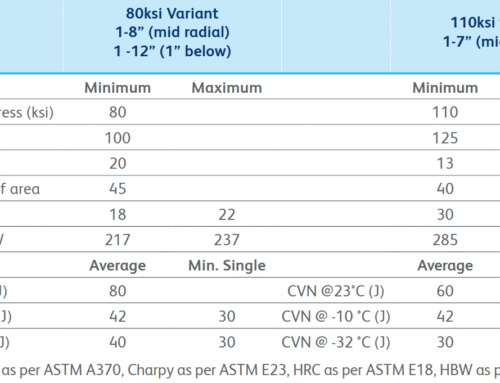
In the quenched and tempered state, 4140 steel typically exhibits a tensile strength of 850–1034 MPa (123–150 ksi) and a yield strength of 552–862 MPa (80–125 ksi). At a 2-inch gauge length, the elongation is approximately 15–20%. The impact toughness at room temperature is approximately 40–60 J.These data indicate that 4140 steel’s performance is: excellent, but not extreme.
Where Does 4140 Steel Actually Get Used?
4140 steel is widely used in components that need to withstand repeated mechanical loads and wear. The following covers the main industries and commonly used 4140 steel components.
- Oil & gas:Drill collars, tool joints, high-pressure valves, wellhead equipment, pump shaft
- Automotive:Axles, crankshafts, transmission gears, connecting rods, suspension parts
- Mining:Drive shafts, wear plates, gear blanks, roller components
- Construction equipment:Hydraulic cylinder rods, pins, bushings, structural brackets
- Manufacturing & tooling:Machine shafts, spindles, tool holders, fixture plates, pre-hardened mold bases
- Power generation:Turbine shafts, couplings, rotating components in generators
- Aerospace & defense:Landing gear components, engine fasteners (per AMS 6349 / MIL-S-5626)
What ties these applications together is cyclic loading. Gears rotate, shafts bend with every revolution, drill collars experience vibration and torque. 4140, properly quenched and tempered, holds up under repeated stress in a way that plain carbon steels cannot match.
Comparison:4140 Steel vs Common Alternative Steels
Choosing a material is rarely about finding the “best” steel.It’s about selecting the right material based on the load, environment, and budget. Below is a comparison of 4140 with common alternative steels.
4140 vs. 1045
1045 steel is cheaper and easier to process. However, due to its lack of chromium and molybdenum, it has poor hardenability: only the surface hardens after quenching, while the interior of thick sections remains relatively soft.
1045 steel can save costs if the parts are thin and subjected to low stress. However, for components such as shafts or gears that require uniform cross-sectional strength, 4140 steel is a more reliable choice.
4140 vs. 4340
4340 has added nickel, which improves its toughness and hardenability. It is the material of choice for large cross-section or high-stress aerospace components.
However, it is about 15-20% more expensive than 4140. For most general mechanical applications, 4140 offers sufficient performance at a more affordable price.
4140 vs. 410
410 stainless has 11.5–13.5% chromium, which means real corrosion resistance. 4140 has less than 1.1% chromium, so it rusts in a humid environment.
If your part touches saltwater, acids, or food-grade surfaces, 4140 is the wrong choice. Use 410, 304, or 316. If it is a load-bearing part inside a machine where corrosion is not the problem, 4140 is stronger and cheaper.
When is the Right Choice For 4140 Steel?
If you are considering whether to choose 4140 steel, please ask yourself the following four questions in order:
1. Does the part need through-thickness strength?
If yes, and the section is thicker than what plain carbon steel can harden through, 4140 is on the table.
2.Is corrosion a concern?
4140 steel will rust if the parts come into contact with moisture, salt, chemicals, or food. It is recommended to use stainless steel grades (410, 304, 316).
3.What hardness is required for the finished part?
If you need 28–38 HRC with good toughness, buy 4140 QT bar and machine it. If you need 48–52 HRC on the surface for wear, perform induction hardening after machining.
However, if you require higher hardness (above 58 HRC throughout), consider using tool steels such as H13 or D2.
4.What is the section size?
4140 steel maintains good hardness within a cross-sectional area of approximately 100 mm. If you are forging a 300 mm shaft and require uniform properties within the core, you may need to use 4340 steel.
Run through those four questions and the material choice usually becomes obvious. 4140 is the right answer when the part carries load, wears in service, and lives in a relatively clean environment.
4140 steel achieves a balance of performance that few other grades match.It is strong enough for the majority of load-bearing machinery components, tough enough to absorb impact, hardenable enough for wear surfaces, and available in every major industrial market.
Additionally, 4140 is more expensive than ordinary carbon steel but cheaper than high-alloy steel. Its machinability is quite good, and its heat treatment properties are stable and reliable.
Engineers choose 4140 steel not because it performs best in every aspect, but because it achieves an ideal balance across a variety of applications. Once you understand 4140, you won’t just treat it as the default choice, but will start using it consciously.
Related 4140 Steel Product By Fuhong Steel
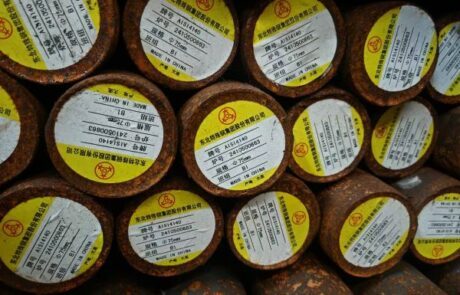
3000+ tons Inventory For 4140 Hot Rolled Round Steel Bar
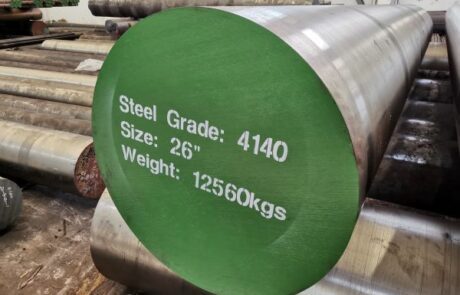
SAE 4140 Steel Bar | AISI 4140 Alloy Steel-ASTM A29
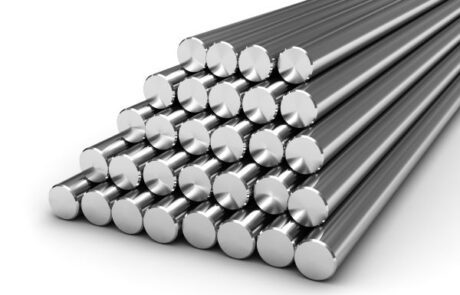
One-Stop Solution For 4140 Steel Bright Bar
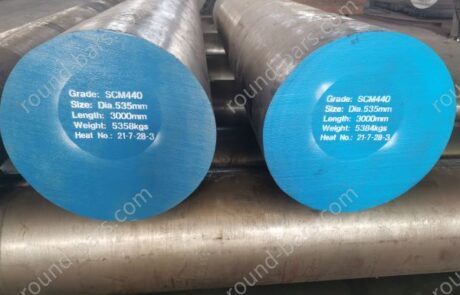
SCM440 | SCM430 Alloy Steel-JIS G4105

EN 42CrMo4 Steel |42CrMoS4| DIN1.7225