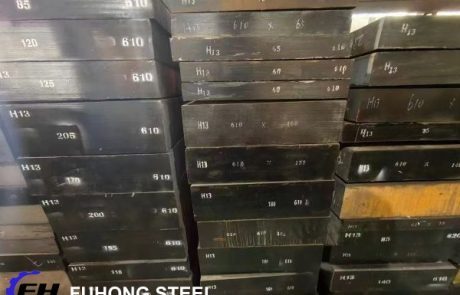

H13 steel (US grade, corresponding to European grade 1.2344) is a widely used hot working steel. Due to its excellent high temperature performance, wear resistance and thermal fatigue resistance, it is widely used in high temperature and high pressure industrial applications.
H13 Steel Basic Information Introduction
| Chemical Composition | Heat Treatment | Mechanical Property | |||
| C | 0.32-0.45 % | Quenching temperature | Tensile strength | ≥1500 MPa | |
| Si | 0.8-1.2 % | 1020-1050°C | Yield strength | ≥1200 MPa | |
| Mn | 0.2-0.5 % | Tempering temperature | Yield strength,600°C | ≥1000 MPa | |
| Cr | 4.75-5.5 % | 550-650°C | Impact Charpy-V | 15-20 J | |
| Mo | 1.1-1.75 % | Hardness | Elongation | 8-12 % | |
| V | 0.8-1.2 % | 48-52HRC | Hardness,600°C | ≥38HRC | |
Why choose H13 steel for high-temperature applications?
H13 is an internationally recognized hot-work steel, specifically designed for applications requiring high temperature and pressure, and subjected to repeated thermal cycling. Its key alloying elements (Cr, Mo, V) give H13 steel three core advantages supporting its applications:
- Thermal Fatigue Resistance: Strong resistance to cracking caused by repeated heating and cooling, which is crucial for the lifespan of hot-work molds.
- High-temperature Stability: Maintains good hardness and resists softening at 500-600℃.
- Strength & Toughness Balance: Maintains sufficient strength and toughness at high temperatures, preventing cracking or deformation.
H13 steel Industrial Applications
Due to its comprehensive properties, H13 steel is widely used in molds that need to withstand cyclic thermal and mechanical loads.
1. Die-casting Mold
This is the most widespread and representative application of H13 steel. Even under repeated impacts from molten metal at high temperatures (600~800℃), H13 steel maintains stable properties. It is mainly used in:
- Aluminum alloy die-casting molds
- Magnesium alloy die-casting molds
- Zinc alloy die-casting molds
In addition, key components of die-casting molds such as cores, cavities, slides, and sprue bushings are all made of H13.
2. Hot Forging Mold
Hot forging molds are one of the core applications of H13 steel. Due to its excellent high-temperature strength, resistance to thermal fatigue, toughness, and wear resistance, H13 steel is the mainstream choice for small and medium-sized hot forging molds. It is mainly used for:
- Molds for materials with relatively low forging temperatures
- Precision hot forging molds
- Small and medium-sized forging molds
- Molds for medium impact loads
- Key components of hot forging molds
3. Hot Extrusion Mold
In hot extrusion molds, particularly aluminum alloy extrusion molds, H13 steel is the undisputed mainstream and standard material. Under prolonged medium-high temperature (approximately 500°C) and high pressure conditions, H13 steel exhibits excellent resistance to deformation, sufficient wear resistance, and good overall toughness.It is mainly used for:
- Aluminum alloy extrusion molds
- Magnesium alloy extrusion molds
- Copper alloy extrusion molds
- Key components of extrusion molds
4. Plastic Mold
H13 is widely used in high-performance plastic molds due to its excellent polishability, high hardness, and wear resistance. It offers superior wear resistance and heat deformation resistance compared to ordinary plastic mold steels (such as P20), making it suitable for mass production and high-stress conditions.
- Engineering Plastic Molds
- Transparent Part Molds
- Corrosion-Resistant Reinforced Molds
- Wear-Resistant Reinforced Molds
Comparison with Other Hot Working Steels
| Grade | High temperature strength | Thermal fatigue resistance | Toughness | Application |
| H13 | ★★★★☆ | ★★★★☆ | ★★★★☆ | Die casting,Hot forging/extrusion |
| H11 | ★★★☆☆ | ★★★☆☆ | ★★★★★ | High-toughness forging mold |
| DIEVAR | ★★★★★ | ★★★★★ | ★★★☆☆ | Ultra-long life die casting mold |
With its three core advantages of “resistance to thermal fatigue, high-temperature stability, and a balance of strength and toughness,” H13 steel has become a “universal steel” in the field of hot working. The stable performance of H13 steel under high temperature and high pressure environments has always made it the preferred material for high-temperature molds.
CHOOSE FUHONG STEEL FOR YOUR STEEL NEEDS
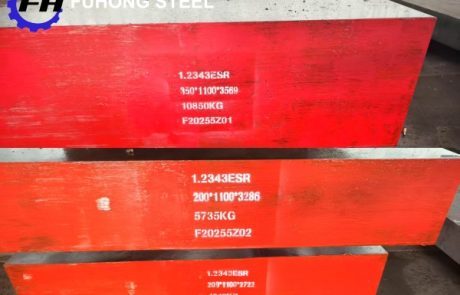
DIN 1.2343 Steel | H11 Hot Work Tool Steel
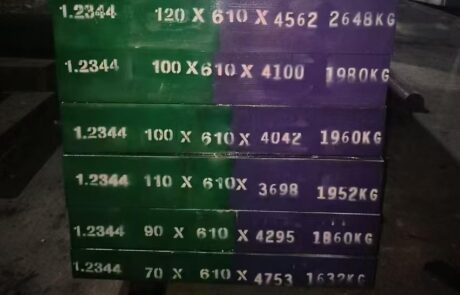
1.2344 Tool Steel | X40CrMoV5-1-DIN 17350
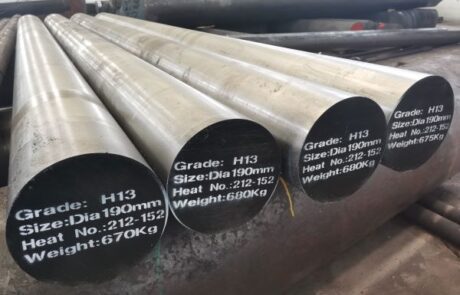
H13 Hot Work Steel | H13 ESR Quality Assurance
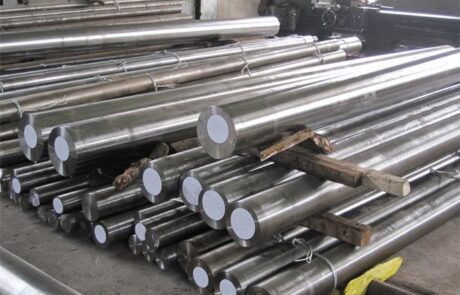
AISI H11 Tool Steel | DIN1.2343 | SKD6