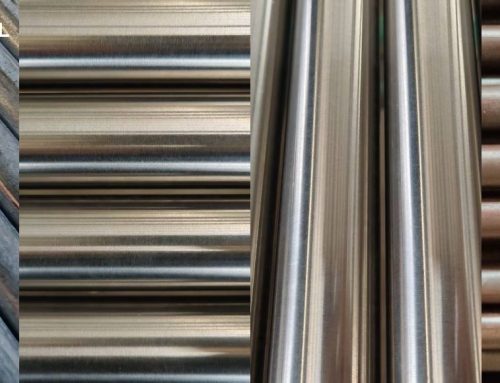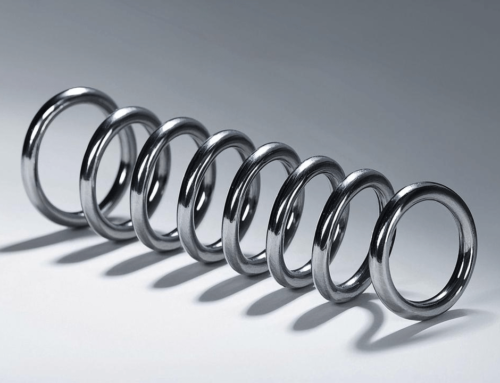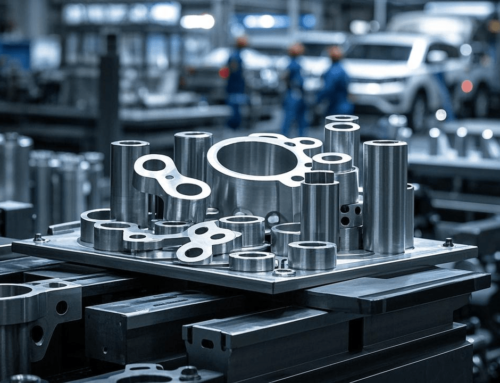

Bearing steel is the core material in bearing manufacturing. Its excellent wear resistance, contact fatigue strength, toughness, high-temperature resistance, and corrosion resistance enable it to remain stable under high-load operating environments.
As the solid foundation for the operation of mechanical equipment, how do we choose bearing steel? Let’s discuss it together.
What is Bearing Steel?
Bearing steel is a category of high-performance specialty alloy steel specifically engineered for manufacturing rolling bearing components (races, balls, rollers, needles).
Bearing steel is recognized as one of the most demanding steel grades, with extremely strict controls on purity, carbide distribution, non-metallic inclusions and structural uniformity — standards far higher than those for ordinary structural or tool steels.
Classification of Bearing Steel
These are the four most mainstream bearing steel classifications in the international bearing industry, which directly determine the application of bearings.
1.High-carbon chromium bearing steel(largest volume)
This type of bearing steel contains approximately 1.0% carbon and 1.5% chromium. It offers a balance of wear resistance, fatigue performance, and cost, but its impact resistance and corrosion resistance are limited.
Typical grades: GCr15,100Cr6,52100,SUJ2
2.Carburizing bearing steel (heavy load & impact resistant)
This type of bearing steel has a carbon content of about 0.2%. After carburizing and quenching for surface hardening, it has a hard and wear-resistant surface (HRC 58–62) and a tough shock-absorbing core.
Typical grades: 8620,SCM420,20MnCr5
3. Stainless bearing steel (corrosion-resistant)
This type of bearing steel has a chromium content as high as 16%-18%. Although it is resistant to water and chemical corrosion, its fatigue life is usually lower than that of high-carbon chromium steel because inclusions are difficult to control.
Typical grades: 440C,9Cr18
4. High-temperature bearing steel
This type of bearing steel, with the addition of molybdenum (Mo) and vanadium (V), can maintain high hardness and dimensional stability at temperatures ranging from 300℃ to 500℃.
Typical grades:M50
Applications For Common Bearing Steel
| Grade | Hardness (HRC) | Typical Application |
| AISI 52100 / GCr15 | 60–65 | General-purpose bearings, automotive, industrial |
| AISI 440C | 58–62 | Corrosive environments, food processing, medical |
| AISI 316 | ~25(solution treated) | Severe corrosion, low-load, non-magnetic needs |
| 8620 | 60–64(surface) | Heavy shock loads, large bearings, gears |
| M50 / M50NiL | 60–64 | Aerospace, high-temperature, high-speed |
Bearing Steel:Four Core Performance Requirements
1.Contact Fatigue Strength
Bearings are subjected to cyclic alternating compressive stresses over long periods, making them highly susceptible to surface pitting and spalling, which is the leading cause of bearing failure.
Bearing steel must possess high contact fatigue strength to resist the initiation and propagation of fatigue cracks. This requires high purity, few non-metallic inclusions, and fine, uniformly distributed carbides in the bearing steel.
2.Hardness & Wear Resistance
Bearings are constantly subjected to friction, requiring bearing steel to possess high hardness and excellent wear resistance.
After quenching and tempering, the standard hardness of bearing steel needs to be stably maintained at HRC 60-65. High hardness is the foundation for ensuring wear resistance, effectively reducing friction and wear, and maintaining the bearing’s fitting accuracy and smooth operation.
3.Impact Toughness
Hardness and toughness are often contradictory. For bearings subjected to impact loads, good impact toughness is crucial. Bearing steel must possess sufficient fracture toughness while maintaining sufficient hardness to prevent brittle fracture.
4.Dimensional & Microstructural Stability
Internal retained austenite and internal stress can cause slight deformation and dimensional changes in bearings during long-term use.Bearing steels are typically required to control the retained austenite content to ensure the long-term dimensional stability of precision bearings.
Five Factors For Selecting Bearing Steel
Selecting the right bearing steel is critical to bearing performance, service life, and reliability. The choice must balance mechanical requirements with operating conditions and total cost.
1.Load type:Heavy or shock loads demand higher core toughness and surface hardness.High-carbon chromium bearing steel handles standard loads; case-carburized bearing steel is preferred for impact loads.
2.Operating speed:High-speed applications generate centrifugal stress and heat. Materials must maintain dimensional stability and low friction; cleaner steel with fewer inclusions extends fatigue life.
3.Temperature range:Standard 52100 steel is limited to approximately 120–150 °C continuous operation.For higher temperatures, high-temperature bearing steel should be selected.
4.Corrosion environment:Moisture, chemicals, or washdown conditions require martensitic stainless (440C) for moderate corrosion, or austenitic stainless (316) for severe chemical exposure.
5.Steel cleanliness:Non-metallic inclusions are the primary cause of rolling contact fatigue.For critical applications, high-purity steel should be selected.
Taking all these factors into account, when selecting bearings, we first determine the load, speed, temperature, and environment.
Due to the excellent balance of hardness, wear resistance, and cost, AISI 52100 high-carbon chromium steel remains the default choice for most bearing applications.This standard should only be deviated from when operating conditions (such as corrosion, extreme temperatures, heavy impacts, or high speeds) require a special bearing steel.
Related Bearing Steel By FUHONG STEEL


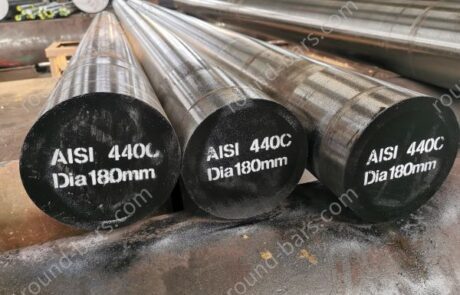
AISI 440C Stainless Steel | X105CrMo17 | DIN1.4125 | SUS440C

AISI 52100 Bearing Steel | 100Cr6 | DIN 1.3505 | SUJ2 | EN31

20MnCr5 Steel | DIN 1.7147 Case Hardening Steel