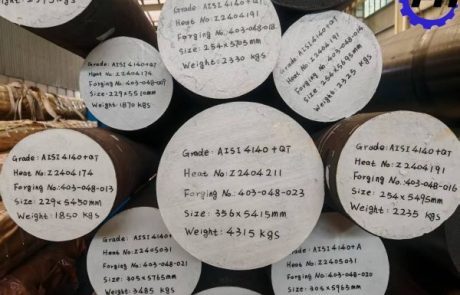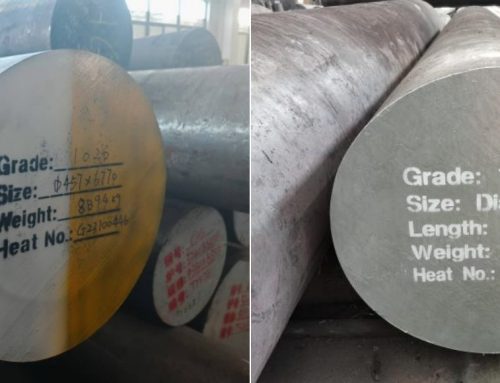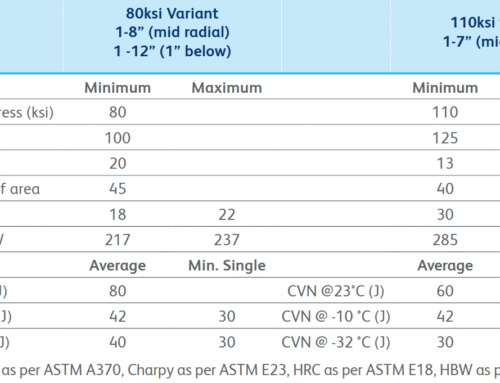

4140 steel (domestic grade 42CrMo) is an excellent medium carbon alloy structural steel, known for its high strength, good toughness, wear resistance and hardenability. There is a close relationship between its strength and hardness, but the selection needs to be weighed according to the specific application requirements.
How to Balance Strength and Hardness For 4140 Steel?
Core Principles:The strength and hardness of 4140 steel can be adjusted through heat treatment (mainly tempering temperature): the higher the hardness, the higher the strength, but the lower the toughness.
Here are the key considerations and guidelines for selecting the strength and hardness of 4140 steel:
How to Understand Strength and Hardness For 4140 Steel?
Strength: Mainly refers to the material’s ability to resist deformation (yield strength) and fracture (tensile strength). High-strength 4140 can withstand greater static or dynamic loads without plastic deformation or fracture.
Hardness: Refers to the ability of a material to resist local plastic deformation (such as indentation, scratching). High-hardness 4140 is more wear-resistant and more resistant to surface damage.
What is the relationship between the strength and hardness of 4140 steel?
For quenched and tempered 4140 steel, hardness and strength have a strong positive correlation. Generally speaking, the higher the hardness of 4140 steel, the higher the yield strength and tensile strength. This is because the performance of both is mainly determined by the same microstructural factors (martensite morphology, carbide precipitation, etc.).
Should the toughness of 4140 steel be considered?
Toughness is a key trade-off. As hardness and strength increase, the toughness of 4140 steel typically decreases. This means that 4140 steel is more prone to brittle fracture under impact loads or stress concentration.
Selection Basis – Application Scenarios and Performance Requirements
Scenario one: When 4140 steel requires high fatigue strength, impact load and good toughness, how to choose hardness and strength?
Firstly, 4140 steel typically achieves these requirements through quenching and tempering, with a hardness usually between HRC 28 and 36 (or HB 280 to 350).
Within this range, 4140 steel achieves the optimal balance between strength and toughness. 4140 steel not only has high strength but also maintains good plasticity and excellent impact toughness, effectively resisting fatigue and impact failure.
Typical applications: shafts (drive shafts, crankshafts, camshafts), connecting rods, high-strength bolts, gears, pressure vessel components, oil drilling tools, key structural parts of engineering machinery.
Scenario two: When 4140 steel requires high surface hardness, excellent wear resistance, how to choose hardness and strength?
To achieve these requirements,quenching + low-temperature tempering can be used for 4140 steel.This process produces 4140 steel with extremely high hardness (HRC50-58+), excellent wear resistance, and high compressive strength. However, its impact toughness is significantly reduced.
In addition, 4140 steel can also achieve extremely high surface hardness and good core toughness through surface hardening methods (such as induction hardening/nitriding).
| Induction hardening | Nitriding | |
| Surface hardness | HRC 55–60+ | HRC 60-70 |
| Core hardness | HRC 28-36 | HRC 28-32 |
Typical applications: Gears , sprockets, pins, wear-resistant liners, fixtures, parts requiring high wear resistance.
Why choose high hardness for 4140 steel?
When wear is the main failure mode, high hardness is the primary consideration. Surface hardening for 4140 steel is the best solution to the contradiction of “needing both hard surface (wear resistance) and tough core”.
Scenario three: When 4140 steel requires medium strength and good machinability, how to choose hardness and strength?
4140 steel is supplied in pre-hardened state,and HRC 28 – 32 (or HB 280 – 320) is more common for this requirement. The 4140 steel still has good strength at this hardness, and the machinability is much better than that of the high hardness state. It can be directly processed to avoid subsequent heat treatment deformation.
Typical applications: structural parts of engineering machinery, fixtures, etc.
Should Machining Costs be considered For 4140 Steel?
The answer is yes.The higher the hardness, the more difficult the subsequent machining (turning, milling, drilling, etc.), the faster the tool wear, and the higher the cost.
4140 steel with quenched and temperd condition (HRC 28-36) is relatively easy to process.However, surface hardening (induction hardening, nitriding) is generally more expensive and complex than full hardening, but it can achieve the best combination of surface and core properties.
In addition, after being fully hardened to a high hardness (HRC 50+), grinding is almost the only option.
How to Choose the Hardness and Strength of 4140 steel?
- To be strong,tough and easy to process : choose quenching & high temperature tempering, HRC 28-36.
- To have a hard surface (resist wear): choose Induction hardening or nitriding, surface HRC 55+ or HV 700+.
- To be hard throughout (wear-resistant but not brittle): choose overall quenching+low temperature tempering, HRC 50+
The final choice of hardness and strength of 4140 steel is a comprehensive balance between performance requirements, manufacturability and cost.
Related 4140 Steel Products By FUHONG
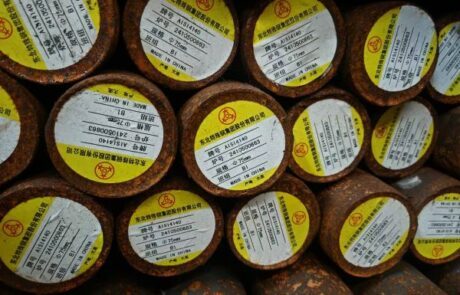
3000+ tons Inventory For 4140 Hot Rolled Round Steel Bar
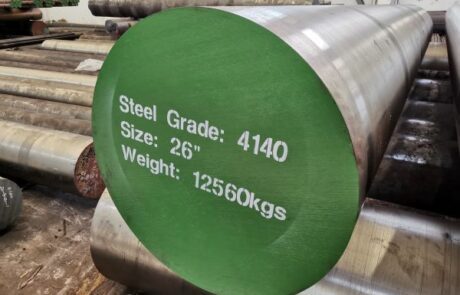
SAE 4140 Steel Bar | AISI 4140 Alloy Steel-ASTM A29
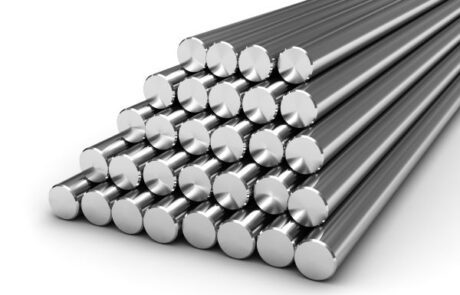
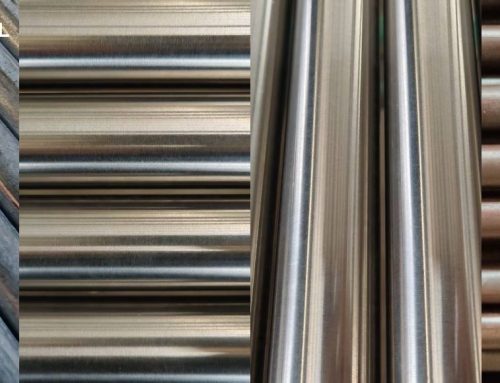
One-Stop Solution For 4140 Steel Bright Bar
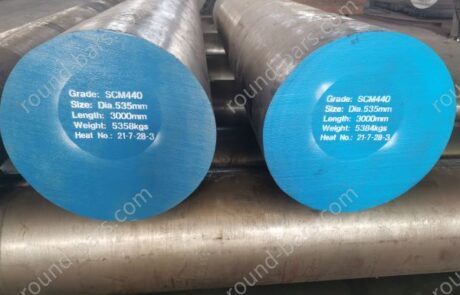
SCM440 | SCM430 Alloy Steel-JIS G4105

EN 42CrMo4 Steel |42CrMoS4| DIN1.7225