
Basic Characteristics of H13 Steel
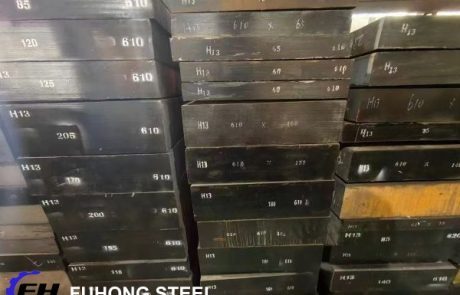
H13 is a commonly used hot working tool steel, widely used in mold manufacturing under high temperature and high pressure environment (such as die casting, forging, extrusion, etc.). Its typical chemical composition includes:
- Carbon (C): 0.32~0.45% (improves hardness and wear resistance)
- Chromium (Cr): 4.75~5.50% (anti-oxidation and corrosion resistance)
- Molybdenum (Mo): 1.10~1.75% (high temperature strength and resistance to tempering softening)
- Vanadium (V): 0.80~1.20% (refines grains and improves toughness)
What is the H13 Steel Ultrafine Processing Technology?
The ultra-fine processing of H13 steel is a combination of processes designed to eliminate microscopic defects, obtain fine and uniform grains, and thus significantly improve the overall performance of H13 steel. It is not a single heat treatment, but a systematic project that runs through smelting, forging and heat treatment.
H13 Steel Core Technology of Ultra-fine Treatment
By optimizing heat treatment or deformation process, the grain size of H13 steel is significantly reduced (usually to micron or even nanometer level). The main methods include:
- Isothermal annealing:
Long-term heat preservation at a specific temperature to homogenize the structure and refine the carbides. - Deformation-induced refinement:
Control the amount of deformation (such as large plastic deformation) during high-temperature forging or rolling to promote dynamic recrystallization. - Cyclic heat treatment:
Multiple austenitization and tempering cycles, using phase transformation recrystallization to refine grains.
What is the Target For Ultra-fine H13 Steel?
For the ultrafine refinement of H13 steel, it is necessary to achieve not only ultrafine grain size but also ultrafine carbide size.
- Austenite grain size: refined from the conventional 25-50μm to ≤10μm, even ultrafine grains of 1-5μm.
- Carbide size: liquid-precipitated carbides broken down from 10-50μm to ≤5μm, secondary carbides ≤1μm, dispersed distribution.
- Grain size: improved from ASTM 6-7 to ≥9.
Why Does H13 Steel Need to be Ultra-fine?
H13 steel commonly suffers from problems such as coarse liquid carbides, uneven grain size, and banded segregation. Ultrafine processing technology can simultaneously refine both the grain size and carbides in H13 steel, further optimizing its microstructure and significantly improving its overall performance.
- Strength and toughness: Fine grains simultaneously improve tensile strength and impact toughness, reducing the risk of brittle fracture.
- Resistance to thermal fatigue: More uniform stress distribution at high temperatures, delaying the initiation of thermal cracks.
- Wear resistance: Fine carbides are evenly distributed, enhancing surface wear resistance.
- Extended life: The service life of the mold under severe working conditions can be increased by 30%~50%.
Ultrafine H13 steel significantly improves the ultimate performance of traditional H13 steel through microstructure optimization, especially solving problems such as thermal fatigue and insufficient toughness of traditional H13 steel,which is of great significance for improving the service life of molds and industrial production efficiency.
Related How Work Tool Steel Products By FUHONG
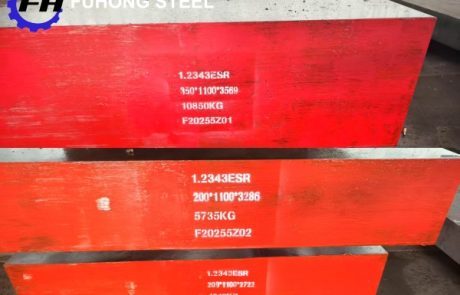
DIN 1.2343 Steel | H11 Hot Work Tool Steel

DIN1.2355 | S7 Shock-Resisting Tool Steel

DIN 1.2367 Tool Steel | X38CrMoV5-3

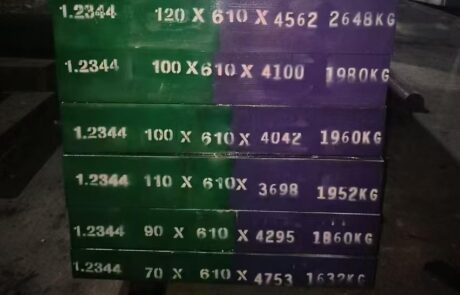
1.2344 Tool Steel | X40CrMoV5-1-DIN 17350
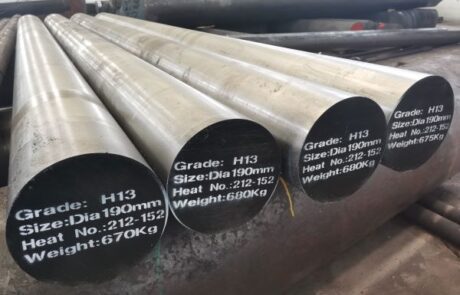
H13 Hot Work Steel | H13 ESR Quality Assurance

DIN 1.2329 Hot Work Tool Steel | 46CrSiMoV7

1.2714 Tool Steel | 56NiCrMoV7-DIN 17350
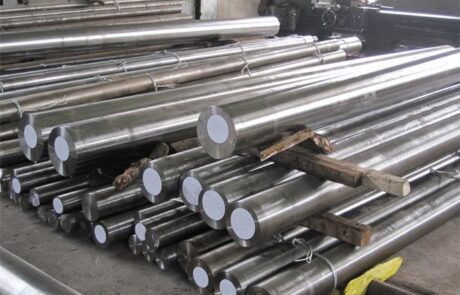
AISI H11 Tool Steel | DIN1.2343 | SKD6