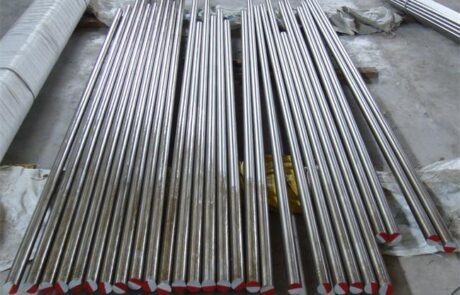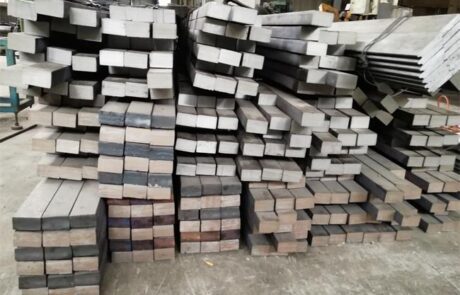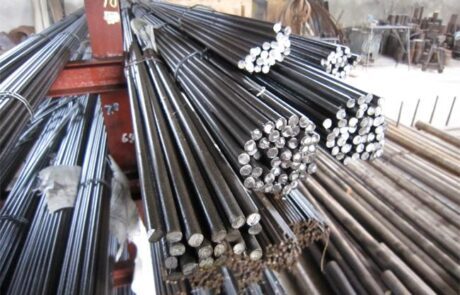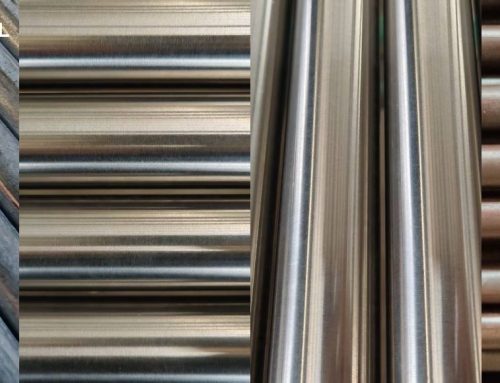

M2 high-speed steel (such as AISI M2 in the United States or W6Mo5Cr4V2 in China) is a high-carbon, high-alloy tool steel known for its excellent red hardness (ability to maintain hardness at high temperatures) and wear resistance. Its hardness mainly depends on the heat treatment process. The following are detailed data and analysis:
Conventional Hardness Range of M2 High Speed Steel
The hardness of M2 high-speed steel is not a fixed value.it changes significantly with the heat treatment process.
- Supply status-Annealed:M2 high-speed steel is typically supplied in the annealed state, where its hardness is lower than 255 HB. This state makes M2 steel easier to cut and form, facilitating the manufacture of complex-shaped tools and molds.
- Final use status-Quenched & tempered:M2 high-speed steel must be quenched and tempered to activate its high hardness. During this process, special carbides precipitate inside the M2 steel, producing a “secondary hardening” effect that significantly increases its hardness to HRC 63-65.
- High temperature status-Red hardness:As a high-speed steel, a key characteristic of M2 is its “red hardness,” meaning its ability to maintain high hardness at high temperatures. M2 high-speed steel retains good hardness(≥55HRC) and machinability even at temperatures around 600℃, which is the foundation for its ability to perform high-speed cutting.
What Factors Affect the Hardness of M2 Steel?
The hardness of M2 high-speed steel is influenced by many factors, which collectively determine the material’s performance from its initial annealed state to its final service state. These factors can be mainly categorized into the following three main types:
- Chemical composition: This is the basis of hardness. Carbon (C) is the core of hardness, while alloying elements such as tungsten (W), molybdenum (Mo), and vanadium (V) ensure wear resistance and red hardness by forming hard carbides.
- Heat treatment process: This is the key to hardness. In particular, the quenching temperature (about 1220℃) must be precise to ensure that the alloying elements are fully dissolved. The subsequent high-temperature tempering (550-570℃, 2-3 times) can produce the “secondary hardening” effect, allowing the hardness to reach HRC 63-65.
- Microstructure: This reflects hardness. The final hardness of the martensitic matrix, as well as the type, size, quantity, and distribution of carbides, directly determine the final hardness of the material.
Hardness Comparison: M2 Steel vs Others
| Material | Typical hardness | Comparison description |
| M42 high-speed steel | 65~67 HRC | Higher wear resistance and red hardness |
| D2 tool steel | 58~62 HRC | Wear resistance but not as red hard as M2 |
| Cemented carbide (YG8) | 70~75 HRC | Harder but brittle and expensive |
| Carbon steel (1045 steel) | 20~25 HRC | For reference only, much lower than tool steel |
M2 high-speed steel, with its stable hardness of HRC 63–66 and red hardness of HRC≥58 even at 600℃, has become a mainstay material in metal processing and mold making.
M2 high-speed steel strikes a good balance between performance and economy, making it one of the most widely used high-speed steel grades globally.