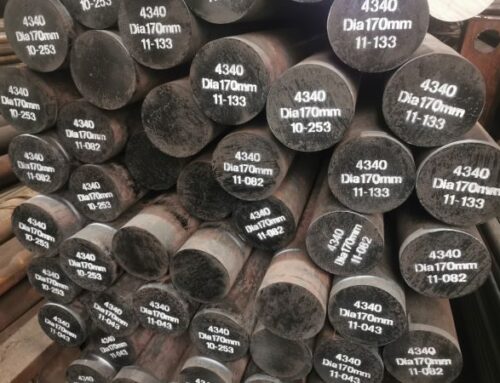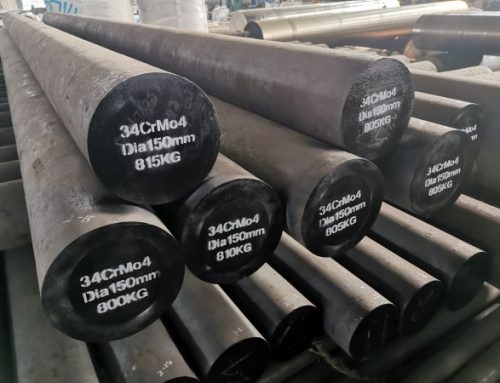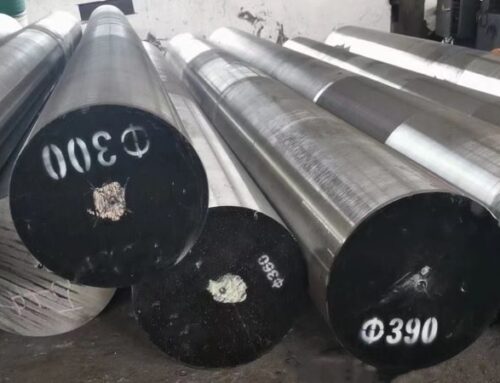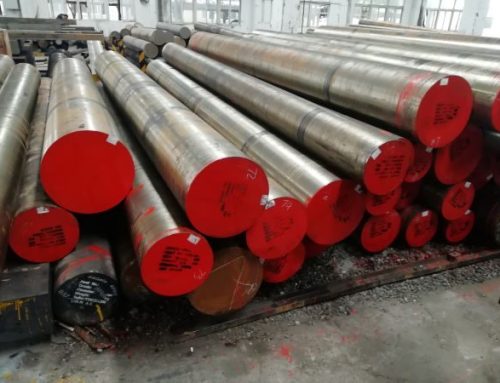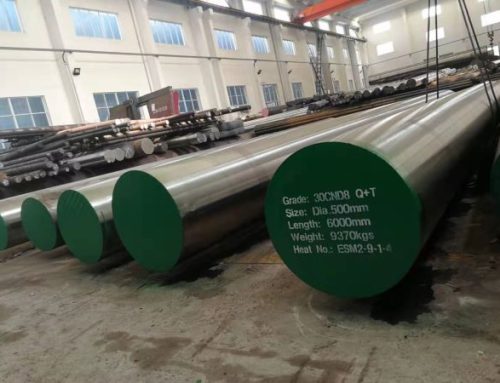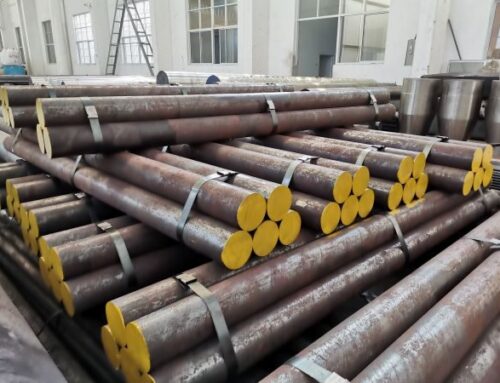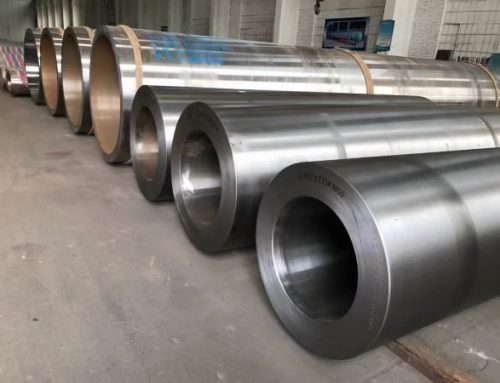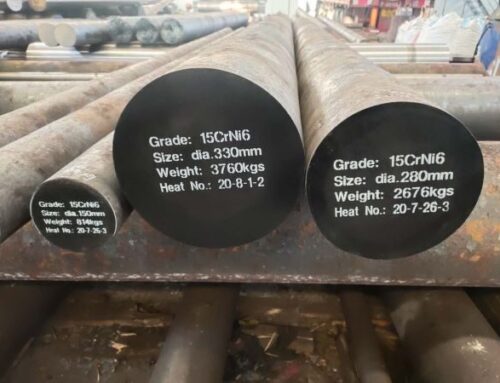
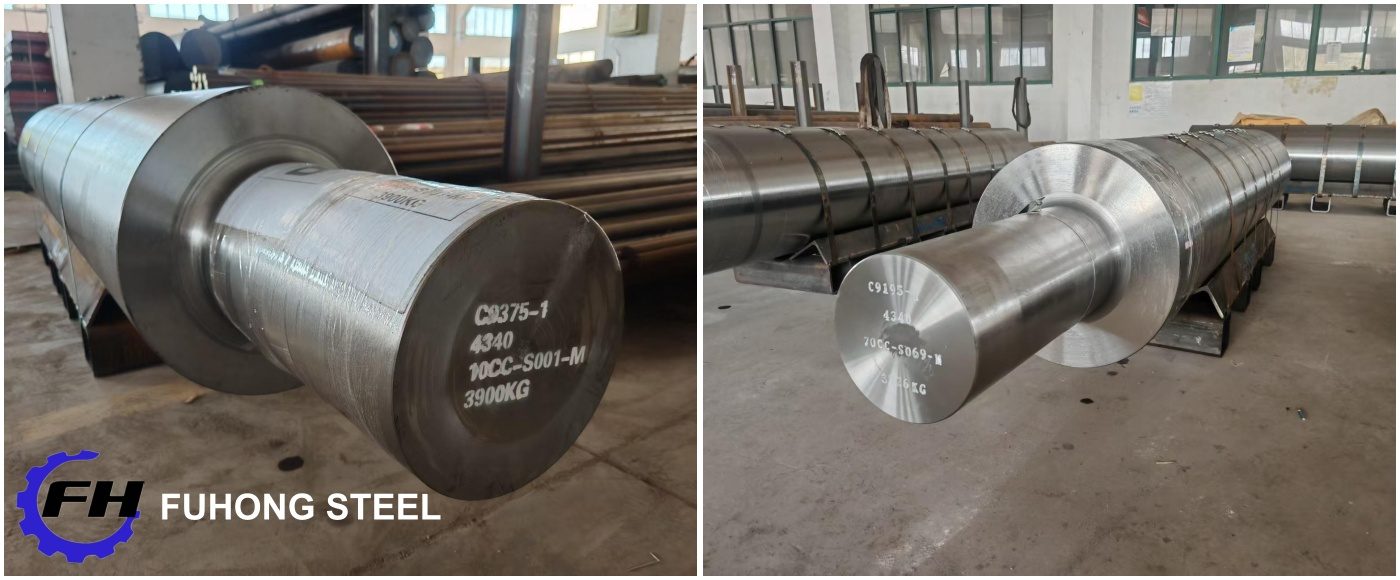
Why 4340 Steel Is the Right Choice for Mining Rolls?
Mining rolls operate under extremely harsh conditions: they withstand enormous impact loads, come into contact with abrasive ores, endure continuous cyclic stress, and often face severe environmental factors. Once a roll develops cracks, uneven wear, or premature failure, it not only needs to be replaced but also leads to production interruption.
4340 is a nickel-chromium-molybdenum alloy steel that effectively solves all the aforementioned problems. Its nickel content (1.65%–2.00%) distinguishes it from low-alloy steels such as 4140 steel. Nickel significantly improves toughness and hardenability, meaning that even large-diameter rolls can be integrally quenched, thus maintaining uniform strength from the surface to the core.
4340 Steel Key Benefits for Mining Applications
Chemical Composition For 4340 Rolls
| C | Si | Mn | P | S | Cr | Ni | Mo | Cu | H |
| 0.38-0.43 | 0.15-0.35 | 0.6-0.8 | ≤0.025 | ≤0.016 | 0.7-0.9 | 1.65-2.00 | 0.2-0.3 | ≤0.3 | ≤2.5ppm |
4340 steel is defined under ASTM A29/A29M and SAE J404 standards. Its balanced alloy chemistry is what gives it the unique combination of properties that heavy industry depends on.
What each element does for your rolls:
- Carbon provides baseline hardness and strength after quenching and tempering.
- Nickel is the toughness booster — it’s why 4340 absorbs impact without shattering and why it hardens all the way through thick sections.
- Chromium adds hardenability and contributes to wear resistance.
- Molybdenum prevents temper brittleness and maintains strength at elevated temperatures.
Mechanical Properties For 4340 Rolls
When properly heat treated — typically austenitized at 850°C, oil quenched, then tempered at 600°C depending on the target hardness — 4340 delivers a well-balanced set of mechanical properties.
| Tensile Strength | Yield Strength | Elongation | Reduction of Area | Impact Charpy-V | Hardness |
| 930-1100 Mpa | ≥740Mpa | ≥15% | ≥50% | ≥60J | 280-320HBW |
Common Mining Roll & Machinery Applications
4340 steel finds its way into a wide range of mining equipment components where strength and reliability are non-negotiable.
Crusher Rolls & Roll Crushers
Double-roll crushers and sizers rely on 4340 for roll bodies and shafts. The material’s combination of surface hardness and core toughness means rolls resist both the abrasive wear from ore and the shock loads from tramp iron or oversized material. For even greater wear performance, 4340 rolls can be surface-hardened or overlaid with wear-resistant materials.
Conveyor Pulleys & Drum Shafts
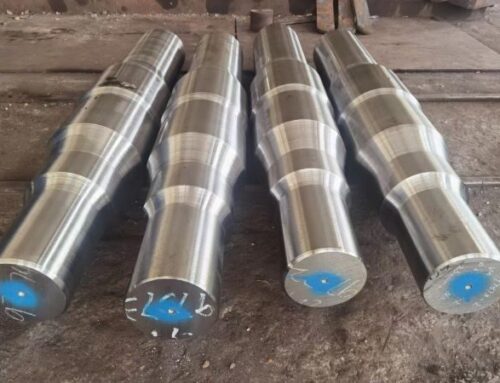
Head pulleys, tail pulleys, and drive pulleys in heavy mining conveyors need shafts that won’t bend or fatigue under thousands of tons of tension. 4340 forged shafts deliver the high yield strength and fatigue resistance these applications demand, especially in large-diameter sections where 4140 would fall short.
Mill Pinions & Gear Shafts
In ball mills, SAG mills, and rod mills, the pinion gears and drive shafts transmit enormous torque. 4340’s high core strength and good surface hardenability (via carburizing or induction hardening) make it a reliable choice for these power-transmission components.
Heavy-Load Shafts & Axles
From haul truck axles to shovel dipper handles and dragline components, 4340 handles the heavy lifting. Its through-hardening capability is essential for large-diameter shafts where surface hardness alone isn’t enough.
Frequently Asked Questions For 4340 Rolls
4340 Steel Mining Machinery Roll Manufacturer-FUHONG
Choosing the right steel grade is only half the battle — you also need a supplier who understands your application and can deliver material that meets your exact specifications, on time and with full documentation.