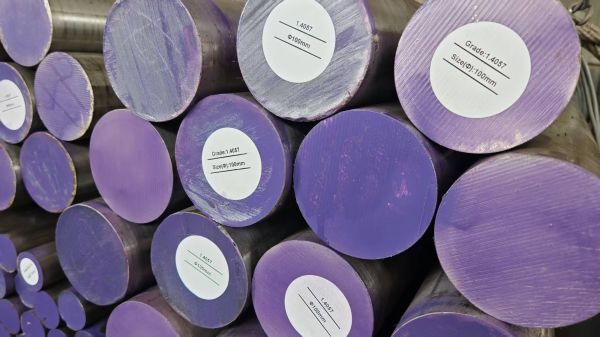
1.4057 steel is martensitic stainless steel, corresponding to the European standard X17CrNi16-2 as per EN10088-3.
As a heat-treatable stainless steel, the addition of nickel gives 1.4057 steel a balance of higher strength, excellent toughness, and corrosion resistance.
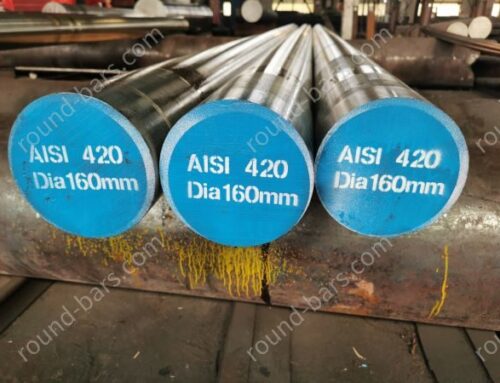
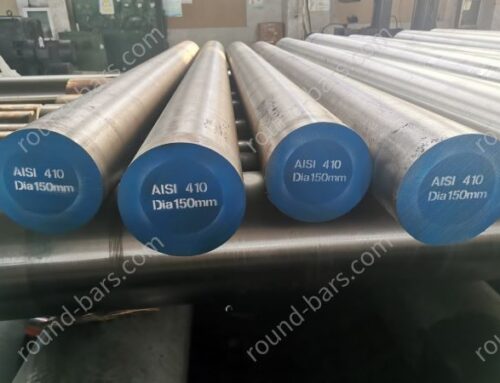
With its superior overall performance, 1.4057 has become the preferred upgrade for 12% chromium stainless steel 410 and 420,widely used in industries such as machinery, automobiles, aviation, and medical.
1.4057 STEEL CHEMICAL COMPOSITION
| Grade | C | Si | Mn | P | S | Cr | Ni |
| 1.4057 | 0.12-0.22 | ≤1.0 | ≤1.0 | ≤0.04 | ≤0.03 | 15.0-17.0 | 1.25-2.5 |
| 431 | ≤0.2 | ≤1.0 | ≤1.0 | ≤0.04 | ≤0.03 | 15.0-17.0 | 1.25-2.5 |
1.4057 STEEL EQUIVALENT GRADE
| Europe | USA | China | Japan |
| X17CrNi16-2 | 431 | 14Cr17Ni2 | SUS431 |
1.4057 STEEL PHYSICAL PROPERTY
| Density, g/cm3 | 7.75 | |
| Specific heat capacity,20℃,kj/(kg.k) | 0.46 | |
| Thermal conductivity,20℃ W/(m.K) | 20.2 | |
Linear expansion coefficient,10^-6/k | 0~100℃ | 0~500℃ |
| 10.3 | 12.4 | |
| Resistivity(20℃),Ω.mm2/m | 0.72 | |
| Longitudinal modulus of elasticity (20℃),kN/mm2 | 193 | |
| Magnetic | Magnetic | |
1.4057 STEEL FORGING
1.4057 steel has poor thermal conductivity and low low-temperature plasticity, so the temperature range and cooling process must be strictly controlled during forging.
| Preheating | Initial forging temperature | Final forging temperature | Forging ratio |
| 800-850°C | 1100-1150°C | ≥900℃ | ≥4:1 |
1.4057 is a martensitic steel, which is highly prone to cracking. Therefore, slow cooling is essential. Annealing immediately after forging is the recommended method.
1.4057 STEEL HEAT TREATMENT
1.4057 steel Pretreatment: Softening Annealing
The purpose of softening annealing of 1.4057 steel is to reduce the hardness to a machinable level, eliminate forging/rolling internal stress, homogenize the microstructure, and prepare the microstructure for subsequent heat treatment.
| Annealing temperature | Cooling method | Hardness | Microstructure |
| 700-750 ℃ | Furnace cooling | ≤285HBW | Pearlite + Ferrite |
1.4057 steel Final Heat Treatment: Quenching & Tempering
1.4057 is a martensitic stainless steel that can be strengthened by quenching and tempering. Its core feature is that its performance can be flexibly matched between “high strength” and “high toughness” by adjusting the tempering temperature.
The purpose of quenching 1.4057 steel is to obtain a martensitic structure, thereby significantly improving its strength and hardness.
| Quenching temperature | Cooling method | Hardness | Microstructure |
| 950-1050 ℃ | Oil cooling | 48-52HRC | Martensite + Austenite (small amount) |
1.4057 steel must be tempered immediately after quenching! Tempering is the core process that determines the final performance, achieving a balance between strength and toughness through temperature adjustment.
1.4057 steel Tempering temperature vs Hardness
| Tempering temperature | Hardness | Performance characteristics |
| 200-300 ℃ | HRC 45-50 | High strength, low toughness |
| 600-650 ℃ | HRC 30-35 | Good balance between strength and toughness |
| 650-800 ℃ | HRC 25-30 | Excellent toughness |
1.4057 steel Mechanical properties under different tempering processes
| Tempering process | Tensile strength Rm | Yield strength Rp0.2 | Elongation A | Hardness | |
| +QT800 | Double tempering First:750-800℃ Second:650-700℃ | 800-950 MPa | ≥600 MPa | ≥14% | HRC 25-30 |
| +QT900 | Single tempering 600-650℃ | 900-1050 MPa | ≥700 MPa | ≥12% | HRC 30-35 |
1.4057 STEEL SUPPLY FORM & SIZE & TOLERANCE
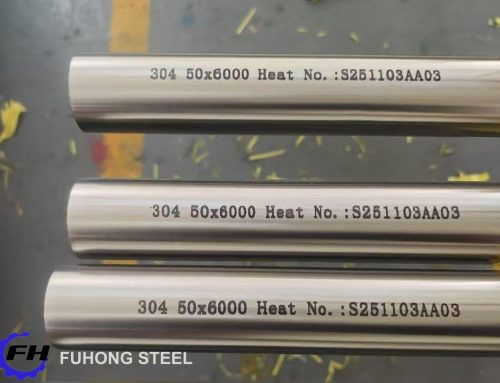
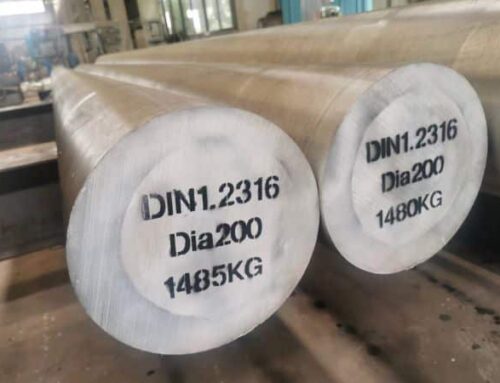
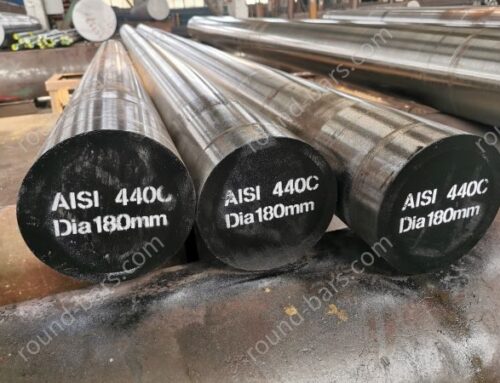
Round bar: Dia 6-400mm
Square bar: Dia 6-200mm
Flat bar:2 x 10-20 x 200mm
Hexagonal bar: Dia 6-150mm
| Surface Finish | Black-Forged | Black-Rolled | Rough Turned | Cold Drawn | Peeled | Polished | Grinded |
| Tolerance | 0/+5mm | 0/+1mm | 0/+3mm | Best H11 | Best H9 | Best H9 | Best h8 |